
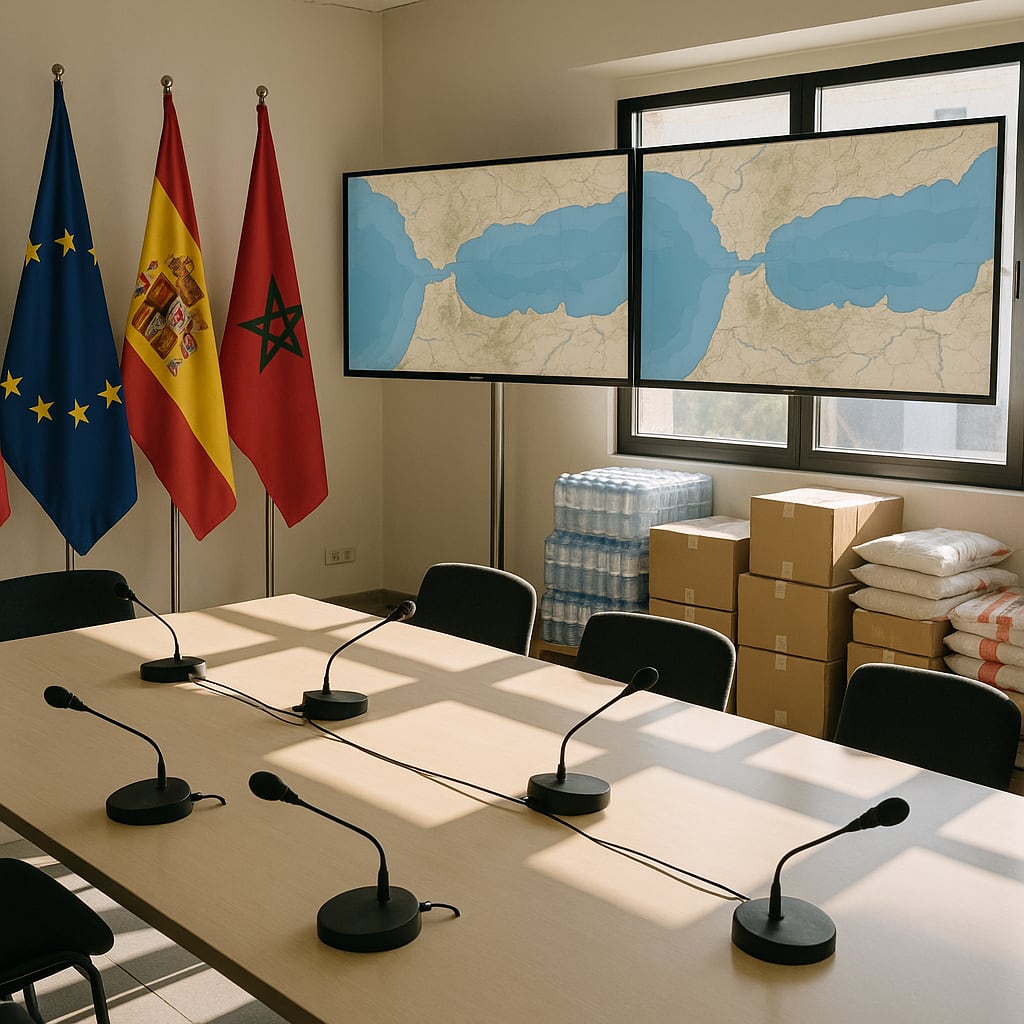
After mass crossings into Spain’s Ceuta from Morocco, most return as death toll rises
Narrative Snapshot
Across outlets, consensus holds that the scale of crossings into Ceuta was unprecedented and that the vast majority of entrants returned to Morocco within days. Spanish authorities cited roughly 50,000 entrants and more than 48,000 returns by July 31, figures carried by Deutsche Welle, France 24, CGTN, Politika, Fox News, and Le Monde. Several international outlets subsequently reported higher death counts as recovery continued, with a cluster converging around at least 72 fatalities by August 2 (The Hindu, Al Jazeera, Bangkok Post, Folha de S.Paulo, Japan Times, Fox News). Others published different tallies, including 57 (Le Monde, France 24), 67 (The Guardian), 71 (ANSA), and later 88 cited by Ceuta authorities (TASS), underscoring real-time gaps in accounting as searches along the coastline continued.
Explanations for what drove the surge diverge. Morocco’s government pointed to disinformation and rumors, saying around 40,000 people participated in mass attempts toward Ceuta and Melilla (Politika), while Japan Times highlighted social media rumors layered atop economic hardship. Telesur framed Morocco’s border enforcement calculus as strategic, suggesting relaxed patrols functioned as leverage, even as other Telesur reporting described Spain–Morocco coordination to restore control. Frontline reporting emphasized method and risk: thousands entered by sea, with drownings and a stampede near a breakwater highlighted in Fox News and Le Monde coverage.
European responses revealed institutional strain. Italy temporarily reinstated checks on travelers from Spain, a symbolic stress test for Schengen noted by Fox News, Deutsche Welle, and France 24, while the European Commission rejected suggestions to suspend Spain from Schengen and said the area’s integrity was assured (Telesur, Le Monde). Spain’s prime minister sought an urgent EU meeting and criticized “selfish” member-state reactions (The Guardian), and Politika reported that 22 EU countries requested a videoconference, indicating both pressure for coordination and the political salience of the episode. Human Rights Watch, cited by France 24, flagged chaotic returns and uncertain figures, signaling rights-based scrutiny alongside security-led responses.
What Happened
Over two days in late July, between 50,000 and 60,000 people crossed from Morocco into Spain’s North African enclave of Ceuta by land and sea, with local authorities describing being overwhelmed (CGTN, DW, TASS). Spain deployed military units to support the Guardia Civil as order was re‑established (Fox News). By July 31, the Interior Ministry said about 48,300 people had returned to Morocco; Spanish media circulated video of mass returns, and officials later said most entrants had left the enclave (Corriere della Sera, France 24, Al Jazeera). Morocco announced 70 arrests after clashes near border perimeters (Politika). Italy and France tightened controls, with Italy temporarily suspending Schengen free movement with Spain (France 24, DW, Fox News). Spain called for urgent EU talks; 22 member states sought a videoconference (The Guardian, Politika). Reported deaths rose from initial single digits to at least 72 by August 2, while Ceuta’s authorities later cited 88 and Moroccan authorities reported 11 on their side (The Hindu, Bangkok Post, TASS, ANSA).
Why It Matters
The episode tests the EU’s external-border governance, the elasticity of Schengen under pressure, and the efficacy of Spain–Morocco cooperation that EU migration management increasingly relies on. Italy’s temporary checks on travelers from Spain, juxtaposed with Commission assurances that Schengen’s integrity was “absolutely guaranteed,” illustrate the recurring tension between national controls and EU-level stewardship during acute inflows (France 24, Le Monde, Telesur). The friction exposes the bloc’s dependence on third-country enforcement and the leverage that can create, a dynamic highlighted in analyses of Moroccan patrol posture and subsequent bilateral coordination (Telesur). It also reopens questions about emergency returns at EU borders, particularly in enclaves with special rules that limit onward movement, and amid reports of chaotic processes (France 24). For decision-makers, the case underscores the need for crisis protocols that reconcile rapid stabilization, accurate casualty accounting, and legal safeguards, alongside calibrated engagement with Rabat and targeted Frontex support commensurate with operational need (Telesur).
Diverging Narratives
The numbers underpinning the story do not align neatly. Spanish and international outlets widely carried a range of death tolls—from 57 (Le Monde, France 24) to 67 (The Guardian), 71 (ANSA), and at least 72 (The Hindu, Al Jazeera, Bangkok Post, Fox News, Japan Times)—reflecting incremental recoveries and cross-border attribution issues. Ceuta’s authorities later cited 88 deaths while Morocco reported 11, further complicating reconciliation (TASS, ANSA). Entry and return figures also vary. Spain’s Interior Ministry figures—about 50,000 entrants and 48,300 returns—anchor much coverage (CGTN, DW, France 24, Politika), while ANSA subsequently reported over 73,000 returned to Morocco, an outlier suggesting different baselines or counting methodologies.
Causal framing diverges as well. Morocco attributes the surge to disinformation and rumors (Politika), with Japan Times also citing social media drivers alongside economic hardship. Telesur’s analytical framing emphasizes the strategic use of border controls and, in separate reporting, parallel reinforcement of Spain–Morocco cooperation. Human Rights Watch, via France 24, stresses the disorderly nature of returns and uncertain tallies. Political interpretations at the margins add further contrast: Middle East Eye covered a clash between a Spanish minister and an Israeli diplomat over the episode, while RT reported Iran’s embassy in Kenya alleging US–Israeli orchestration—claims not echoed in mainstream reporting and presented as statements by political actors rather than established facts (Middle East Eye, RT).
What Happens Next
Two decision tracks will shape outcomes. First, EU coordination: Spain’s call for urgent talks and the request by 22 member states for a videoconference position interior ministers to calibrate responses on internal checks, external-border support, and information-sharing (The Guardian, Politika). Analysts should watch whether Italy maintains or lifts checks on travelers from Spain, any Frontex reinforcement beyond the small contingent already noted in Ceuta, and Commission messaging on Schengen safeguards (Telesur, France 24, Le Monde). Second, Spain–Morocco operational posture: reporting of reinforced cooperation and Moroccan arrests points to sustained joint enforcement; signals to track include further Moroccan policing actions, returns management, and public messaging on disinformation (Telesur, Politika). A third, cross-cutting indicator is casualty accounting. As searches continue along Ceuta’s coast, convergence—or not—of Spanish local, national, and Moroccan tallies will inform accountability debates and humanitarian follow‑up (Al Jazeera, Fox News, TASS, ANSA).