
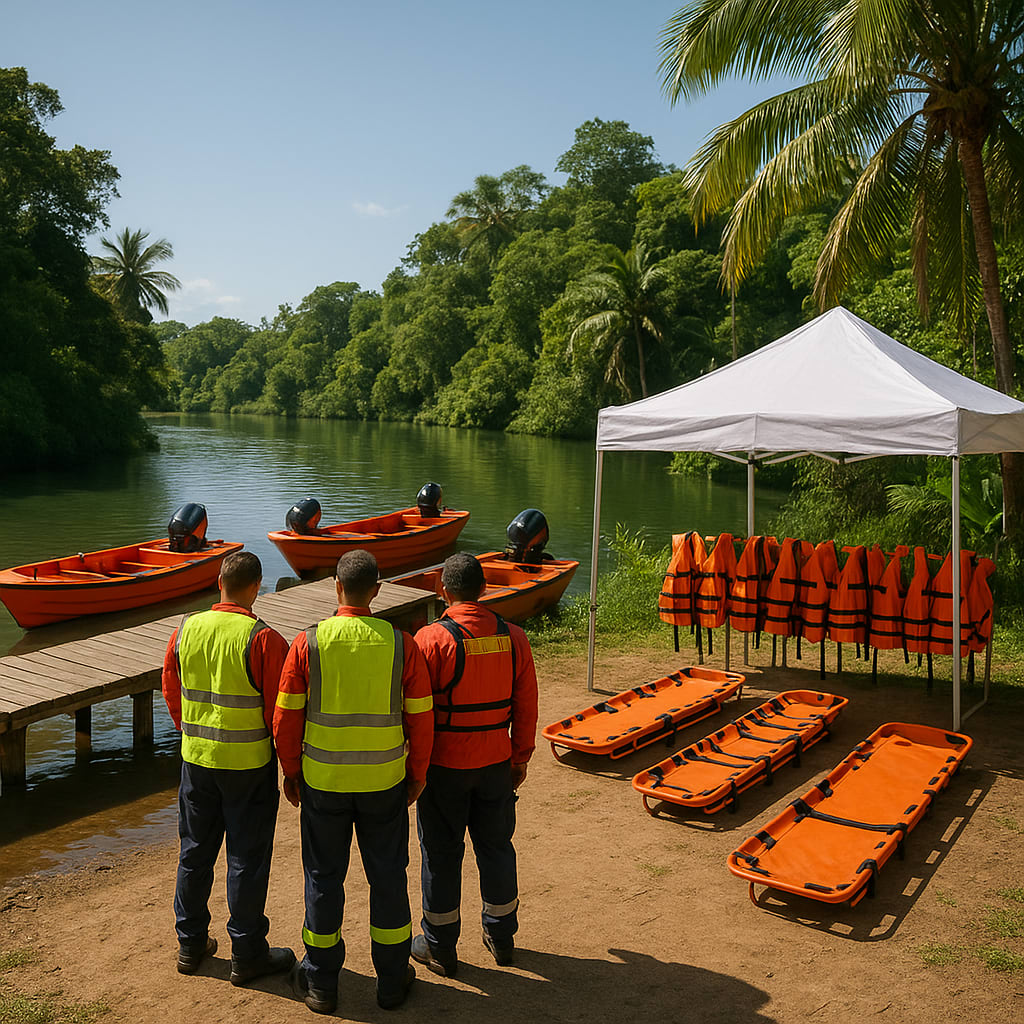
Guyana ferry capsizes with over 100 aboard; dozens rescued as search continues
Narrative Snapshot
Across outlets, the scale of the rescue and the basic parameters of the incident are consistent, but the numbers and even the setting vary. Multiple reports place more than 100 people on board and at least 50 rescued, with some citing 67 survivors as of Sunday, while earlier updates carried lower figures. The Guardian specifies that 15 children were among those rescued, and Deutsche Welle highlights uncertainty over the total number due to an inaccurate passenger list. Where several describe a coastal sinking between Georgetown and Port Kaituma, Telesur English situates the event on the Pomeroon River near Iron Punt and names the vessel MV Barima; South China Morning Post also names the MV Barima and adds the starting count of 133 aboard, diverging from the 116 cited by others.
Emphases differ. The Guardian frames the event as among Guyana’s worst maritime disasters. SCMP and the Bangkok Post characterize the ship as an “aging” ferry and foreground the route toward Port Kaituma in the Essequibo region. TASS underscores that the circumstances are unknown. Early BBC reporting captured the fluidity of the situation with a much lower rescue count. In parallel, coverage of the separate San Francisco Bay capsizing shows how initial narratives can shift: The Guardian first referenced a fire on board, while CGTN subsequently reported there was no fire, and Fox News and DW documented how the U.S. Coast Guard later suspended the search, with missing passengers presumed dead.
What Happened
Guyana authorities and international media report that a passenger ferry with well over 100 people on board capsized late Saturday local time during a journey from Georgetown to Port Kaituma. Initial tallies varied: BBC cited eight rescues early on, the Associated Press via the Toronto Star reported 53, and later updates from Al Jazeera, The Guardian, SCMP, Bangkok Post, Telesur, and DW raised that to 67 people rescued. The Guardian notes 15 children among survivors. Several outlets say the sinking occurred off the coast, while Telesur places it on the Pomeroon River near Iron Punt. Telesur and SCMP identify the vessel as the MV Barima. Passenger counts also diverge, with 116 reported by several outlets and 133 by SCMP. DW reports the manifest is inaccurate, and TASS says circumstances remain unknown as search-and-rescue operations continue.
Why It Matters
This incident intersects with structural issues in maritime safety and state capacity. SCMP and the Bangkok Post describe the ferry as “aging,” and DW’s note about an inaccurate passenger list points to administrative gaps that complicate emergency response, casualty accounting, and accountability. The route serves Port Kaituma in the Essequibo region, which SCMP describes as oil-rich, underscoring the importance of safe, reliable transport links for internal connectivity and economic activity. The Guardian’s characterization of the event as among Guyana’s worst maritime disasters elevates the stakes for national authorities to demonstrate effective crisis management.
The contemporaneous San Francisco Bay capsizing illustrates how institutional protocols shape outcomes and public communication. Fox News and DW detail the U.S. Coast Guard’s coordinated search and subsequent suspension with missing presumed dead, while CGTN’s correction regarding the absence of fire shows the importance of rapid factual reconciliation. Together, the cases highlight how manifest integrity, vessel standards, and clear incident reporting affect response quality across different systems.
Diverging Narratives
Key uncertainties drive differences in reporting. The number of people on board ranges from 116 in BBC, Al Jazeera, The Guardian, and the AP account in the Toronto Star to 133 in SCMP; DW explicitly attributes such discrepancies to an inaccurate passenger list. Rescue counts evolved as operations progressed: BBC’s early figure of eight rescues contrasts with TASS and AP’s 53 and later with multiple outlets’ 67. Location framing also diverges, with most outlets describing a coastal capsize between Georgetown and Port Kaituma while Telesur situates the sinking on the Pomeroon River near Iron Punt, and both Telesur and SCMP naming the MV Barima. SCMP and the Bangkok Post add a qualitative detail—that the ferry was “aging”—not broadly echoed elsewhere.
The San Francisco coverage shows a separate but instructive pattern in how early narratives can conflict and then consolidate. The Guardian initially reported a fire on the pontoon boat near Alcatraz, while CGTN later stated there was no fire, contrary to early reports. DW and Fox News track the casualty progression, from one confirmed death with multiple missing to four presumed dead after the search was suspended, establishing how official thresholds and conditions such as five-foot swells inform operational decisions and public updates.
What Happens Next
In Guyana, the decisive variables are the ongoing search-and-rescue results and the reconciliation of passenger records. As authorities continue operations reported by Al Jazeera and others, the confirmed toll will shift with additional rescues or recoveries, and DW’s note on manifest inaccuracies suggests that establishing a definitive passenger count will be a prerequisite for closure. Clarity on the exact location and vessel identity—split in coverage between an offshore capsize and the Pomeroon River and with MV Barima named by Telesur and SCMP—will shape any official chronology. TASS’s statement that circumstances are unknown indicates that causal findings are still pending.
For the San Francisco case, Fox News and DW report the search was suspended and missing passengers presumed dead, focusing attention on formal cause determinations and any safety communications from authorities. Analysts should watch for official updates in both cases that resolve numerical discrepancies, confirm the vessel and route details in Guyana, and, in the U.S. case, any authoritative account of contributing factors.