
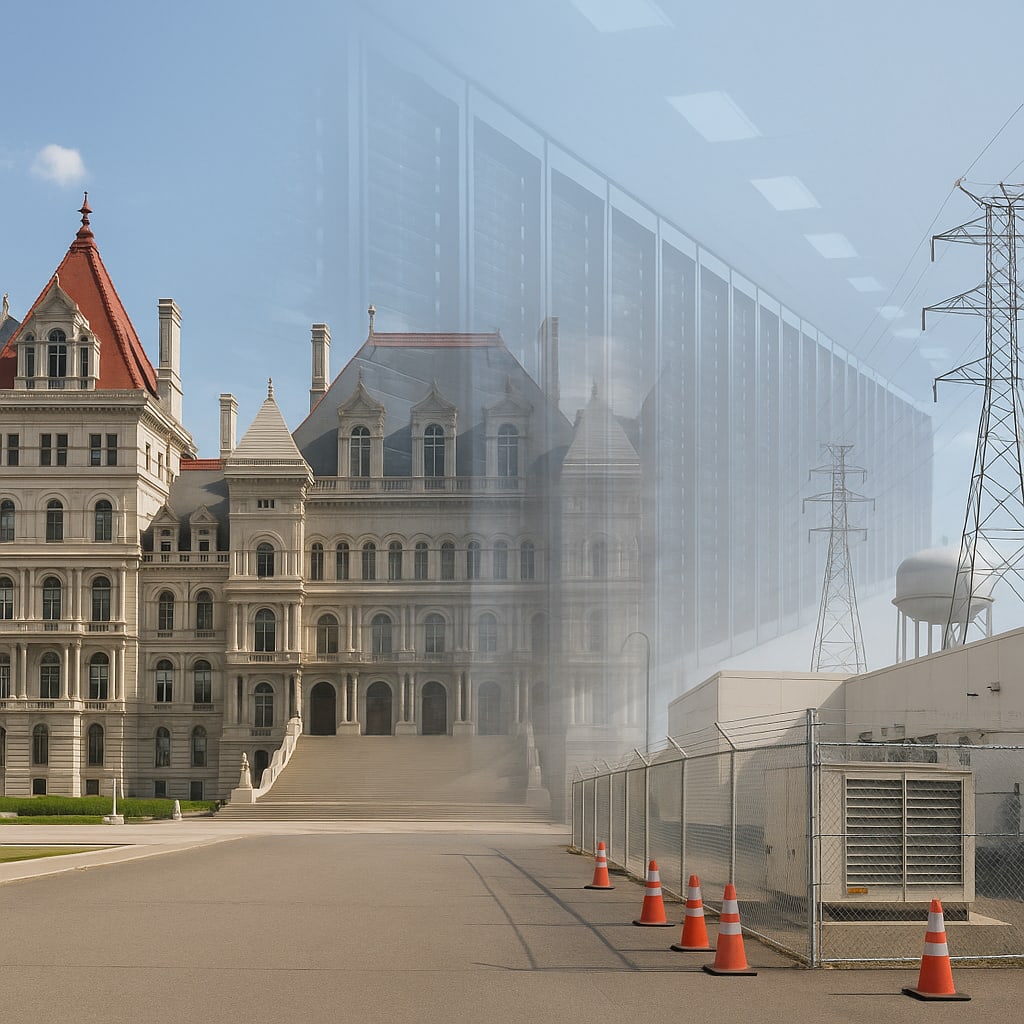
New York enacts first statewide one-year pause on large data centers to evaluate environmental and grid impacts
Narrative Snapshot
Across outlets, there is broad alignment that New York’s action is a first-of-its-kind, statewide halt focused on the largest, high-resource facilities and justified by environmental and power-system concerns. US and Indian coverage emphasize environmental protection and grid reliability as the rationale, with the New York Times underscoring an executive order to assess effects on energy use, and the Associated Press (via the Toronto Star) and The Hindu highlighting rulemaking to safeguard the grid and environment. The Guardian frames the target more narrowly as large, resource‑intensive AI datacenters.
International reporting adds distinct emphases. NHK foregrounds concerns about rising electricity prices and water shortages as drivers, while Folha de S.Paulo situates the move within a broader public backlash to the infrastructure required for the AI boom. Al Jazeera places the decision inside a national trend, noting moratorium proposals in at least a dozen US states. Canadian coverage in the Toronto Star shows municipal reverberations, with Hamilton nearing a vote on its own moratorium, suggesting the issue is moving across borders and down to local levels.
What Happened
Governor Kathy Hochul moved to pause New York’s largest data centers for one year through an executive order, described as the nation’s first statewide moratorium on such facilities. The New York Times reports the order will halt construction of the largest data centers for a year while the state assesses environmental and energy-use impacts. The Guardian says Hochul issued an executive order mandating a one-year pause on resource-intensive AI facilities. The Associated Press, via the Toronto Star, and The Hindu say New York will block construction of new large data centers for up to a year to develop rules protecting the environment and the energy grid. NHK reports the state announced it would freeze new construction permits for up to one year, citing concerns over rising electricity prices and water shortages. Al Jazeera adds that similar moratorium pushes are advancing elsewhere, with bans proposed in at least a dozen US states.
Why It Matters
The move sets a statewide precedent for governing AI-era infrastructure through a time‑limited pause to generate standards, potentially shaping how other jurisdictions approach siting, resource use, and grid integration for large data centers. US coverage indicates the pause is intended to produce rules that safeguard environmental quality and power-system reliability, positioning New York to influence emerging norms around how AI‑driven capacity expansions intersect with electricity demand and natural resource constraints. Al Jazeera’s reporting that moratorium proposals are circulating in at least a dozen states suggests policy diffusion is already underway. The Toronto Star’s reporting on Hamilton’s pending vote indicates cross‑border municipal salience, with local governments testing their own levers. NHK’s emphasis on electricity costs and water scarcity signals the resource dimensions other governments may foreground as they balance digital infrastructure growth against price stability and water stress.
Diverging Narratives
Outlets differ on how they describe the target: the New York Times and the Associated Press (via the Toronto Star) refer to “the largest data centers,” while The Guardian specifies “large, resource‑intensive AI facilities,” and The Hindu links the moratorium to data centers that fuel AI. These distinctions matter for policy scope, even if none of the reports specify thresholds for what counts as “large.” Rationales are framed with varying emphasis. The Times, AP, and The Hindu focus on environmental and grid impacts and the use of the pause to conduct assessments and draft rules. NHK elevates concerns about electricity price increases and water shortages. Folha de S.Paulo situates the decision amid a broader US backlash to AI‑related infrastructure. There is also a minor timing discrepancy: the Times reports Hochul “will sign” an executive order, whereas The Guardian says she “issued” it, reflecting differences in when outlets filed. Across reports, details of the forthcoming regulatory framework remain unspecified.
What Happens Next
The central decision is how New York uses the one‑year pause. AP and the Times indicate the state will develop rules and assess environmental and energy impacts; outcomes could range from stringent siting and resource‑use constraints to procedural requirements grounded in those assessments. Analysts should watch for state documents that clarify definitions of “large” facilities and how environmental and grid considerations are operationalized. Al Jazeera’s note about proposals in at least a dozen states highlights a second track: whether other governors or legislatures adopt pauses, and whether they mirror The Guardian’s AI‑specific framing or the broader “largest data centers” approach seen in AP and the Times. A third indicator sits at the municipal level: the Toronto Star reports Hamilton is nearing a moratorium vote, a signal of local policy uptake. NHK’s emphasis suggests to monitor whether electricity price stability and water scarcity become explicit criteria in New York’s eventual rules and in other jurisdictions’ proposals.