
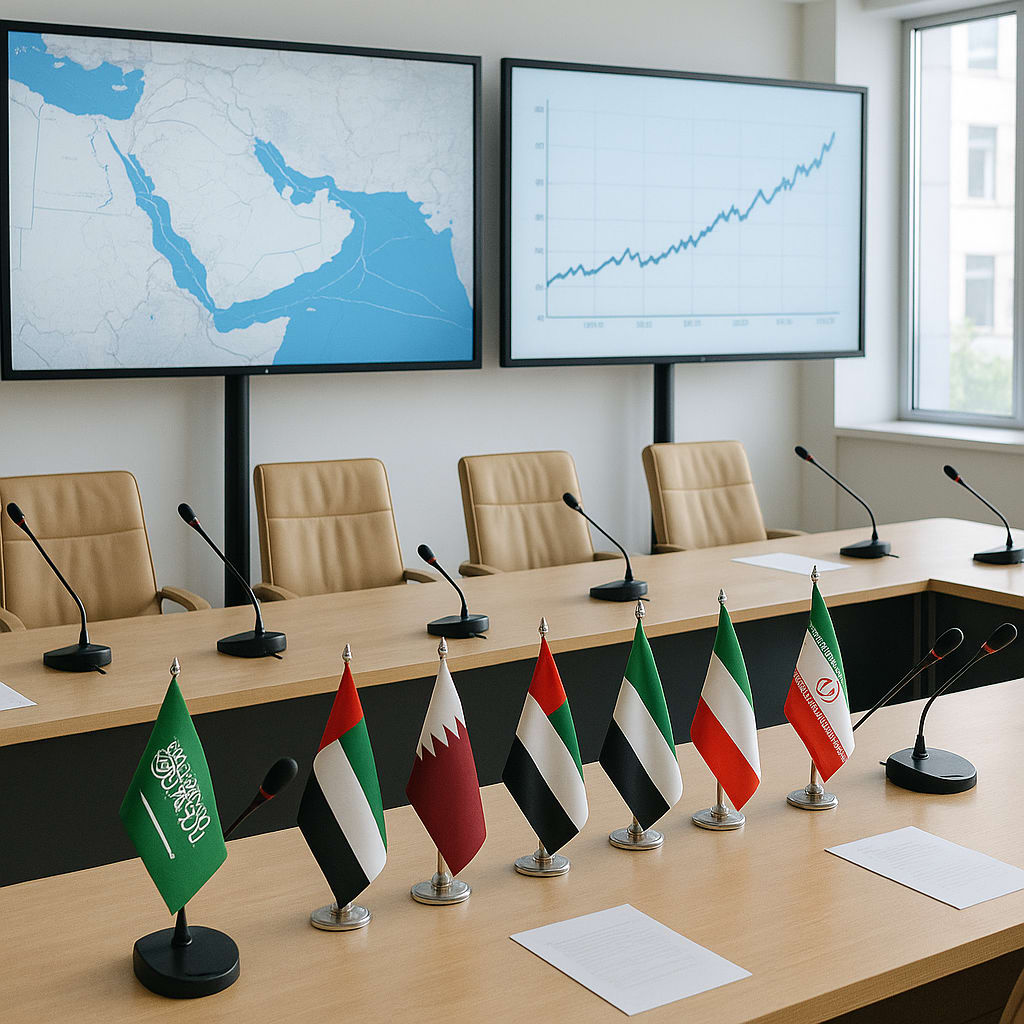
Seven OPEC+ members to raise September oil output targets by 188,000 b/d
Narrative Snapshot
Across outlets there is alignment on the magnitude of the adjustment and who is making it: seven OPEC+ states—Saudi Arabia, Russia, Iraq, Kuwait, Kazakhstan, Algeria, and Oman—will collectively lift their September targets by 188,000 barrels per day following an online ministerial meeting (Ukrinform; CGTN; Bangkok Post; Telesur English). Beyond that consensus, coverage diverges on framing. Politika situates the move within OPEC+’s internal sequencing, noting it completes the unwinding of the second of three previously agreed restriction packages, while CGTN links the adjustment to the voluntary cuts announced in April 2023 and to a stated commitment to market stability. By contrast, Folha de S.Paulo presents the move as a reaction to the conflict between the United States and Iran affecting global prices.
A second line of difference is the weight placed on geopolitical constraints that could blunt the practical effect of higher quotas. Telesur English underscores ongoing difficulties moving crude due to war in the Middle East, and the Bangkok Post also anchors the decision against disruption from that conflict. La Repubblica is more specific, arguing a naval blockade at the Strait of Hormuz is compromising market impact. Meanwhile, TASS highlights intra-alliance allocation by specifying Russia’s quota will rise by 62,000 barrels per day, signaling how distribution among participants is part of the story.
What Happened
Following a virtual session on August 2, seven OPEC+ members agreed to raise their production cap or targets by a combined 188,000 barrels per day in September compared with August levels (CGTN; Ukrinform; Bangkok Post). The participating states were Saudi Arabia, Russia, Iraq, Kuwait, Kazakhstan, Algeria, and Oman (Ukrinform; CGTN; Telesur English). TASS reports that within this collective increase, Russia’s quota will rise by 62,000 barrels per day. Politika describes the September step as completing the gradual removal of the second of three tranches of earlier-agreed production limits. CGTN connects the decision to the group’s April 2023 voluntary cuts and frames it as consistent with a collective commitment to supporting oil market stability. Telesur English reports the alliance will put an additional 188,000 barrels per day on the market from September following the ministers’ video conference.
Why It Matters
The decision shows OPEC+ continuing to manage supply through small, coordinated adjustments concentrated among a subset of core participants rather than the full coalition (Ukrinform; CGTN). Politika’s reference to a three‑package sequencing and CGTN’s linkage to the April 2023 voluntary cuts point to institutional continuity in how the group unwinds prior restraint while signaling market‑stability objectives. At the same time, several outlets emphasize that exogenous constraints may limit how much added quota translates into available barrels: Telesur English and the Bangkok Post point to disruption from the war in the Middle East, and La Repubblica argues a blockade at Hormuz is muting market effects. For governments and multilateral actors, the episode underscores that OPEC+ supply policy is being calibrated within a predefined framework even as security conditions and transport risks—especially around Hormuz—shape real‑world throughput and price formation.
Diverging Narratives
Coverage differs on whether to read the step as institutional follow‑through or crisis response. Politika casts it as the completion of the second stage of a pre‑set rollback of past cuts, and CGTN underscores continuity with April 2023 voluntary reductions and a stated market‑stability goal. Folha de S.Paulo, by contrast, frames the move as a reaction to the conflict between the United States and Iran that is affecting global oil prices. Telesur English characterizes the decision as the sixth consecutive monthly increase and emphasizes that it is a limited rise given difficulties moving crude because of the Middle East war; the Bangkok Post similarly situates the decision against conflict‑driven disruption. La Repubblica goes further, asserting a naval blockade at the Strait of Hormuz is compromising the increase’s impact. There is also a difference in emphasis and terminology: CGTN and Ukrinform describe an adjustment to the cap or targets, while other outlets write in terms of “production,” and TASS focuses on Russia’s specific quota addition of 62,000 barrels per day.
What Happens Next
The next inflection point is whether OPEC+ proceeds to unwind the third package of previously agreed restrictions or pauses the rollback. Politika’s account that September completes the second of three packages frames this as the structural choice ahead. Signals to watch include how future OPEC+ communiqués reference the April 2023 voluntary cuts and market‑stability language (CGTN), and whether the seven participating states remain the locus of incremental adjustments (Ukrinform; CGTN). Operationally, the degree to which wartime disruptions persist will condition implementation: both Telesur English and the Bangkok Post foreground Middle East conflict‑related constraints, and La Repubblica singles out conditions at the Strait of Hormuz as a key bottleneck. On allocations, Russia’s additional 62,000 barrels per day, noted by TASS, provides a concrete marker for tracking how individual participants translate higher targets into realized output amid any logistical limits.