
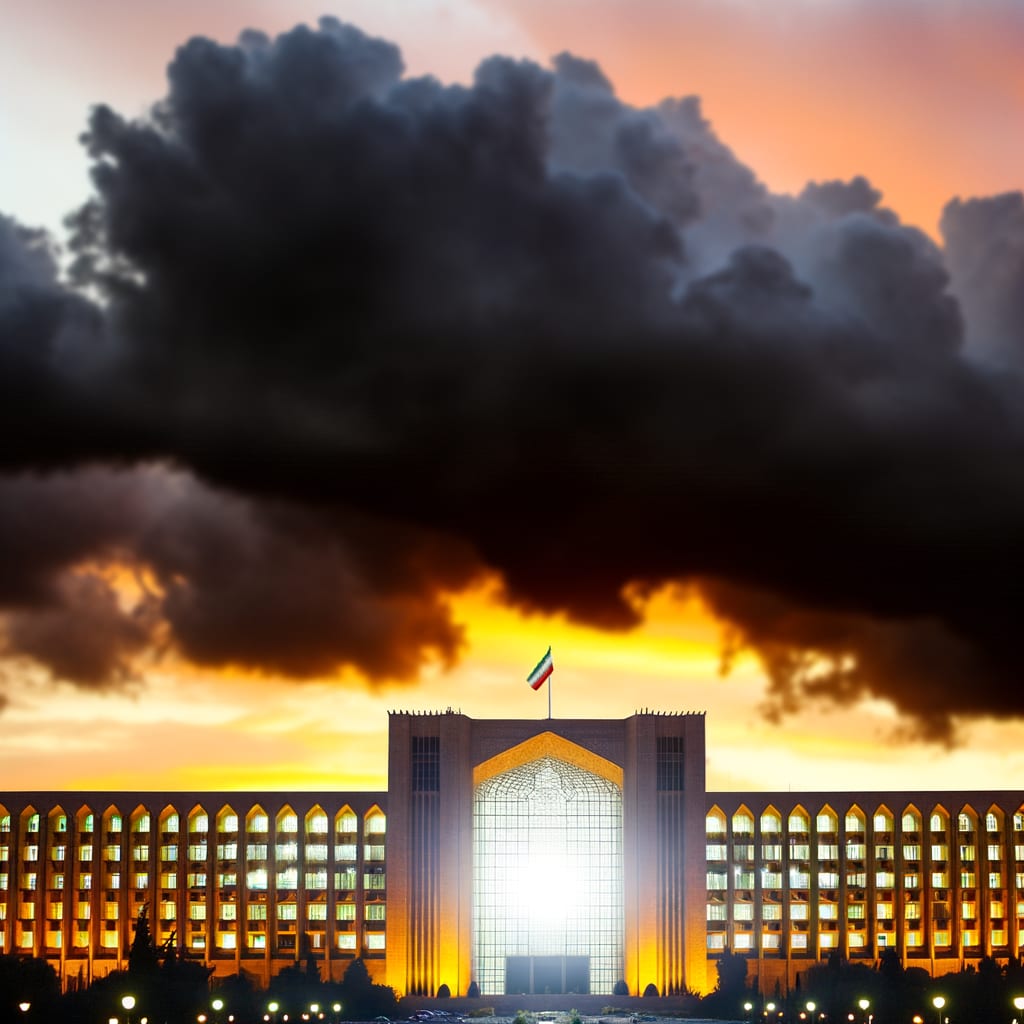
Iran Asserts Resilience Amid Escalating Tensions, Mojtaba Khamenei's Rise, and Shifting Allegiances
As the conflict in the Middle East intensifies, Iran has been thrust into the spotlight with its mounting tensions with the United States and Israel, the rise of Mojtaba Khamenei, and shifting political allegiances both internal and external to the country.
Background and Context
Amid the heated power plays and rivalries, Iran's army claims that attempts by separatist groups to infiltrate the country's western borders have failed, largely due to the vigilance of security forces and local communities, according to a report by the Middle East Eye. In contrast, the New York Times has reported a weeklong struggle over Iran's next leader, pitting the Revolutionary Guards against moderates, with the generals ultimately prevailing.
The ascension of Mojtaba Khamenei as Iran's new supreme leader was neither a simple nor predestined affair, as per Folha de S.Paulo. His rise has been described as a result of intrigue, power plays, and rivalries, despite reports by TASS suggesting that the Iranian leadership maintains power and unity.
Key Developments
While the power dynamics shift within Iran, the country's stance in the international arena remains resolute. Iranian President Masoud Pezeshkian insists that Iran did not initiate the war and is merely exercising its right to defend itself against attacks, as reported by the Middle East Eye. His comments were echoed by parliament speaker Mohammad Bagher Ghalibaf, who warned that Iran will 'abandon all restraint' if the United States and Israel attack any of its islands in the Gulf.
However, this resilience is being tested as exiled opposition figure Reza Pahlavi's supporters are reportedly losing faith in him, according to another piece by the Middle East Eye. This is further complicated by Iran's volatile relationship with the United States and Israel, and its call for Muslim states to back Tehran against these powers, as reported by Ali Larijani, Iran's secretary of the Supreme National Security Council.
Implications and Reactions
The escalating conflict has had far-reaching implications, with a US military refueling plane crashing in Iraq, as reported by The Guardian and the South China Morning Post. Meanwhile, Iran has threatened to retaliate against US companies in the Middle East if America carries out strikes on Iranian energy facilities, as reported by the Middle East Eye. This tension is further exacerbated by Iran's disruption of the vital oil transit route through the Strait of Hormuz.
The international community has responded to these developments, with the United Nations Security Council condemning Iran's attacks on the Gulf, and the Corriere della Sera reporting on the dire situation of Tehran's population amid bombings.
Conclusions and Current Status
The situation remains tense as Iran navigates through internal power dynamics and external threats. Iran's resilience and determination to defend its territory are being tested as the conflict escalates, affecting not just the political landscape but also the lives of its citizens. With increasing international pressure and shifting allegiances, the future of the country hangs in the balance.