
Venezuela’s twin earthquakes: fatalities surpass 3,500 as rescue winds down and relief, burials, and data disputes intensify
Narrative Snapshot
- Casualty figures converge around high mortality but diverge on totals: several outlets report 3,535 deaths (Japan Times; CBC; Al Jazeera), while others cite 3,685 (Folha de S.Paulo; TASS; Le Monde). Injuries (16,740) and homelessness (~17,900) are consistent (Japan Times; TASS).
- Information control and credibility are central fault lines. Official tallies omit a missing-persons figure, while media highlight crowdsourced “missing” portals with methodological flaws (duplicates, geographic distance from the epicenter) yet significant agenda-setting impact (New York Times). Some coverage describes access limits and militarization near key sites (Folha de S.Paulo; Clarín).
- The operational center of gravity has shifted from rescues to mass burials and sheltering. Foreign teams begin withdrawing after no signs of life (Le Monde), even as “miracle” rescues were still being documented days in (Al Jazeera; Clarín).
- Narratives split on state capacity: official accounts emphasize massive deployments and international solidarity (TASS), while European and Latin American reporting foregrounds ad hoc morgues, new cemeteries, citizen-led digging, and uneven aid delivery (Le Monde; Corriere della Sera; Clarín; Folha de S.Paulo).
What Happened
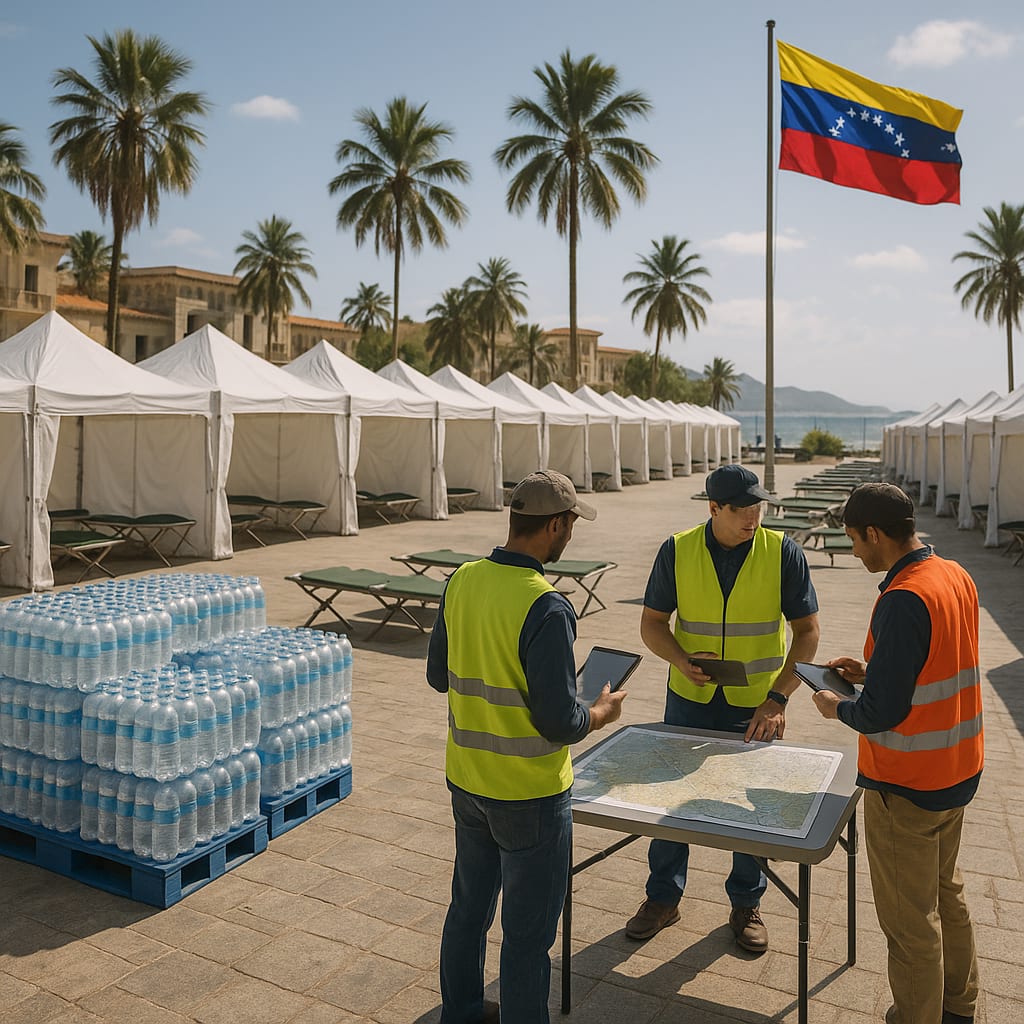
Twin earthquakes on June 24 devastated Venezuela’s coastal La Guaira state and affected Caracas, collapsing housing blocks and infrastructure (New York Times; Corriere della Sera). Authorities report 3,535–3,685 deaths, 16,740 injured, and roughly 17,900 left without housing (Japan Times; CBC; TASS; Le Monde). The government says over 19,000 rescuers were deployed and thanked 147 countries for solidarity (TASS). Yet foreign search teams began to withdraw as prospects for survival faded two weeks on (Le Monde; ANSA), even as some highly publicized rescues occurred days after the quakes, including a 3‑year‑old and an adult trapped for eight days (Clarín). Emergency operations converted a port area into a temporary morgue and opened a new cemetery at La Esperanza in La Guaira for mass burials (Corriere della Sera; Clarín; Al Jazeera). Stadiums, a golf course, and even a McDonald’s were repurposed for shelter and triage, often staffed by young volunteers (Al Jazeera; Folha de S.Paulo; Japan Times; Clarín). Caracas’s airport was preparing to reopen to aid traffic (Le Monde).
Why It Matters
The disaster is a stress test of Venezuela’s emergency governance, information systems, and international relief interface. Official data omit a missing‑persons count while crowdsourced registries proliferate and shape coverage despite acknowledged quality issues (New York Times; Folha de S.Paulo; Clarín). That gap affects humanitarian targeting, forensic caseloads, and public trust. The government’s emphasis on scale of deployments and solidarity (TASS) intersects with reports of militarization, access restrictions, and community self‑help, exposing contested control of the response space (Folha de S.Paulo; Clarín; Le Monde). Regionally, UN agencies have mobilized and neighbors are channeling assistance—Argentina’s NGO‑led airlift of responders and Brazil’s shipment of vaccines and medical supplies (Clarín; Folha de S.Paulo). As foreign SAR teams depart and airport operations resume (Le Monde), coordination shifts toward medium‑term sheltering and dignified burials, where institutional capacity, data integrity, and transparent prioritization will drive outcomes.
Diverging Narratives
- Mortality counts and trajectory: Several international outlets cite 3,535 deaths (Japan Times; CBC; Al Jazeera), while others report 3,685 (Folha de S.Paulo; TASS; Le Monde). The gap reflects update timing and sourcing. Injuries (16,740) and homelessness (~17,900) align (Japan Times; TASS), but the absence of an official missing tally sustains uncertainty (Folha de S.Paulo).
- Missing-persons data: Media and critics cite online registries, yet the New York Times documents how these lists are populated far from the quake zone, allow duplicate entries, and are nonetheless leveraged to question the official response. Live coverage in Latin America repeats large missing estimates—10,000 to 50,000—without an official baseline (Folha de S.Paulo; Clarín).
- State capacity vs. grassroots response: Government‑aligned accounts highlight mass deployments and international backing (TASS), while European and Latin American reporting depicts families digging by hand, foreign teams departing, and relief shortfalls (Le Monde; ANSA). Coverage also notes militarization and restricted access in La Guaira (Clarín; Folha de S.Paulo).
- Search vs. transition: Al Jazeera documents late “miracle rescues” and continued volunteer searches, while Le Monde and ANSA emphasize the pivot to burials and the drawdown of foreign teams after no signs of life. The operational emphasis now centers on mass interments at La Esperanza and emergency shelter management (Al Jazeera; Clarín; Le Monde).
What Happens Next
- Data consolidation and accountability: Watch for any official publication of a missing‑persons registry or reconciliation process addressing duplicate and remote submissions flagged by the New York Times. Access policies around key sites—previously reported as restricted or militarized—will signal transparency levels (Folha de S.Paulo; Clarín).
- Policy measures and financing: Authorities indicated economic measures for rebuilding (TASS). Track the scope, funding sources, and implementation capacity, especially given reports that many La Guaira officials were killed (TASS)—a factor for local governance continuity.
- Operational transition: With foreign teams withdrawing and Caracas airport reopening (Le Monde), monitor the scale‑up of shelter operations (stadiums, repurposed facilities) and dignified burials (La Esperanza cemetery capacity, temporary morgues) (Al Jazeera; Clarín; Corriere della Sera). The durability of volunteer‑run shelters will matter (Japan Times).
- International relief posture: Continued UN agency presence and bilateral aid—Argentina’s deployed responders and Brazil’s medical shipments—suggest a pivot from SAR to health, shelter, and logistics support (Clarín; Folha de S.Paulo). Indicators include new appeals, cargo throughput via Caracas, and any drawdown or surge announcements.