
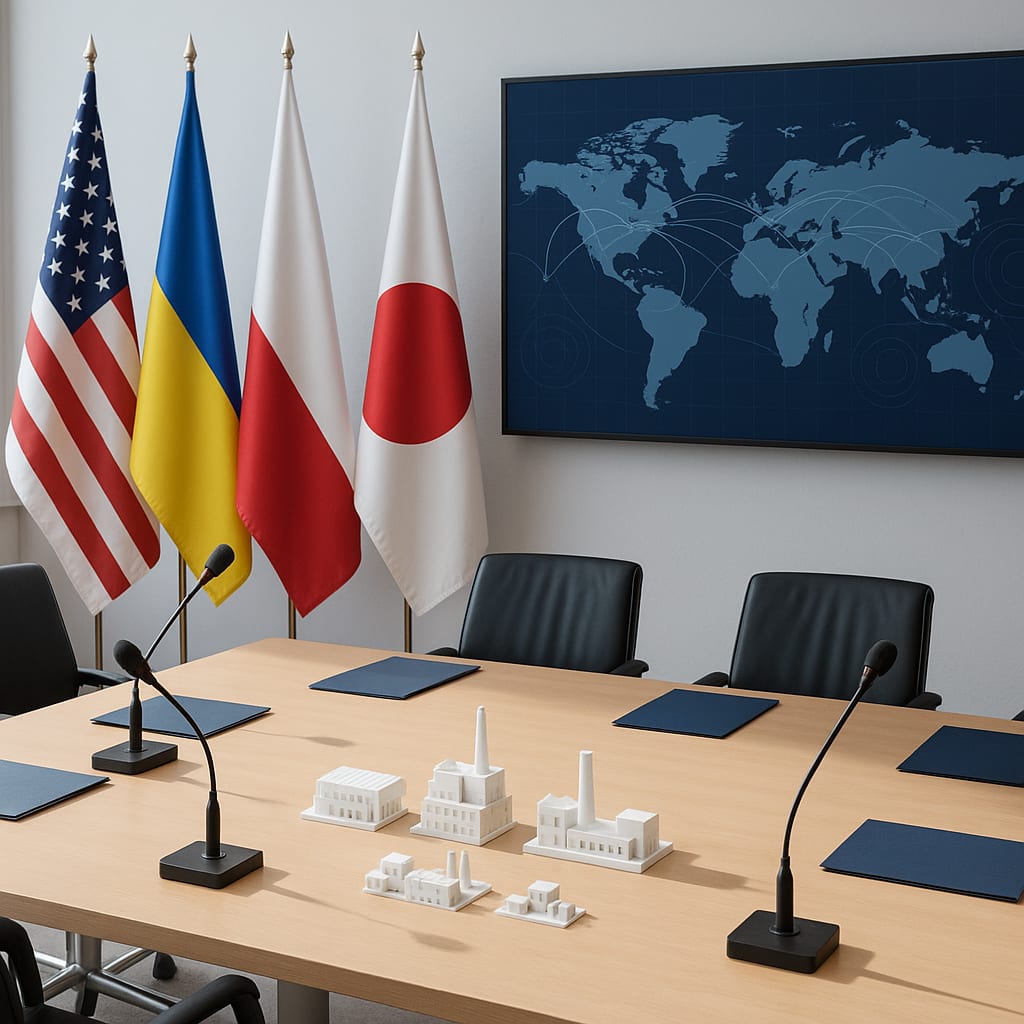
US signals license for Ukraine to produce Patriot air defenses as allies weigh long-term support
Narrative Snapshot
Across Western outlets, the license is treated primarily as a long-horizon industrial decision with immediate battlefield limits. France24, Deutsche Welle, the Toronto Star/AP, and the Japan Times converge on the view that domestic production would strengthen Ukraine’s air defense resilience but not quickly, given the time needed to build lines, train workforces, and secure inputs. Le Monde underscores that technical agreements still have to be concluded, indicating the policy remains contingent on implementation details.
Coverage from Russia-affiliated outlets spotlights futility and threat perceptions. TASS situates the move within a pattern of US arming of Kyiv, while RT calls the license a “cruel gift,” arguing that technological and security hurdles make production “nearly impossible.” Meanwhile, reporting from the Kyiv Independent highlights allies’ near-term stopgap approach: Poland’s defense minister defended sending Patriot missiles now to intercept threats over Ukraine rather than risk them reaching Polish territory.
Several reports emphasize cross-alliance industrial dynamics. The Japan Times notes Kyiv’s interest in Mitsubishi Heavy Industries, one of the few companies licensed to manufacture Patriot systems, signaling potential Asian-European-US supply-chain linkages if legal and technical arrangements advance.
What Happened
At the NATO summit, US President Donald Trump publicly signaled support for granting Ukraine a license to produce Patriot air defenses and said Washington would “show” Kyiv how to make them, speaking alongside President Volodymyr Zelenskyy. NATO members also pledged 70 billion euros in support for Ukraine during the meeting. Russian officials responded that they are fully aware the United States is actively supplying weapons to Kyiv, referencing Trump’s announcement on the license transfer. French reporting specified that further technical agreements are still required for the production of Patriot missiles, while multiple Western outlets stressed that domestic manufacturing would take years due to the need for facilities, trained personnel, and secure supply chains. In parallel, immediate air-defense gaps remain salient: Poland’s defense minister defended sending Patriot missiles to Ukraine now. Japan-focused coverage reported that Kyiv is exploring cooperation with Mitsubishi Heavy Industries, a licensed Patriot producer.
Why It Matters
A US license for Ukrainian Patriot production would shift Kyiv’s air-defense posture from near-total reliance on foreign deliveries toward co-production and eventual domestic sustainment. Western reporting frames this as a structural move to embed Ukraine within allied defense-industrial networks, dovetailing with NATO’s new multibillion-euro commitment and efforts to scale European and partner production. It also tests how quickly complex, export-controlled technologies can be localized under wartime conditions, with implementation hinging on technical arrangements, partner participation, and protected supply lines. Russian state media positions the step as a continuation of US arming, signaling Moscow’s expectation of prolonged Western support to Ukraine. For decision-makers, the trade-off is immediate readiness versus long-term capacity: allies weigh transfers of existing interceptors and launchers now, while standing up production that could reduce future bottlenecks. The reported outreach to Japan’s Mitsubishi suggests a broader, multi-regional industrial alignment if legal and political conditions permit.
Diverging Narratives
Outlets differ on scope and feasibility. Several describe the license in terms of producing Patriot missiles or interceptors, emphasizing that technical agreements remain to be finalized before manufacturing can proceed. Others frame it as enabling production of full Patriot systems. Western and Ukrainian-adjacent coverage tends to view the decision as strategically significant but slow-burning. France24, DW, the Toronto Star/AP, and the Japan Times stress multi-year timelines for plant construction, workforce development, and contractor organization, cautioning that it will not address Ukraine’s immediate air-defense needs.
Russian outlets stress risk and impracticality. TASS folds the license into a narrative of ongoing US military support, and RT labels it a “cruel gift,” contending that wartime technological and security constraints could make production unworkable. Meanwhile, the Kyiv Independent highlights an opposing emphasis among some NATO members on near-term interception capability, quoting Poland’s defense minister in support of sending Patriot missiles now. Le Monde adds a procedural note often absent from more political framing: key technical arrangements are still outstanding, leaving material questions unresolved even as leaders signal intent.
What Happens Next
Key inflection points will center on formalization and implementation. One is whether and when Washington issues the concrete licensing instruments and associated technical-transfer arrangements; Le Monde’s reporting that technical accords are still needed indicates that documentation, scope, and compliance parameters remain open. A second is partner selection and industrial routing. The Japan Times reports Kyiv’s interest in Mitsubishi Heavy Industries, so announcements from Tokyo or the company would clarify whether a Japan-linked supply chain can be mobilized.
A third concerns bridging the timeline gap. The Kyiv Independent’s coverage of Poland’s stance illustrates immediate transfers as an interim measure; additional allied decisions on sending batteries or missiles would signal how NATO members intend to cover Ukraine’s air-defense needs while production ramps. Finally, financing and protective logistics will be decisive. The NATO pledge provides macro backing, but Western reporting underscores that secure inputs, trained labor, and protected facilities must materialize before any domestic output can affect the battlefield.