
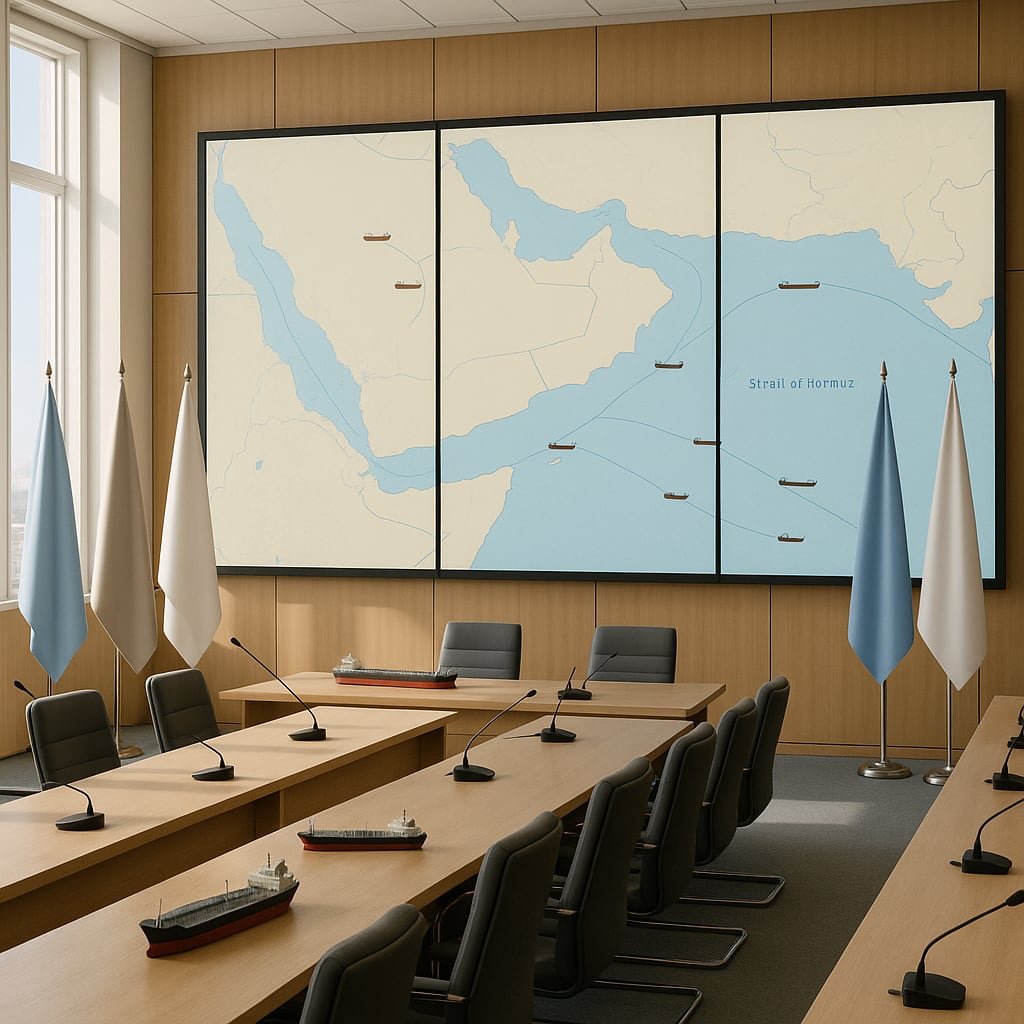
Houthis strike Saudi oil sites and declare Red Sea blockade as Bab el-Mandeb becomes a second oil chokepoint under pressure
Narrative Snapshot
Across outlets, there is broad agreement that an Iran-aligned Houthi campaign is testing Saudi Arabia and the security of the Red Sea corridor at a moment when the parallel U.S.–Iran confrontation has already put the Strait of Hormuz under strain. Reporting converges on two levers of pressure: a maritime “embargo” focused on Bab el-Mandeb and stepped-up strikes on Saudi oil infrastructure, including facilities at Jizan and Yanbu, a port critical to Saudi exports (La Repubblica; France24; Middle East Eye; Japan Times). Several sources emphasize the Houthis’ effort to transpose Iran’s Hormuz playbook to the Red Sea, a framing advanced by Yemen’s internationally recognized government in Riyadh and echoed by regional and international media (Al Jazeera; Japan Times; Middle East Eye).
Coverage diverges most on the operational impact in the lane itself. The New York Times mapped dozens of ships still transiting despite uncertainty, portraying disruption as uneven and fluid, while TASS cited a newspaper report of a 56 percent decline in Bab el-Mandeb bulk traffic over six days, suggesting sharper near-term effects (New York Times, 25 July; TASS). A parallel split is evident in strategic emphasis: the New York Times centers Saudi reluctance to enter another war and the Houthis’ bid to force political concessions in Yemen, whereas Middle East Eye ties Houthi leverage more directly to the U.S. war on Iran and the prospect of a second chokepoint at risk (New York Times, 27 July; Middle East Eye, 27 July). Economic stakes are drawn out most explicitly by South China Morning Post and The Hindu, which link the Red Sea escalation to oil price surges and costly detours affecting dependent Asian economies and global freight (SCMP; The Hindu).
What Happened
The Houthis announced a maritime ban on Saudi shipping on 21 July, framing it as “blockade for blockade,” with immediate effect but without specifying enforcement modalities (CGTN, 21 July). In parallel, the group expanded attacks on Saudi targets, including missile and drone strikes on oil facilities in Jizan and the Yanbu complex, a key export hub (La Repubblica; France24). Two Saudi oil tankers were struck in the Red Sea, intensifying fears of a second energy chokepoint under threat as the U.S.–Iran conflict escalated (SCMP, 23 July). Traffic continued through the Red Sea with scattered disruption, though a Russian report cited a steep short-term drop in Bab el-Mandeb bulk transits (New York Times, 25 July; TASS). Yemen’s internationally recognized government said it was ready for Houthi escalation and warned the group aims to replicate Iran’s Hormuz control model, arguing international complacency had emboldened them (France24; Al Jazeera; Japan Times). Washington signaled a hard line: President Donald Trump vowed to “take care of” any blockade and promised “major military punishment” for Iran and the Houthis amid ongoing U.S. strikes against Iran (Fox News; SCMP; Middle East Eye, 22 July; CGTN, 24 July).
Why It Matters
The confrontation elevates Bab el-Mandeb—from the Suez link to Asia and Europe—into a concurrent pressure point with Hormuz, stressing the resilience of global supply chains and the norm of freedom of navigation. Even limited disruption forces detours around Africa, raises freight rates, and adds time and cost to energy and container flows, compounding volatility as Brent crude climbed above $100 amid fears of widening disruption (The Hindu; SCMP, 23 July). Strategically, the episode spotlights how non-state actors tied to state patrons can project outsized influence by exploiting maritime chokepoints, challenging U.S. and partner capacity to manage simultaneous crises across two straits (Middle East Eye; CGTN, 24 July). For policymakers, the stakes cross regions: Southeast Asian energy security buffers look thin; African littoral interests are engaged as the African Union condemned Houthi attacks on tankers; and Saudi calculations about war re-entry intersect with U.S.–Iran escalation dynamics and Yemeni political endgames (SCMP, 24 July; CGTN, 24 July; New York Times, 27 July).
Diverging Narratives
Accounts differ on the extent and immediacy of the blockade’s bite. The New York Times depicts ongoing traffic with localized disruptions and growing uncertainty, while TASS cites a sharp week-on-week fall in bulk ship transits through Bab el-Mandeb, implying stronger enforcement effects (New York Times, 25 July; TASS). On strategic intent, the New York Times frames the Houthi campaign as seizing a vulnerable moment to extract Yemeni political concessions from a Saudi leadership reluctant to resume full-scale war, whereas Middle East Eye interprets it as leverage amplified by the U.S.–Iran war and the threat of a second chokepoint under duress (New York Times, 27 July; Middle East Eye, 27 July). Yemen’s foreign minister designates the move as an explicit attempt to mirror Iran’s pressure model at Hormuz and blames an “insufficiently serious” international response for emboldening the group, a position carried by Al Jazeera and Japan Times (Al Jazeera; Japan Times). U.S. posture is described in sharper terms by Fox News and SCMP—public threats of “major military punishment” and linkage to oil price spikes—while CGTN and Middle East Eye emphasize a sustained U.S. operational campaign against Iran that forms the conflict’s backdrop (Fox News; SCMP, 23 July; CGTN, 24 July; Middle East Eye, 22 July).
What Happens Next
Three decision points emerge from reported positions. First, Riyadh’s choice set: the New York Times reports Saudi reluctance to reenter a large-scale war even as the Houthis aim to force concessions; France24 notes Yemen’s internationally recognized government says it is ready for escalation. Analysts should watch for signs of Saudi military expansion around Jizan–Yanbu or renewed talks on Yemeni political terms (New York Times, 27 July; France24). Second, Washington’s response: President Trump warned he would “take care of” a blockade and vowed major punishment for Iran and the Houthis amid ongoing strikes on Iran; any shift from Hormuz-focused operations to overt Red Sea security measures would be a key indicator (Fox News; SCMP, 23 July; CGTN, 24 July). Third, maritime risk signals: traffic volumes and patterns through Bab el-Mandeb, insurance and rerouting behavior, and the Houthis’ enforcement—through further attacks on tankers or port infrastructure—will determine if disruption remains scattered or hardens into sustained constraints (New York Times, 25 July; TASS; The Hindu; SCMP, 23 July).