
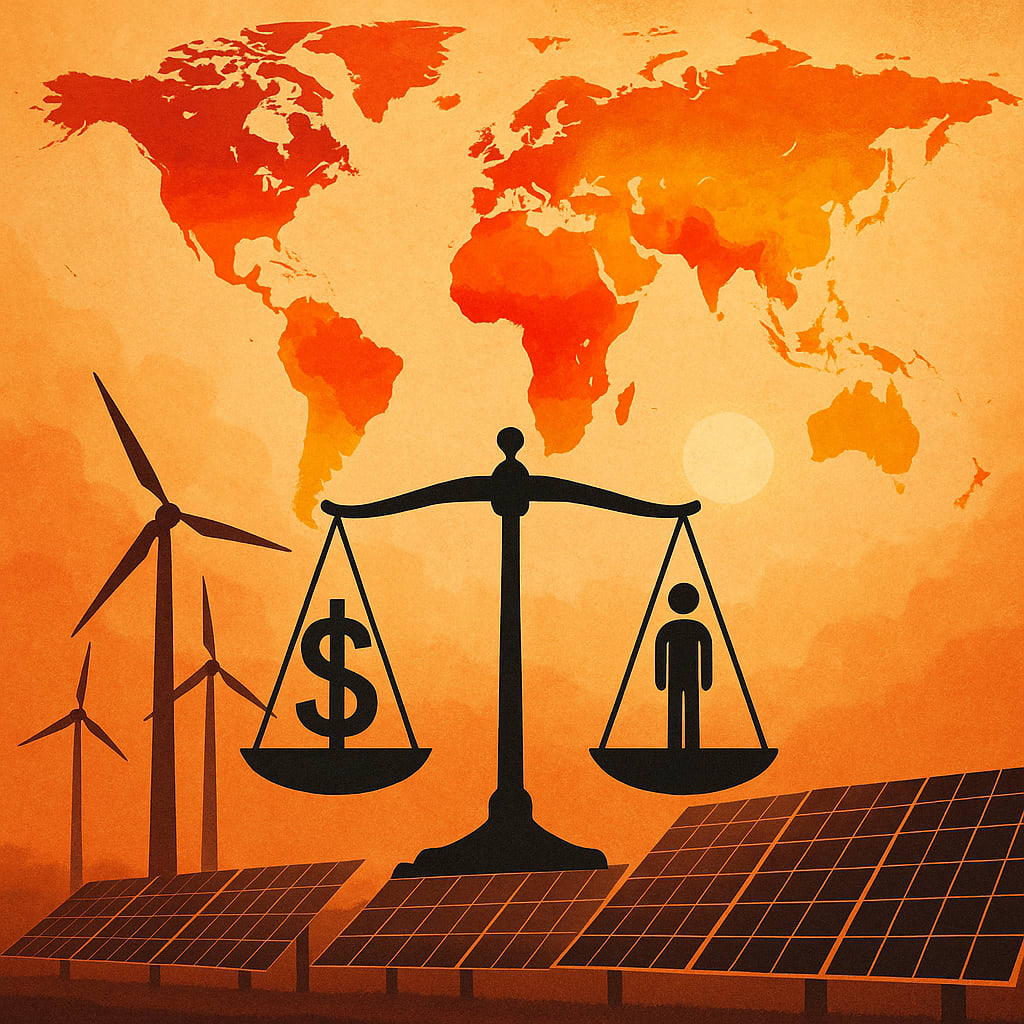
Rising Global Temperatures Threaten Increased Inequalities and Economic Impact
Rising global temperatures, predicted to hit record highs in the coming years, are posing a significant threat to countries worldwide, potentially exacerbating existing socioeconomic inequalities and hampering economic productivity. A major report warns that the United Kingdom is built for a climate that no longer exists, with temperatures already 1.4C above the historic norm and heading towards a 2C rise in the next two decades. Meanwhile, India is grappling with extreme heat, exposing the vulnerability of its populous city, and Bangladesh's energy restrictions are posing heat risks to garment workers.
Unprecedented Heat Across the Globe
Western Europe is preparing for the first significant heat event of the summer, with temperatures forecast to rise to more than 10C above the norm. Particularly, UK temperatures are expected to exceed 40C by 2050, according to the report by the Climate Change Committee (CCC). Such conditions are driving an increase in air conditioning ownership, with an estimated 4 million homes in the UK now equipped, doubling the figure from three years ago.
In India's capital, Delhi, extreme heat has once again exposed the city's vulnerability where millions rely on the street for work and transportation. The city has been experiencing scorching days since April, with temperatures reaching an overwhelming 43 °C.
Climate Change and Inequality
The government must act to redress the unequal impact of climate change, warns The Guardian, or risk rising temperatures making disparities worse. Particularly, the CCC report recommends air conditioning be installed in all care homes, hospitals, and schools within the next 10 to 25 years.
However, high power costs in India's parched heart put cooling out of reach for many, forcing them to keep their consumption to a bare minimum. Bangladesh's energy restrictions, caused by the Middle East war, have resulted in factories turning off cooling, leading to a likely drop in productivity costing billions of dollars.
Renewables Rollout and Global Warming
Despite the dire scenarios, there is some optimism as the rapid rollout of renewable energy is helping to shift emissions trends. However, the UN is moving to tighten countries' commitments as expected temperature rises remain high. The warning that concerns scientists is that Earth may no longer be able to regenerate what humanity consumes, according to an investigation analyzing population, consumption, and natural resources.
Conclusion
The current climate scenario brings to the fore the urgent need for adaptation and mitigation strategies. As the UK is urged to think like a hot country, India is already implementing innovative methods like zonas de enfriamiento
or cooling zones to cope with the heatwave. Yet, as Deutsche Welle reports, while the worst-case climate scenario may be off the table, global warming is not, emphasizing the ongoing challenge of rising global temperatures. Consequently, the balance between consumption and regeneration remains a critical concern for the global community.