
Andy Burnham takes office as UK prime minister with a crowded reform agenda and contested foreign‑policy signals
Narrative Snapshot
Across international outlets, there is broad alignment that Burnham inherits a heavy domestic docket and limited fiscal room, with coverage converging on the same pressure points: tepid growth, high borrowing costs, the small-boats issue, housing, and social care. France24 highlights his vows to boost public housing and resource social care, while Folha de S.Paulo stresses the chronic nature of the UK’s growth problem that eluded successive leaders. The Guardian anchors early cost-of-living moves in concrete energy-market levers, and Bangkok Post and the Toronto Star/AP frame the scale of the in-tray and the churn that made him the seventh UK leader in a decade.
A second throughline is institutional design. The Japan Times casts Burnham’s bet on remaking Britain’s centralized state as the core wager of his premiership. In parallel, The Guardian reports he has asked officials to draw up plans to abolish the Department for Science, Innovation and Technology, triggering warnings from MPs, officials, and tech experts about risks to AI leadership and growth if Whitehall is disrupted at this juncture.
Foreign policy and international positioning receive contrasting emphasis. Deutsche Welle examines how a Manchester-rooted leader steps onto the global stage. Middle East Eye assembles a focused critique of Burnham’s stance on Gaza—portraying his mea culpa as tonal, not substantive—alongside pressure for sanctions on Israel and for UK action on settlement-linked trade after Ireland’s partial move. La Repubblica’s interview with a northern MP close to Burnham signals hopes of re-engaging the EU single market, while Fox News foregrounds Burnham’s record as a Trump critic, shaping how some US coverage reads his arrival.
What Happened
Andy Burnham was confirmed as Labour leader on Friday and is due to be appointed UK prime minister on Monday, 20 July, after securing 322 nominations from Labour’s 403 MPs, far exceeding the threshold, according to Fox News and the New York Times. France24, Bangkok Post, and the Toronto Star/AP outline the immediate challenges: a weak economy, elevated borrowing costs, irregular Channel crossings, and domestic pledges on housing and social care. The Guardian reports he is considering overhauling gas standing charges to cut typical household energy bills by about £130 a year and make heat pumps cheaper to run than gas boilers, with a cost-of-living package expected early. The Guardian separately reports he has asked officials to plan the abolition of the Department for Science, Innovation and Technology as part of a Whitehall shake-up, drawing backlash. The Japan Times frames his central bet as remaking Britain’s highly centralized state. Middle East Eye reports he offered a mea culpa on Labour’s Gaza stance but argues this reflects a change in tone rather than policy.
Why It Matters
A leadership change amid serial turnover—Bangkok Post notes Burnham will be the seventh UK leader in a decade—tests institutional capacity to execute multi-year reforms. The devolution agenda described by the Japan Times would recalibrate UK governance and fiscal authority, affecting how public investment, industrial strategy, and regional productivity are coordinated. The Guardian’s reporting on energy-price reforms intersects directly with heat decarbonization, retail market design, and household incentives—decisions with path-dependent implications for net zero and consumer welfare. Plans to dismantle the science and technology department, if pursued, would reshape the state’s interface with AI and innovation policy at a time The Guardian notes industry fears of lost momentum. Internationally, Deutsche Welle’s focus on the UK’s role abroad, alongside Middle East Eye’s Gaza-centered scrutiny and calls for sanctions or settlement-trade restrictions, signals that early foreign-policy choices will reverberate across transatlantic ties, EU relations, and Middle East diplomacy.
Diverging Narratives
On Gaza, Middle East Eye presents a concentrated critique: Burnham’s mea culpa is described as rhetorical rather than substantive, with adjacent reporting highlighting UK politicians urging sanctions on Israel and advocacy to go beyond Ireland’s partial ban on settlement-linked trade. Other international outlets devote less space to this file, prioritizing domestic economy and governance, creating an emphasis gap rather than a resolved disagreement on substance.
Institutional reform is cast two ways. The Japan Times interprets devolution as Burnham’s strategic fulcrum, while The Guardian’s account of plans to abolish the technology department spotlights opposition from MPs, officials, and tech experts who warn that reorganization could “waste time” during a critical AI and growth window. The tension is between statecraft-by-redesign and policy-delivery risk in a constrained fiscal context noted by France24 and Folha de S.Paulo.
On Europe, La Repubblica’s interview with Karl Turner, a northern Labour MP, expresses the view that Brexit cost roughly 7% of GDP and the expectation that a Burnham government could return to the EU single market. No other source reports such a policy position, underscoring uncertainty about the scope of any EU re-engagement. Meanwhile, Fox News frames Burnham through a US lens—as a critic of President Donald Trump—signaling that transatlantic dynamics will be read, in some quarters, through personal and partisan prisms rather than institutional continuity.
What Happens Next
Whether Burnham proceeds with abolishing the Department for Science, Innovation and Technology is a near-term hinge. The Guardian reports he has commissioned plans; sustained sectoral backlash could force modification or sequencing, while proceeding would signal commitment to a wider Whitehall redesign.
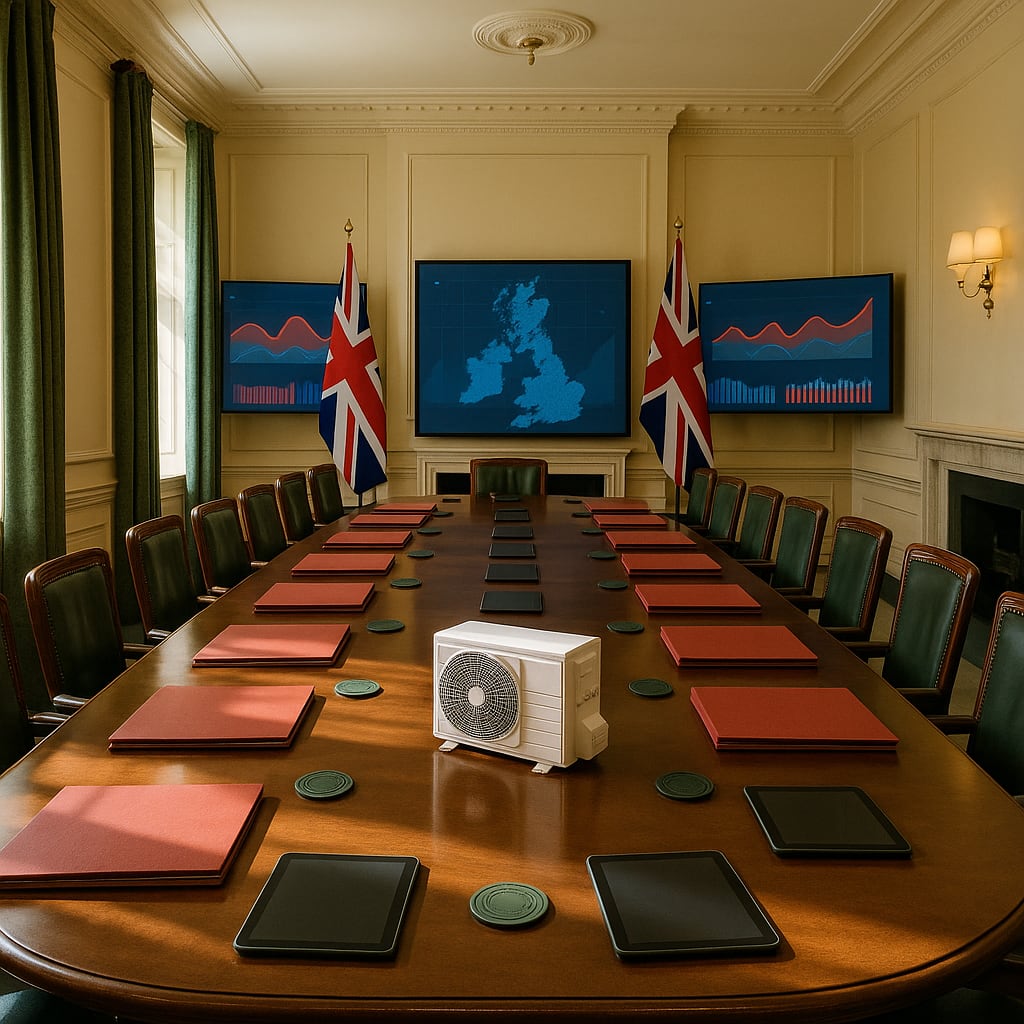
The energy-cost package flagged by The Guardian is another early marker. A decision to overhaul gas standing charges and tilt running costs toward heat pumps would indicate willingness to use market design for decarbonization and relief; a narrower package would reflect fiscal caution and regulatory pragmatism.
Devolution, as profiled by the Japan Times, will require legislative and fiscal detail. Concrete proposals on powers, funding, and accountability will reveal whether the reform is systemic or incremental.
Foreign policy signals will be closely parsed. Middle East Eye highlights pressure for sanctions or settlement-trade measures; movement here would denote a substantive reset, while continuity would confirm a limited tonal shift. On Europe, La Repubblica’s allied-MP signaling puts a spotlight on any language about the single market or regulatory alignment. In Washington, Fox News’s emphasis on Burnham’s past criticism of Trump suggests early engagement will be watched for tone and access, as Deutsche Welle’s lens on the UK’s global role widens the frame beyond domestic reform.