
Twin earthquakes devastate northern Venezuela as international aid mobilizes and casualty estimates escalate
Narrative Snapshot
- Most outlets converge on the severity and concentration of destruction along the northern coast—especially La Guaira—while emphasizing the narrowing 72-hour rescue window even as late rescues occur (Al Jazeera English, The Guardian, Fox News, ANSA, Corriere della Sera).
- Casualty reporting diverges: several sources cite 1,430–1,450 confirmed dead with tens of thousands missing (Le Monde, The Guardian, Deutsche Welle, The Hindu), while others carry higher projections or evolving tallies (RT, TASS). Missing-person estimates range widely—from roughly 51,000 to nearly 69,000—amid parallel registries (Al Jazeera English, The Hindu, South China Morning Post).
- Coverage splits on political framing: multiple outlets refer to Delcy Rodríguez as acting or interim leader (South China Morning Post, Japan Times, The Guardian live), while Russian state media continue to highlight Nicolás Maduro’s statements (TASS).
- International response is broadly noted, but emphasis varies: some foreground rapid U.S. military-enabled relief and airport access (Le Monde, South China Morning Post, Fox News), while others stress citizen-led rescues, reported delays, and capacity gaps in the state response (Le Monde, The Times of Israel, ANSA, Al Jazeera English, New York Times).
What Happened
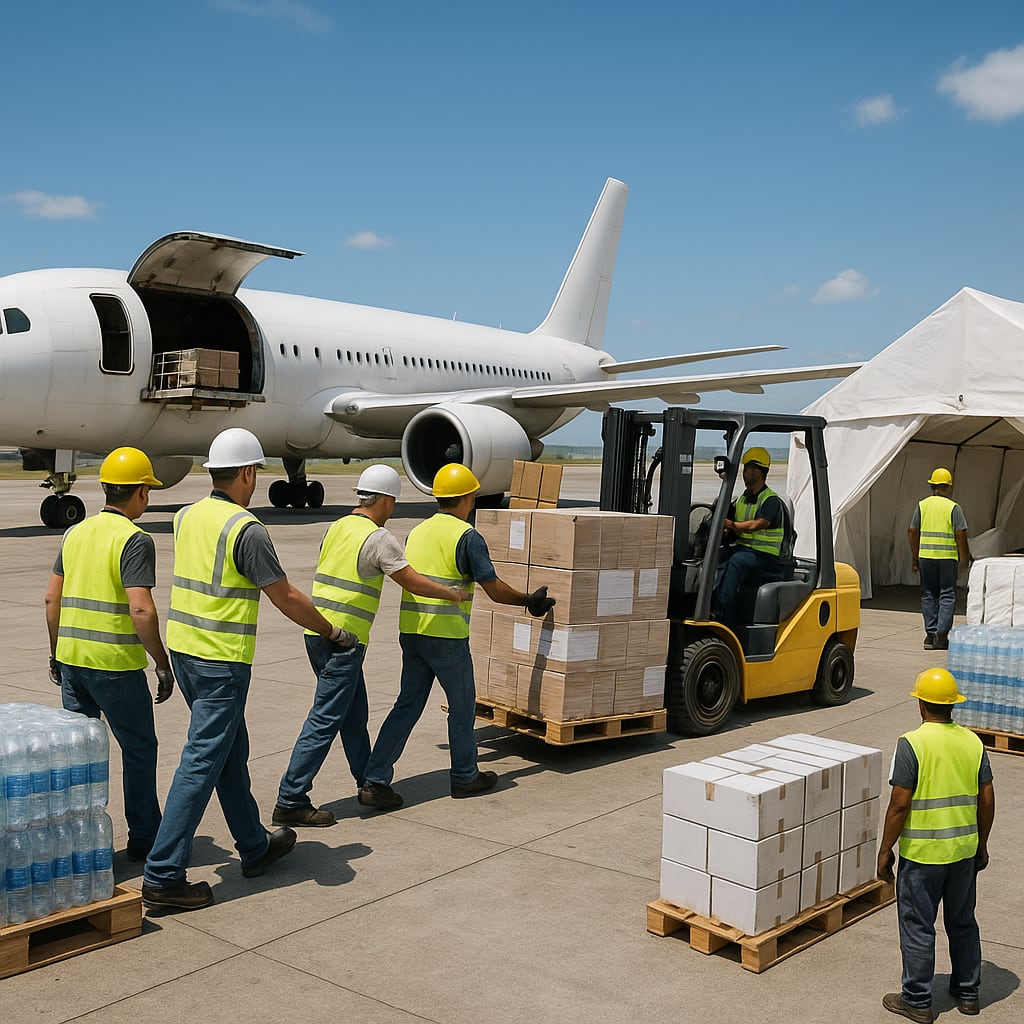
Two powerful earthquakes, magnitude 7.2 and 7.5 and roughly 39–40 seconds apart, struck northern Venezuela on June 24, toppling buildings across coastal La Guaira and affecting Caracas (South China Morning Post; TASS; The Guardian). Authorities and media report at least 1,430–1,450 fatalities, more than 3,000 injured, and tens of thousands missing, with UN estimates that nearly seven million people may be impacted (Le Monde; The Guardian; Deutsche Welle; The Hindu). Hundreds of aftershocks—including a 4.9 tremor—complicate search-and-rescue (Fox News; ANSA). International teams from at least 17 countries mobilized, with 1,600 foreign rescuers reported by Venezuelan authorities (South China Morning Post; Folha de S.Paulo). A partially reopened runway at Caracas’s airport is receiving U.S. C‑17 flights; India dispatched C‑17s and a field hospital; Canadian and Iranian teams also moved to assist (Le Monde; South China Morning Post; The Hindu; CBC News; IRNA). Citizen volunteers and medical teams continue operations amid reported resource constraints (New York Times; Le Monde).
Why It Matters
- Regional and extra-regional crisis response: Rapid deployments from countries that had previously cut ties with Caracas and the visible U.S. military-enabled air bridge and naval support re-open channels for operational cooperation, potentially resetting aspects of Venezuela’s external relationships (South China Morning Post; Le Monde; Fox News).
- Governance and legitimacy under stress: Conflicting leadership references (Delcy Rodríguez vs. Maduro) and parallel information systems for the missing underscore an unsettled political environment that can impede unified command-and-control and public trust in casualty accounting (South China Morning Post; Japan Times; TASS; South China Morning Post).
- Institutional capacity and norms: Accounts of citizen-led rescues and reported delays outside the capital point to structural gaps in national disaster management; UN-coordinated multinational teams and self-sustaining foreign military assets are filling critical functions, with implications for long-term reliance and coordination protocols (The Times of Israel; ANSA; Deutsche Welle; Fox News).
- Humanitarian scale: With millions potentially affected, immediate WASH, shelter, and medical needs risk outstripping national capacity, shaping priorities for multilateral funding, logistics corridors, and medium-term housing strategies (Deutsche Welle; BBC News).
Diverging Narratives
- Casualty and missing counts: Some outlets cite official tallies around 1,430–1,450 dead and approximately 3,000+ injured (Le Monde; The Guardian; Fox News), while others report higher missing estimates—51,000 to nearly 69,000—and warn of a rising death toll as time elapses (Al Jazeera English; The Hindu; RT). A Russian outlet quotes a journalist projecting deaths could reach the tens of thousands, exceeding official figures (TASS).
- Political leadership and messaging: Asian and Western outlets repeatedly refer to Delcy Rodríguez as acting/interim leader announcing figures and thanking foreign partners (South China Morning Post; Japan Times; The Guardian live), whereas Russian state media amplify Nicolás Maduro’s addresses and biblical quotations, without adopting the “interim” framing (TASS).
- State capacity vs. international lift: U.S. and allied sources highlight rapid, self-sustaining foreign deployments, naval assets, and runway access (Fox News; Le Monde; South China Morning Post). Other reporting emphasizes volunteer-led efforts, alleged delays, and limited state presence outside Caracas (Le Monde; The Times of Israel; ANSA; Al Jazeera English).
- Rescue trajectory: While several reports stress the closing “golden window” for survivals, others document late live extractions, sustaining public expectations even as official messaging tempers hopes (Al Jazeera English; ANSA; Fox News; Corriere della Sera).
What Happens Next
- Access corridors and logistics: Whether authorities expand the partially reopened Caracas airport to full capacity or add seaports/airstrips will determine relief throughput. Indicators: additional C‑17 rotations, naval ship tasking, and UN tasking of international USAR rotations (Le Monde; South China Morning Post; Fox News).
- Command and information coherence: Convergence—or not—between official casualty figures and parallel missing-persons platforms will signal coordination maturity. Watch for unified registries or joint state–opposition reporting (South China Morning Post).
- Scope of external military support: SOUTHCOM says operations are self-sustaining and ongoing; decisions on duration and footprint will shape civil–military coordination and political optics. Indicators: new SOUTHCOM releases, Venezuelan requests/acceptances, and arrival of additional foreign teams (Fox News; Folha de S.Paulo).
- Transition to recovery: Movement from rescue to mass shelter and WASH scale-up depends on aftershock trends and structural assessments. Signals include expanded sheltering (e.g., stadium facilities), published displacement figures, and international appeals (BBC News; ANSA; Deutsche Welle).
- Diplomatic recalibration: Continued assistance from states that recently cut ties and new bilateral missions (e.g., Argentina) could extend beyond the emergency phase. Indicators: formal MOUs on aid, high-level acknowledgments, and follow-on humanitarian financing (South China Morning Post; Clarín).