
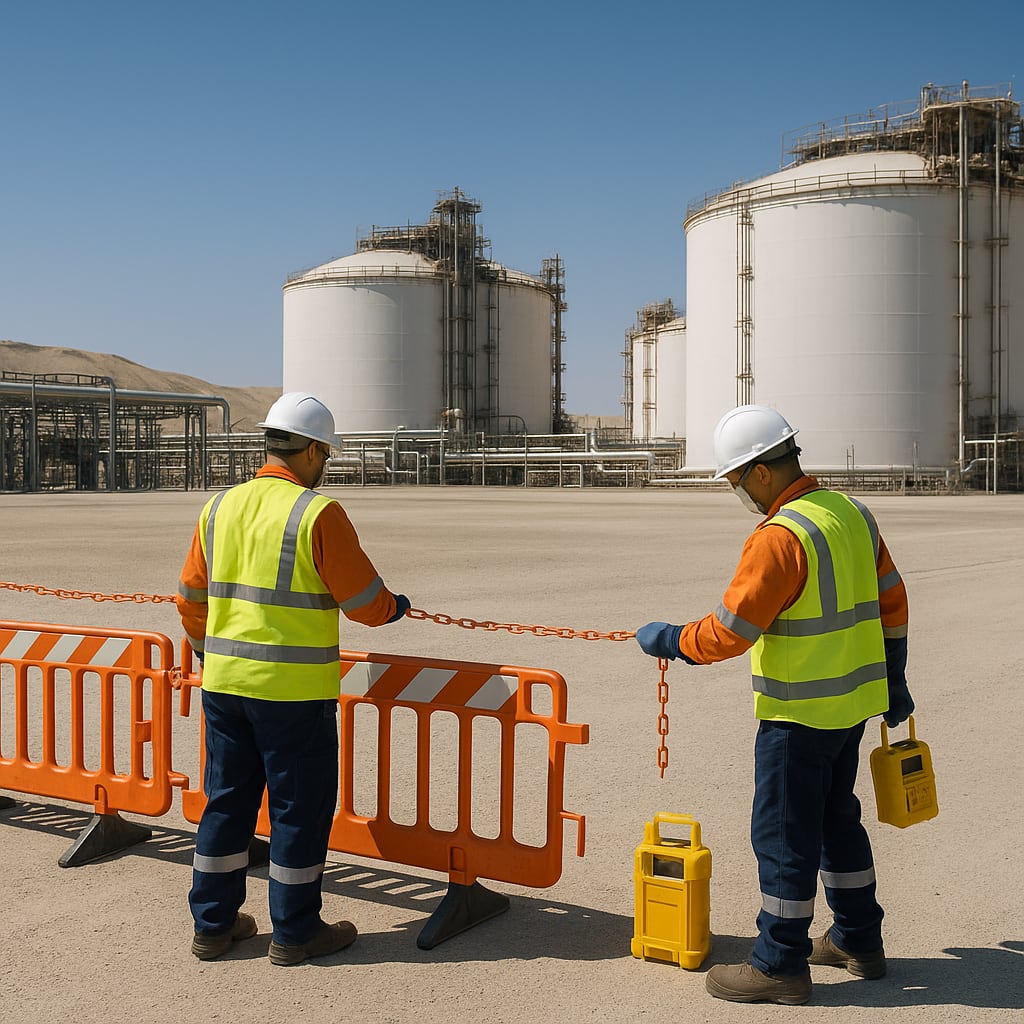
Deadly explosion at Qatar’s Ras Laffan gas complex during restart; officials cite “technical malfunction”
Narrative Snapshot
- Broad agreement that authorities attributed the blast to a “technical malfunction/technical accident,” with early assurances of no hazardous leaks and no broader public threat (RT; TASS; BBC).
- Casualty reporting diverged over time: initial counts of 54 injured and 18 missing (Al Jazeera; Middle East Eye; The Hindu; Sky News; South China Morning Post) later shifted to at least 13 dead and dozens injured, including a 66-injured figure (BBC; TASS; Japan Times; Folha de S.Paulo).
- Several outlets foregrounded wartime damage and a restart context—linking the site to prior Iranian strikes—while others kept the frame technical and domestic (SCMP; Times of Israel; Sky News; Folha vs. RT; Al Jazeera).
- Economic stakes were emphasized unevenly: some warned of potential turbulence in global energy markets tied to Qatar’s LNG role (SCMP; Times of Israel), while others prioritized incident containment and safety messaging (RT; TASS).
What Happened
An explosion and fire struck Qatar’s Ras Laffan Industrial City on Sunday night, with the Interior Ministry describing an “internal explosion” caused by a technical incident and stating there was no threat to public safety; later updates noted injuries and no dangerous leaks (RT; TASS). Multiple outlets reported 54 injured and 18 missing (Al Jazeera; Middle East Eye; The Hindu; Sky News; SCMP). Subsequent tallies raised the severity to at least 13 dead and dozens injured, including 66 injured in one account (BBC; TASS; Japan Times; Folha). The incident occurred during efforts to restart production at Ras Laffan, with reporting tying the work to facilities previously bombed during the war and to earlier shutdowns linked to regional tensions (Times of Israel; SCMP; Sky News; Folha). One outlet specified the Barzan plant within the complex (The Hindu).
Why It Matters
Ras Laffan is Qatar’s main LNG processing hub, and Qatar is among the world’s top natural gas producers (SCMP). Outlets warned that a setback at this site could further shake global energy markets (SCMP; Times of Israel). The episode intersects with two structural pressures highlighted across coverage: the vulnerability of critical energy infrastructure to regional conflict—several outlets note prior Iranian strikes on the complex—and the operational risks of restarting damaged or idled facilities (SCMP; Times of Israel; Sky News; The Hindu; Folha). It also underscores how official safety assurances (“no hazardous leaks,” “no public threat”) can shape incident management and market signaling (RT; TASS). For decision-makers, the balance between rapid restoration of export capacity and demonstrable safety controls will be central to limiting supply uncertainty and avoiding secondary shocks to LNG trade flows referenced in the reporting (SCMP; Times of Israel).
Diverging Narratives
Coverage splits first on framing. Qatari authorities and some outlets emphasize a self-contained technical accident with prompt civil defense response and no hazardous leaks (RT; TASS; BBC), while others situate the blast within a restart of facilities previously struck during the war, explicitly referencing Iranian attacks (SCMP; Times of Israel; Sky News; Folha; The Hindu). Second, casualty data are unsettled: early figures cited 54 injured and 18 missing (Al Jazeera; Middle East Eye; The Hindu; Sky News; SCMP), while later reports put deaths at 13 with dozens injured—66 in one account (BBC; TASS; Japan Times; Folha). Third, the facility lens varies: some name the LNG export terminal broadly (SCMP; Times of Israel), one specifies the Barzan plant (The Hindu). Finally, risk emphasis differs: “no public threat”/“no leaks” messaging (RT; TASS) contrasts with warnings that the incident could jolt global energy markets (SCMP; Times of Israel). One outlet calls it among the deadliest industry accidents in over two decades, underscoring severity (Japan Times).
What Happens Next
- Cause determination and safety posture: Authorities have labeled it a technical malfunction; formal findings from the Interior Ministry or QatarEnergy (named as the source for the restart context) would clarify whether restart procedures or legacy war damage were factors (RT; Times of Israel). Watch for investigation results and any revised safety protocols.
- Operational status and market signaling: Clarity on damage extent and restart timelines will shape the energy-market impact some outlets flagged (SCMP; Times of Israel). Indicators include QatarEnergy updates on plant readiness and export scheduling, and whether “no hazardous leaks” remains the operative safety assessment (TASS; RT).
- Human toll reconciliation: Expect updated counts on fatalities, injuries, and the status of those initially reported missing (Al Jazeera; BBC; TASS).
- Regional security context: Given repeated references to prior Iranian strikes and chokepoint pressures on the Strait of Hormuz affecting Qatari production in earlier phases (SCMP; Sky News; Times of Israel; Folha), monitor official statements linking repairs, protection measures, or operational adjustments to those risks.