
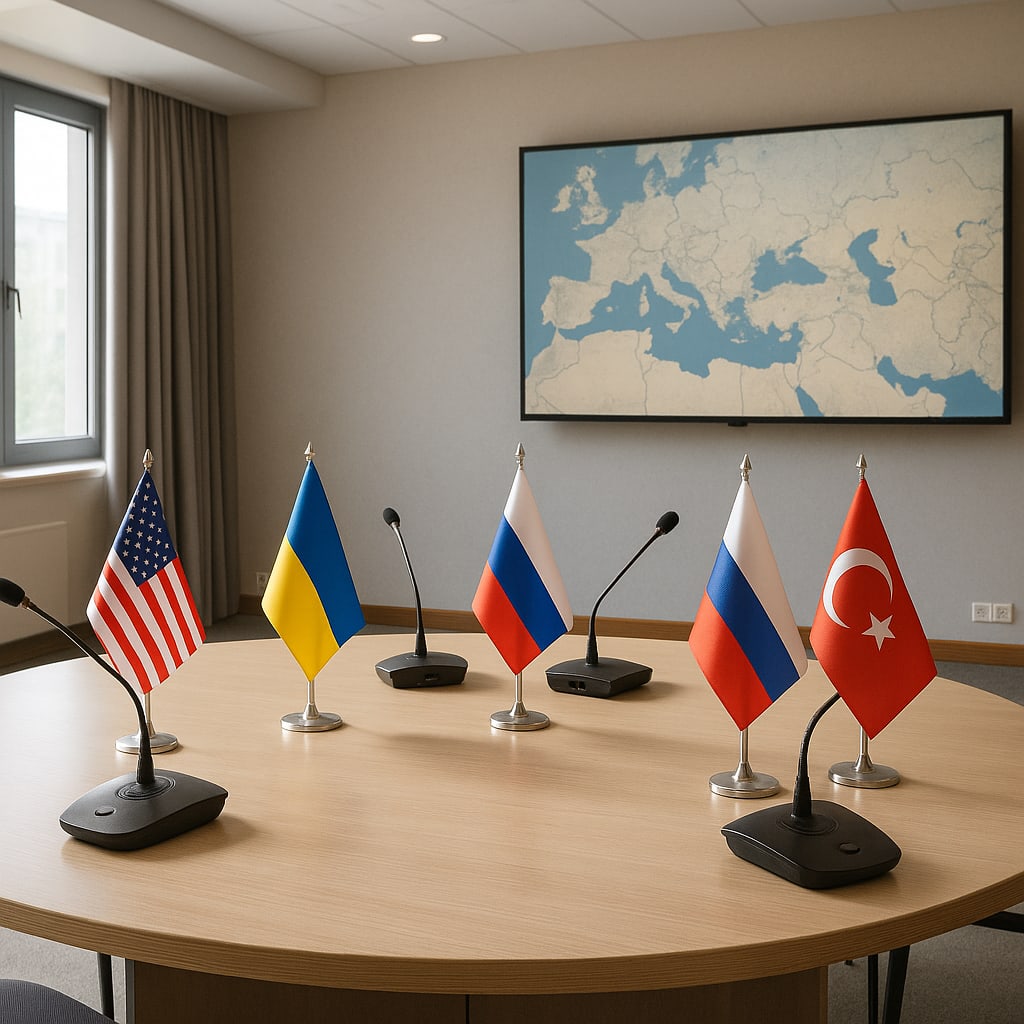
Trump offers to help end Ukraine war in call with Putin; will meet Zelensky at NATO summit, multiple outlets report
Narrative Snapshot
- Attribution and emphasis split along lines of sourcing: Kremlin accounts drive the claim that Trump offered to “help end” the war (Al Jazeera English, CBC, Corriere della Sera), while Western outlets foreground sequencing and process—meeting Zelensky first, then contacting Putin (Le Monde, TASS via Reuters, Kyiv Independent, SCMP).
- Ukrainian-focused outlets emphasize continuity of U.S. support and Kyiv’s agenda-setting with Washington (Kyiv Independent, July 4 and July 5 items), while Italian coverage highlights Moscow’s upbeat reading that Washington will not simply back Zelensky’s line (Corriere della Sera).
- Regional scope widens as the White House pairs the Ukraine track with a planned meeting with Syria’s President Ahmad al‑Sharaa amid U.S. pressure on Damascus over Hezbollah (SCMP; Al Jazeera English, July 2), signaling concurrent—if not linked—files.
What Happened
Kremlin aide Yury Ushakov said U.S. President Donald Trump, in a nearly 90‑minute call with Vladimir Putin, offered to help find a solution to Russia’s war against Ukraine (Al Jazeera English, CBC). The White House plans for Trump to meet Ukraine’s Volodymyr Zelensky on Wednesday on the sidelines of the NATO summit in Ankara (Le Monde; Kyiv Independent; SCMP), with spokeswoman Anna Kelly confirming the bilateral (SCMP). Multiple outlets report that Trump intends to contact Putin after the Zelensky meeting to discuss settlement issues (Le Monde; TASS citing Reuters). Kyiv said Zelensky and Trump had already spoken by phone on July 4 about the battlefield, diplomacy, and efforts to end the war, with Zelensky thanking Washington for continued support (Kyiv Independent). Le Monde’s live coverage also cites Zelensky warning that Russia is preparing a “new massive attack.”
Why It Matters
The diplomacy unfolds around a NATO summit, where alliance cohesion, Ukraine’s war aims, and members’ support signaling converge (Le Monde; Kyiv Independent; SCMP). Sequencing—meeting Zelensky before re-engaging Putin—structures any U.S. role in shaping parameters for talks or de-escalation (Le Monde; TASS). Moscow’s portrayal of Trump’s outreach as facilitative (Al Jazeera English; CBC) and its suggestion that Washington will not simply align with Kyiv (Corriere della Sera) illustrate the contest over narrative leverage before any process takes shape. The White House’s parallel engagement with Syria’s President Sharaa, as Washington presses Damascus over Hezbollah (SCMP; Al Jazeera English, July 2), situates Ukraine diplomacy within a wider regional agenda managed at the same summit venue. For NATO governments and partners, these moves test alliance messaging discipline, Ukraine’s bargaining space, and the degree to which U.S. convening power can translate summitry into actionable channels with Moscow.
Diverging Narratives
- The offer to “help end” the war is reported via the Kremlin’s account (Al Jazeera English; CBC), with Corriere della Sera underscoring Moscow’s satisfaction and reiteration of its conditions. By contrast, Kyiv-linked reporting stresses U.S. “continued support” and frames the Ankara meeting as part of a renewed effort to end the war without indicating any U.S. distancing from Ukraine’s position (Kyiv Independent, July 4 and 5).
- Process coverage differs: European outlets highlight choreography—Zelensky first, then Putin contact (Le Monde; TASS via Reuters)—while North American pieces focus on the length and content of the Trump‑Putin call and the fact of outreach to both leaders (Al Jazeera English; CBC).
- Substantive parameters remain opaque. Corriere notes Moscow “repeats its red lines,” but no outlet details agreed modalities or preconditions for talks. Le Monde’s note on an anticipated “massive attack” by Russia injects urgency but not clarity on whether escalatory dynamics will constrain or catalyze diplomacy.
- The SCMP foregrounds the Syria meeting alongside Ukraine, while Al Jazeera (July 2) details U.S. pressure on Damascus over Hezbollah. This widens the frame but does not establish linkage; it does, however, raise practical questions about agenda bandwidth during the Ankara summit.
What Happens Next
- Ankara sequencing: Outcomes of the Trump‑Zelensky meeting will signal U.S. priorities—look for joint readouts on conditions for negotiations, security assistance, or ceasefire parameters (Le Monde; Kyiv Independent; SCMP). References to “settlement” mechanics would indicate movement toward a channel.
- U.S.–Russia contact: Whether Trump’s post‑Zelensky engagement with Putin is a call or in-person sidebar, watch for convergent or divergent readouts on aims (“settlement,” “de-escalation,” or maximalist conditions) (Le Monde; TASS).
- Battlefield–diplomacy interplay: Indicators of the “new massive attack” warned by Zelensky (Le Monde) could harden positions or accelerate calls for pauses; shifts here will shape any near-term diplomatic space.
- Regional overlay: Statements from Trump’s meeting with Syria’s Sharaa, relative to U.S. demands on Hezbollah (SCMP; Al Jazeera English, July 2), will test whether Washington compartmentalizes tracks or lets concurrent files shape summit messaging.