
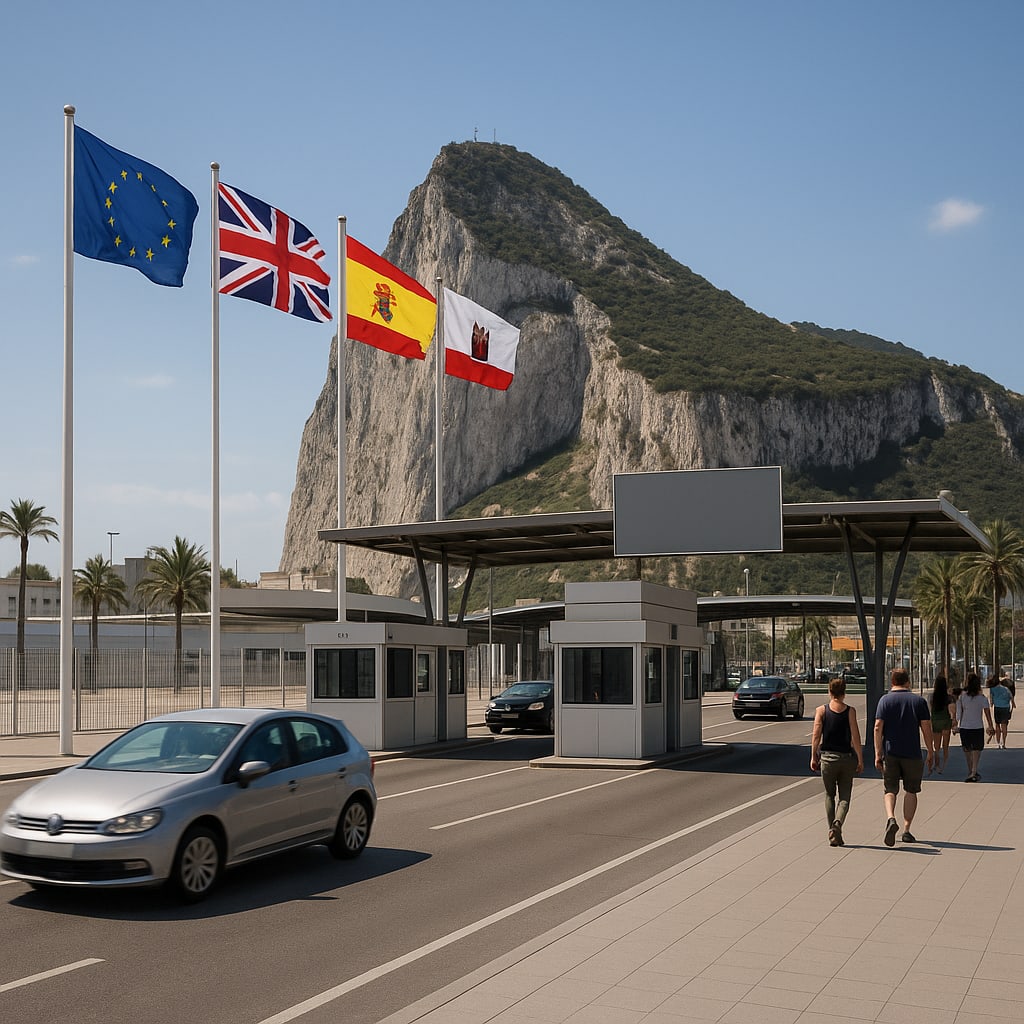
Spain and Gibraltar lift border checks under an EU–UK treaty, removing the border fence
Narrative Snapshot
Across outlets, the dominant through line is the unprecedented nature of the change and its immediate practical effects. European and international wires stress the end of a long‑standing physical frontier and routine checks, with ANSA and La Repubblica calling it the fall of the “last wall” of Western Europe and Deutsche Welle noting the chain‑link fence was physically taken down. Coverage converges on the expectation of smoother daily mobility and trade, with the BBC and Bangkok Post emphasizing the hoped‑for economic and social relief after years of frustration, and the Toronto Star highlighting the impact on the thousands who cross daily.
Where outlets diverge is in framing. Italian coverage places the development in a Schengen‑centric narrative, describing Gibraltar’s “de facto” entry into Schengen‑style free movement with checks relocated to the port and airport, and amplifies Chief Minister Fabian Picardo’s sharp Brexit critique. By contrast, Serbia’s Politika underscores that Gibraltar “will remain completely British and sovereign,” foregrounding continuity of status over integration. France24 and Telesur focus on the institutional architecture of the deal, specifying the travel document regime and describing the accord as a new post‑Brexit framework, while the South China Morning Post supplies on‑the‑ground color from the first minutes after midnight and Picardo’s “Europe is back” message.
What Happened
The European Union and the United Kingdom signed a Gibraltar status treaty on Tuesday, leading to the removal of the physical fence and routine border checks between Spain and the British territory (France24; Telesur). As the change took effect, the old chain‑link fence was taken down and crossings proceeded without customs controls, with several dozen people and vehicles passing minutes after midnight as several hundred looked on (Deutsche Welle; South China Morning Post). France24 reports that Gibraltar residents may now cross using residence cards, while Spanish citizens can use national ID cards. ANSA and the BBC frame the move as ending 118 years of frontier controls, with outlets including Deutsche Welle pointing to freer movement of people and goods. La Repubblica reports that checks will be concentrated at Gibraltar’s port and airport, and the Toronto Star notes the shift affects thousands of daily cross‑border commuters. Picardo declared, “Europe is back” (South China Morning Post).
Why It Matters
The agreement operationalizes a bespoke post‑Brexit border regime that reduces friction while preserving distinct legal orders, a test of EU–UK capacity to craft functional arrangements under political constraint. Telesur characterizes it as a new framework, while France24’s document‑recognition details and La Repubblica’s emphasis on relocating controls to the port and airport point to a Schengen‑aligned externalization model at Gibraltar’s air and sea gateways. This addresses a chronic bottleneck for a labor‑integrated micro‑region, with the BBC and Bangkok Post underscoring anticipated economic and social gains from removing a daily chokepoint. At the same time, Politika’s insistence that Gibraltar remains “completely British and sovereign” shows the accord’s careful boundary: facilitation without status change. For policymakers, the case illustrates how narrowly tailored border solutions can mitigate Brexit‑era frictions, with immediate implications for cross‑border workforce mobility, customs management for goods flagged by Deutsche Welle, and the durability of EU–UK technical cooperation in sensitive territorial contexts.
Diverging Narratives
Outlets differ in how absolute they describe the change. ANSA and Deutsche Welle depict the frontier as effectively “scrapped,” and the Toronto Star stresses the disappearance of a physical barrier. France24 headlines “easing border checks,” yet its copy states the deal ends checks between Spain and Gibraltar while specifying the new travel document regime, signaling both a substantive shift and continuing identity verification. Italian reporting goes further on operational design, asserting checks will occur only at the port and airport, whereas other coverage does not elaborate on that relocation. Political framing splits as well: La Repubblica casts the development as “another slap to Brexit,” quoting Picardo’s contention that leaving the EU was an act of self‑harm, while Politika foregrounds the reassurance that Gibraltar remains fully British and sovereign. The South China Morning Post contributes symbolic texture—crowds waving Spanish flags and Picardo’s “Europe is back”—that some outlets omit, reflecting varied emphasis on symbolism versus institutional mechanics.
What Happens Next
Implementation now shifts to administration and throughput. France24’s account of residence card and ID recognition makes the integrity and usability of these documents at the frontier a key indicator; smooth processing versus emergent bottlenecks will show whether “easing” translates into durable practice. La Repubblica’s claim that controls move to Gibraltar’s port and airport points to the effectiveness of externalized checks as another test, particularly for air and sea arrivals. Deutsche Welle’s note on freer movement of goods and the Bangkok Post’s focus on ending long‑standing frustrations suggest monitoring cross‑border logistics and commuter flows for measurable gains. Politika’s emphasis on unchanged sovereignty frames a separate watchpoint: sustained political messaging from London, Madrid, and Gibraltar that reaffirms the deal’s limits while supporting its facilitation aims. Telesur’s description of a new post‑Brexit framework underscores that any adjustments will be channeled through EU–UK coordination; analysts should watch for joint communications on operational refinements.