
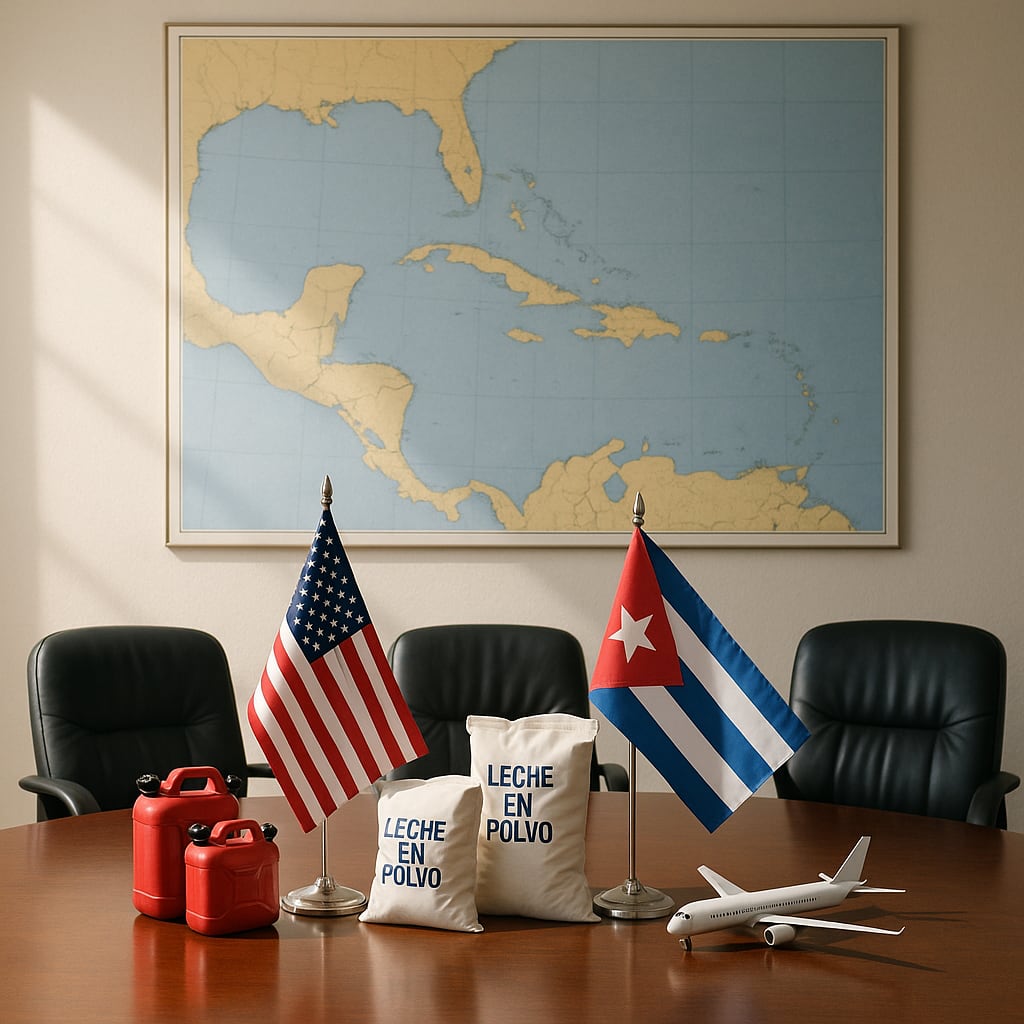
US expands sanctions on Cuban entities, including tourism ministry, as energy shortages persist
Narrative Snapshot
Across outlets, the new U.S. sanctions are presented as a formal expansion of Washington’s restrictions, but the emphasis varies between institutional detail, humanitarian impact, and political framing. Al Jazeera centers the procedural step — the U.S. Treasury posting a new directive that adds the Ministry of Tourism and state-owned firms to the sanctions roster — while Serbia’s Politika highlights the tourism portfolio specifically as a fresh target. Telesur situates the move within an executive authority it identifies as Executive Order 14404, underscoring the breadth of “strategic sectors” affected.
Coverage from France24 situates the sanctions against a background of energy scarcity already constraining daily life and production: Cuba produces 40% of its fuel needs and struggles to secure shipments under U.S. restrictions; a Russian delivery of 730,000 barrels in late March was exhausted by end-April. That resource picture is echoed in Brazilian reporting from Folha de S.Paulo, which focuses on Brasília’s immediate response — dispatching 48 tons of powdered milk as Cuba faces a supply crisis it attributes to a U.S. “energy blockade” over roughly the past six months.
State-aligned media amplify the Cuban government’s framing. CGTN reports President Miguel Díaz-Canel and Foreign Minister Bruno Rodríguez condemning the measures as “aggression,” a “war” against the population, and part of a “genocidal design plan” Cuba says it denounced at the UN. The Toronto Star, carrying an AP dispatch, adds a U.S. domestic angle: four Democratic members of Congress, visiting Havana, characterized the Trump-era “energy embargo” as turning Cuba into a “silent Gaza,” signaling dissent within Washington over the policy’s humanitarian impact.
What Happened
The U.S. Treasury announced a new round of sanctions against Cuba on Monday, adding the Ministry of Tourism and multiple state-owned enterprises to its blacklist, according to Al Jazeera and Politika. Telesur specifies that ten entities were designated, and attributes the legal basis to Executive Order 14404. CGTN reports that Cuban President Miguel Díaz-Canel and Foreign Minister Bruno Rodríguez denounced the measures as an escalation harming the Cuban people.
The sanctions land amid ongoing energy shortages. France24 reports that Cuba produces only about 40% of its fuel needs and has faced difficulties obtaining shipments due to U.S. restrictions; a Russian shipment of 730,000 barrels delivered in late March was depleted by the end of April. Folha de S.Paulo notes that Brazil has begun sending humanitarian assistance — 48 tons of powdered milk — citing a supply crisis it links to a U.S. “energy blockade.” The Toronto Star reports, via AP, that four Democratic U.S. lawmakers visiting Havana likened the energy restrictions to a “silent Gaza.”
Why It Matters
The measures extend the long-running U.S. sanctions regime into sectors tied to foreign exchange and services — notably tourism — while Cuba’s fuel dependency magnifies the economic and social stakes. France24’s account of chronic power outages linked to import constraints illustrates the operational impact of restrictions on logistics and supply. By adding the tourism ministry and state-owned firms, the U.S. steps deeper into areas that fund the Cuban state, as noted by Al Jazeera, Politika, and Telesur.
Regionally, Folha de S.Paulo’s reporting on Brazilian food aid shows a neighbor supplying relief despite U.S. pressure, an indicator of divergent policy choices in the hemisphere. Internationally, CGTN’s coverage of Havana’s denunciations — including references to recent UN criticism voiced by Cuba — signals that the dispute is being framed in multilateral terms. The Toronto Star’s piece on visiting Democratic lawmakers underscores that U.S. domestic contestation over the humanitarian effects of energy-focused measures could shape future congressional oversight or diplomatic engagement.
Diverging Narratives
Outlets diverge most on framing. Al Jazeera presents the action as a regulatory step — the Treasury posting a directive — with few normative claims about intent or effect. Politika similarly notes the inclusion of tourism without elaborating on humanitarian consequences. Telesur emphasizes scope and authority, describing ten entities under an executive order targeting “strategic sectors,” which conveys breadth and state-centric impact.
State-linked coverage and official Cuban statements sharply contest the measures’ legitimacy and humanitarian footprint. CGTN quotes Díaz-Canel and Rodríguez calling the sanctions an “aggression” and a “war” against the people, invoking a “genocidal design plan” that Cuba says it recently denounced at the UN. Folha de S.Paulo’s reference to an “energy blockade” and its focus on emergency food shipments highlight civilian hardship. France24’s reporting links blackouts to U.S. restrictions and the exhaustion of a Russian fuel shipment, stressing practical consequences rather than legal framing.
The Toronto Star/AP adds a domestic U.S. split: four Democratic lawmakers labeled the energy restrictions a “silent Gaza,” contrasting with the administrative tone in Al Jazeera’s account. Across these narratives, the unresolved question is the balance between asserted policy aims and documented civilian effects, particularly in energy supply and food access.
What Happens Next
Key inflection points will hinge on policy signals and logistics. First, U.S. implementation: additional Treasury directives or designations, as reported by Al Jazeera and Telesur in this round, would indicate whether Washington continues to widen sectoral pressure, including in tourism and other state-linked enterprises. Second, supply resilience: France24’s account of a depleted Russian fuel shipment and persistent blackouts points to Cuba’s need to secure new imports; observable changes in blackout frequency or announcements of fuel arrivals will be salient indicators.
Third, external assistance: Folha de S.Paulo’s report on Brazil’s powdered milk shipment opens the possibility of further humanitarian deliveries; tracking official Brazilian statements and cargo movements will clarify scale and continuity. Finally, the U.S. political debate: the Toronto Star/AP report on Democratic lawmakers’ criticism suggests attention to humanitarian impacts within Washington; public statements, hearings, or additional delegations will show whether that dissent translates into policy engagement or oversight. Cuban leaders’ multilateral appeals, noted by CGTN, bear watching for any formal UN follow-on.