
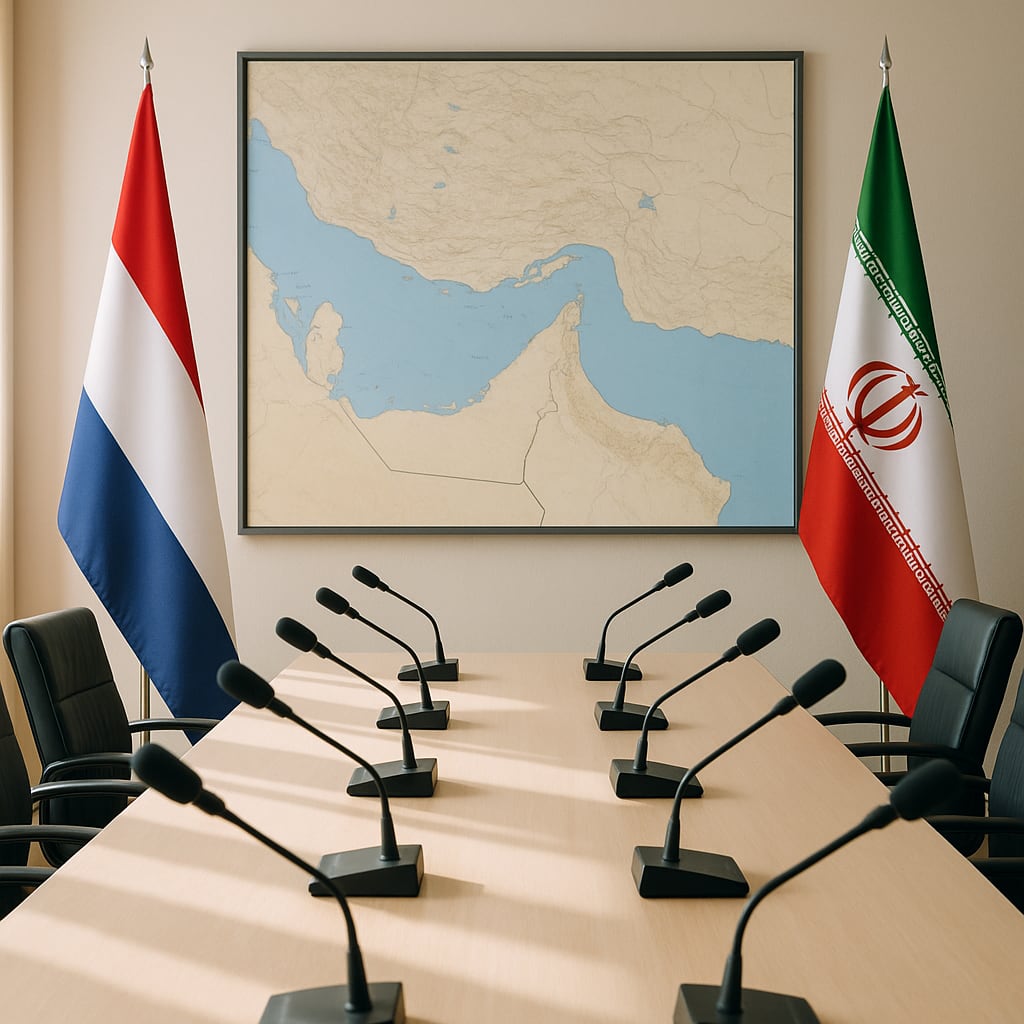
US and Iran pause strikes for a second day as Washington weighs munitions limits and diplomatic openings
Narrative Snapshot
Across outlets, there is convergence that both Washington and Tehran stepped back from strikes for a second consecutive night while diplomatic channels reopened. U.S.–centric reporting stresses the operational calculus behind the pause. The New York Times, France 24, and ANSA attribute President Trump’s decision in part to concerns over dwindling stocks of Patriot interceptors and other air-defense munitions, while The Guardian, Times of Israel, and RT (citing Axios) emphasize senior military advice that the target set near the Strait of Hormuz had been largely exhausted and that additional strikes would have diminishing returns. Politika frames this as a policy split at the top of the U.S. government.
Iran-focused coverage centers on conditional restraint and leverage in Hormuz. Al Jazeera English and RFE/RL report that Tehran halted retaliatory operations against U.S. allies as long as the American pause holds, while NHK and Middle East Eye relay the U.S. ambassador to the UN saying the White House is “giving talks some space.” The Japan Times underscores that Tehran still aims to retain control over the strait, a theme amplified by South China Morning Post and Telesur, which cite Iranian claims of progress in Oman-mediated talks on managing Hormuz and note parliamentary moves to tighten control. Corriere della Sera cuts against that diplomatic current, reporting Tehran has rejected a truce even as Washington pursues a London summit to “reopen” the waterway.
Regional and allied perspectives highlight the risks of spillover and alliance management. The Guardian previews Israeli Prime Minister Benjamin Netanyahu’s Washington visit and his opposition to U.S. negotiations, echoed by the Times of Israel’s quotation that the war would only end with regime change in Tehran or abandonment of its nuclear program. Corriere adds that Kuwait and Bahrain scrambled fighters amid attacks they attribute to the Iranian regime, and Deutsche Welle notes parallel Houthi–Saudi fighting as an additional front complicating de-escalation.
What Happened
After 13 consecutive nights of U.S. strikes on Iranian targets around the Strait of Hormuz, Washington halted the campaign late Friday and maintained the pause through Sunday, multiple outlets reported. A senior Iranian source told Reuters, relayed by Middle East Eye, Haaretz, Al Jazeera English, CBC, and the Toronto Star, that Tehran had stopped retaliatory attacks on U.S. allies and would continue to do so while the U.S. holds fire. The U.S. ambassador to the UN said President Trump was pausing strikes to give talks space, per Middle East Eye and NHK. The New York Times, France 24, and ANSA reported concerns about dwindling air-defense munitions factored into the decision, while The Guardian, Times of Israel, and RT (citing Axios) said U.S. commanders advised that target sets near Hormuz were near exhaustion. Iran announced progress in Oman-facilitated talks on strait management, according to SCMP and Telesur, as Corriere reported a U.S.-backed London summit plan and Gulf states on alert.
Why It Matters
The pause exposes stress points in coercive air campaigns against a state-capable adversary. U.S. reporting that interceptor and air-defense stocks are being drawn down suggests sustainability constraints on force protection during sustained exchanges, a factor that directly shapes escalation thresholds and alliance reassurance commitments, as noted by the New York Times and France 24. Simultaneously, commanders’ assessments that strike effectiveness is reaching its limit underscore the operational trade-off between attrition and political signaling highlighted by The Guardian and Times of Israel. Diplomatically, parallel tracks—from Oman’s facilitation on Hormuz management to a proposed London summit reported by Corriere—test whether ad hoc crisis management can translate into arrangements governing one of the world’s critical energy chokepoints. Israeli opposition to a pause, cited by The Guardian and Times of Israel, and Gulf states’ air readiness, reported by Corriere, point to intra-coalition pressures that will influence how far any de-escalation can go.
Diverging Narratives
Explanations for Washington’s pause diverge between operational necessity and diplomatic intent. The New York Times, France 24, and ANSA foreground munitions depletion, while The Guardian, Times of Israel, and RT’s account of Axios emphasize the exhaustion of designated targets and decreasing marginal returns from further strikes. In contrast, U.S. and Iranian political messaging frames the lull as space for talks: the U.S. ambassador to the UN says the president is allowing room for diplomacy (Middle East Eye, NHK), and Iranian officials tell Reuters they will maintain a halt if the U.S. does (reported by Haaretz, Al Jazeera English, CBC, Toronto Star). There is also a split on the scope of de-escalation. Iran-linked reporting highlights progress with Oman on strait management and parliamentary moves to tighten control (SCMP, Telesur), and the Japan Times says Tehran aims to retain control over Hormuz. Corriere, however, reports Tehran has rejected a truce even as the U.S. pushes a London summit to “reopen” the strait, and notes Kuwait and Bahrain scrambling jets against Iranian attacks. Israeli sources add a different endpoint entirely: Netanyahu’s position, cited by The Guardian and Times of Israel, rejects negotiations and ties war termination to regime change or nuclear rollback. Finally, while RFE/RL says Tehran halted strikes on U.S. allies, Deutsche Welle’s mention of separate Houthi–Saudi fighting underscores ambiguity about how far the pause extends beyond direct U.S.–Iran exchanges.
What Happens Next
Three decision points will shape the trajectory. First, whether Washington sustains the pause or resumes strikes will depend on the White House’s assessment of military efficacy and stockpile management, as reported by The Guardian and the New York Times, and on allied pressures ahead of Netanyahu’s visit, noted by The Guardian and Times of Israel. Second, Tehran’s conditional restraint will hinge on the U.S. holding fire; Iranian statements to Reuters, cited by Al Jazeera English and Haaretz, make continuation of the halt explicitly reciprocal, while Al Jazeera’s separate reporting carries a warning of wider war if U.S. strikes resume. Third, the diplomatic track requires tangible movement: observers should watch for Oman-mediated announcements on Hormuz management (SCMP, Telesur), confirmation of a London summit aimed at reopening the strait (Corriere), and any mediator proposals acknowledged by both sides (Haaretz). Regional indicators—including Gulf air force postures (Corriere) and separate fronts like Houthi–Saudi clashes (Deutsche Welle)—will signal the risk of spillover despite the bilateral pause.