
Seventh round of U.S.-brokered Israel–Lebanon talks opens in Rome as Israeli operations continue and Hezbollah denounces process
Narrative Snapshot
Across outlets, there is a shared baseline: a seventh round of direct Israel–Lebanon negotiations has convened in Rome under U.S. auspices with an agenda centered on “pilot zones” in southern Lebanon and demands related to Hezbollah’s military infrastructure. Where they diverge is over how to characterize the negotiating environment. Haaretz details a significant Israeli military footprint inside Lebanon, including construction and new bases well beyond the border, while Le Monde, Al Jazeera, and Middle East Eye underscore ongoing blasts and strikes in the south that, in their framing, erode the atmosphere for talks. The Times of Israel, by contrast, foregrounds disarmament and border issues and highlights official pushback in Beirut against Hezbollah’s public attacks on the process.
Hezbollah’s messaging is carried prominently by Telesur, France 24, and Middle East Eye: Naim Qassem condemns the talks as “humiliation,” vows continued resistance, and directly criticizes President Joseph Aoun. Deutsche Welle reports reciprocal rhetorical escalation between Hezbollah and the Lebanese government, and links U.S. regional messaging to parallel claims of movement on Iran—a point France 24’s analysis develops by arguing the negotiations are increasingly constrained by broader strategic dynamics and waning American bandwidth. Procedural coverage in Politika and The Hindu situates the talks within an existing framework agreement and fixes expectations about venue and duration, providing a counterpoint of diplomatic routine amid contested ground realities.
What Happened
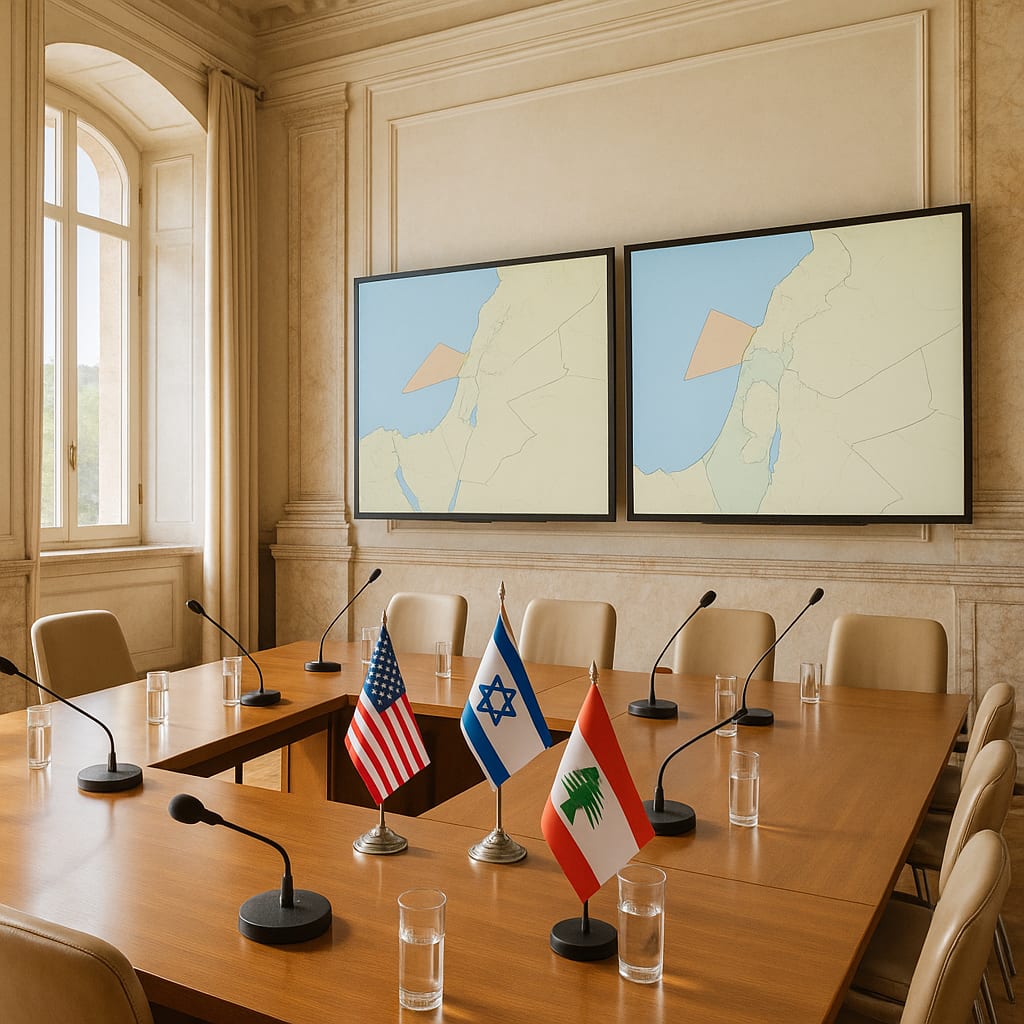
Delegations from Israel and Lebanon returned to Rome on August 4 for a seventh round of direct talks under U.S. mediation, meeting at the U.S. embassy with discussions scheduled to run through Thursday, August 6. The agenda includes expanding pilot zones in southern Lebanon, with Washington pressing Beirut to dismantle elements of Hezbollah’s infrastructure while urging both sides to sustain momentum. The talks open against intensifying military activity inside Lebanon: Haaretz reports the IDF has seized roughly 230 square miles of Lebanese territory and is building new facilities, and Le Monde describes massive demolitions near the Beaufort fortress on July 30–31 that generated powerful shock waves. President Joseph Aoun called those blasts a direct threat to negotiations. Middle East Eye reported an Israeli strike in Haddatha during the talks. Hezbollah leader Naim Qassem publicly rejected the process, a position that drew rebuke from Beirut reported by the Times of Israel.
Why It Matters
The Rome track sits within a June framework agreement referenced by multiple outlets, but France 24’s analysis contends the process is now shaped less by technical sequencing and more by a hardening strategic context: entrenched military positions, domestic constraints in Lebanon, and broader regional frictions. If pilot zones advance while the IDF consolidates inside Lebanon, the result could be a de facto security regime defined by facts on the ground rather than negotiated reciprocity. Washington’s dual role—broker and principal advocate for curbing Hezbollah—exposes the mediation to shifts in U.S. regional priorities, which France 24 characterizes as diminishing, and to linkages with U.S.–Iran dynamics highlighted by DW. For decision-makers in Beirut, the talks test state capacity to negotiate amid explicit Hezbollah opposition. For Israel, decisions about entrenchment and the scope of operations inside Lebanon carry direct implications for any eventual implementation pathway.
Diverging Narratives
Haaretz presents two complementary but differently weighted frames: diplomatic momentum in Rome around pilot zones alongside a granular account of Israeli entrenchment inside Lebanon, including a base “far from the Israeli border.” Le Monde emphasizes the coercive effects of recent demolitions near Beaufort and quotes President Joseph Aoun deeming them a direct threat to the negotiating track; Al Jazeera and Middle East Eye similarly foreground continued occupation and strikes as context for the talks, including a reported bombing in Haddatha. Telesur, France 24, and Middle East Eye amplify Naim Qassem’s denunciations and pledge of resistance, while the Times of Israel centers the talks’ focus on borders and Hezbollah’s disarmament and notes official Lebanese rebuttals to Hezbollah’s stance. France 24’s interview with Joseph Bahout argues the process is stalling amid larger strategic headwinds, in tension with Haaretz’s description of U.S. efforts to maintain momentum. DW situates the rhetoric within a wider regional tableau by flagging concurrent U.S. claims of progress with Iran. Unresolved across coverage are the precise contours and verification of any expanded pilot zones, the scope and permanence of Israeli positions inside Lebanon, and how, if at all, dismantlement of Hezbollah infrastructure would be sequenced or enforced.
What Happens Next
Key decision points center on three tracks. First, pilot zones: Haaretz reports U.S. efforts to expand them; movement would likely be signaled by U.S. or host-nation readouts from the Rome meetings through Thursday, while silence or procedural deferrals would align with France 24’s assessment of stalling. Second, military posture: Haaretz’s documentation of new bases and Le Monde’s account of demolitions, alongside incidents like the Haddatha strike reported by Middle East Eye, provide indicators of whether Israel consolidates or calibrates operations during talks. Third, domestic authorization in Lebanon: Times of Israel and DW note government rebuttals to Hezbollah’s public attacks; sustained cabinet backing for the Rome channel despite Naim Qassem’s condemnation, reported by Telesur and Middle East Eye, would indicate political cover for incremental steps, while escalatory rhetoric or actions from Hezbollah would constrain Beirut’s room to engage. Analysts should also watch U.S. signaling on regional files flagged by DW and France 24, given their reported impact on mediation bandwidth.