
US Oil Companies Target Venezuela's Energy Sector Amid Challenges and Controversy
Following the dramatic capture of Venezuelan President Nicolás Maduro, US President Donald Trump has announced a bold plan for American oil companies to revitalize Venezuela's oil industry. However, experts warn that this move is fraught with multiple challenges and has sparked a wave of controversy.
Background: Venezuela's Oil Industry
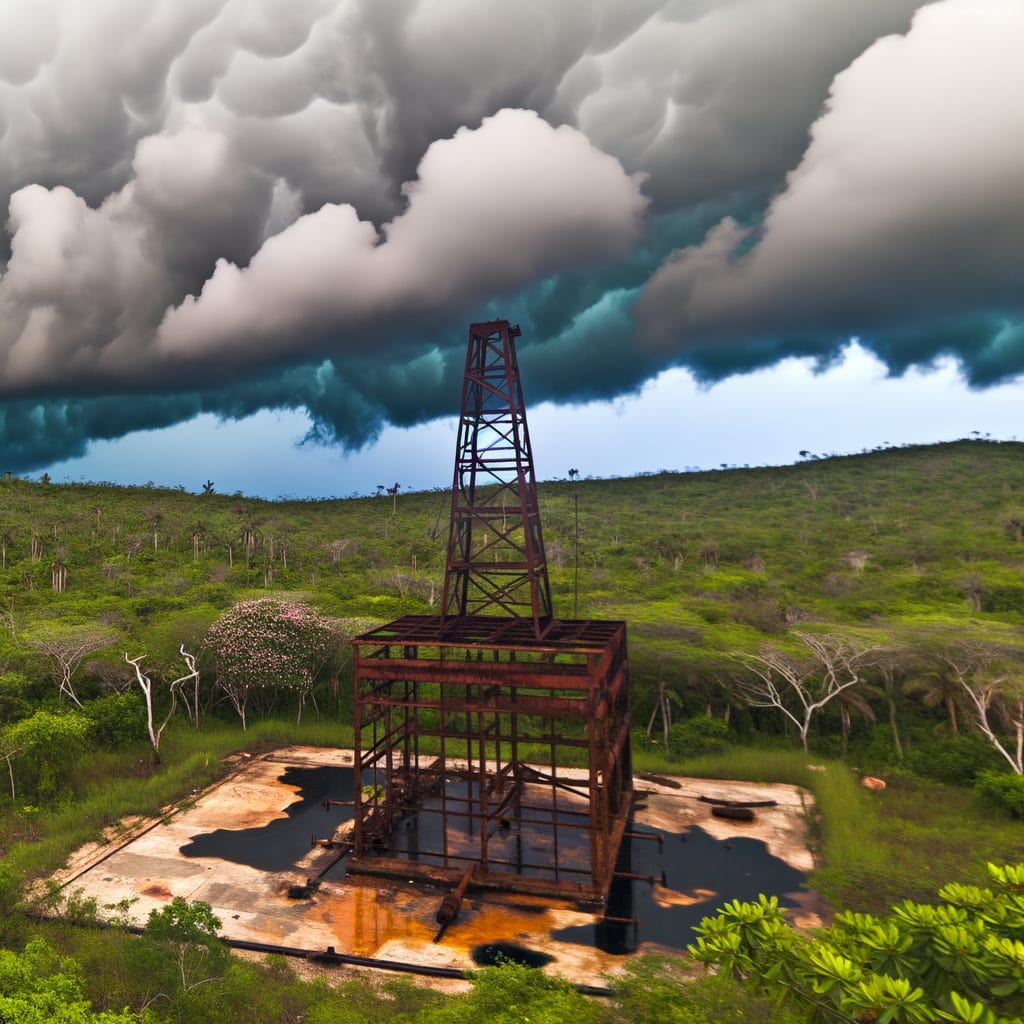
Venezuela, a country almost twice the size of California, holds more than 300 billion barrels of proven oil reserves, making it the world's largest holder of crude oil. Despite this, the country's oil industry has sharply deteriorated due to poor resource management and lack of investment, with production falling to roughly 800,000 barrels a day from about 3.5 million barrels in the late 1990s.
The Trump administration's plan to boost Venezuela's oil sector comes in the wake of the dramatic capture of Venezuelan President Nicolás Maduro. According to Trump, US oil companies are expected to invest billions of dollars in Venezuela's oil industry to repair the severely damaged infrastructure and to start generating revenue for the country.
Key Developments
As part of the plan, a former high-ranking executive from Chevron is reportedly raising $2 billion for Venezuelan petroleum projects. However, there seems to be a discrepancy between the Trump administration's statements and the actions of the oil companies. Contrary to President Trump's assertion, executives from Exxon Mobil, ConocoPhillips, and Chevron stated that they were not consulted about Venezuela before or after the capture of Maduro.
Furthermore, several oil tankers loaded with crude oil and fuel have reportedly left Venezuela's waters since the beginning of 2026, despite the export embargo imposed by the U.S. government.
Implications and Reactions
Analysts have warned that reviving Venezuela's oil industry will not come easily or cheaply, drawing parallels with Iraq, where oil production took years to recover. It's also noted that this move could potentially reshape Venezuela’s energy industry, alter global oil flows, and redefine the balance of influence among major powers long invested in the country’s crude.
The plan has sparked a wave of controversy, with critics arguing that it represents an exploitation of Venezuela's resources. Martina Navratilova, a legendary women's tennis player, expressed support for criminal sanctions on American companies that try to take oil from Venezuela, while the Brazilian state-owned company Petrobras is reportedly evaluating the potential impacts of this development on its operations.
Conclusion
As the situation unfolds, it is clear that the road to revitalizing Venezuela's oil industry is fraught with challenges. The context of decrepit infrastructure, leadership uncertainty, and potential legal battles over old contracts, combined with the controversy surrounding the Trump administration's plan, makes the future of Venezuela's oil industry highly uncertain. As President Trump continues to hold meetings with oil companies and pushes for new investments, the world watches closely to see how this complex situation will evolve.