
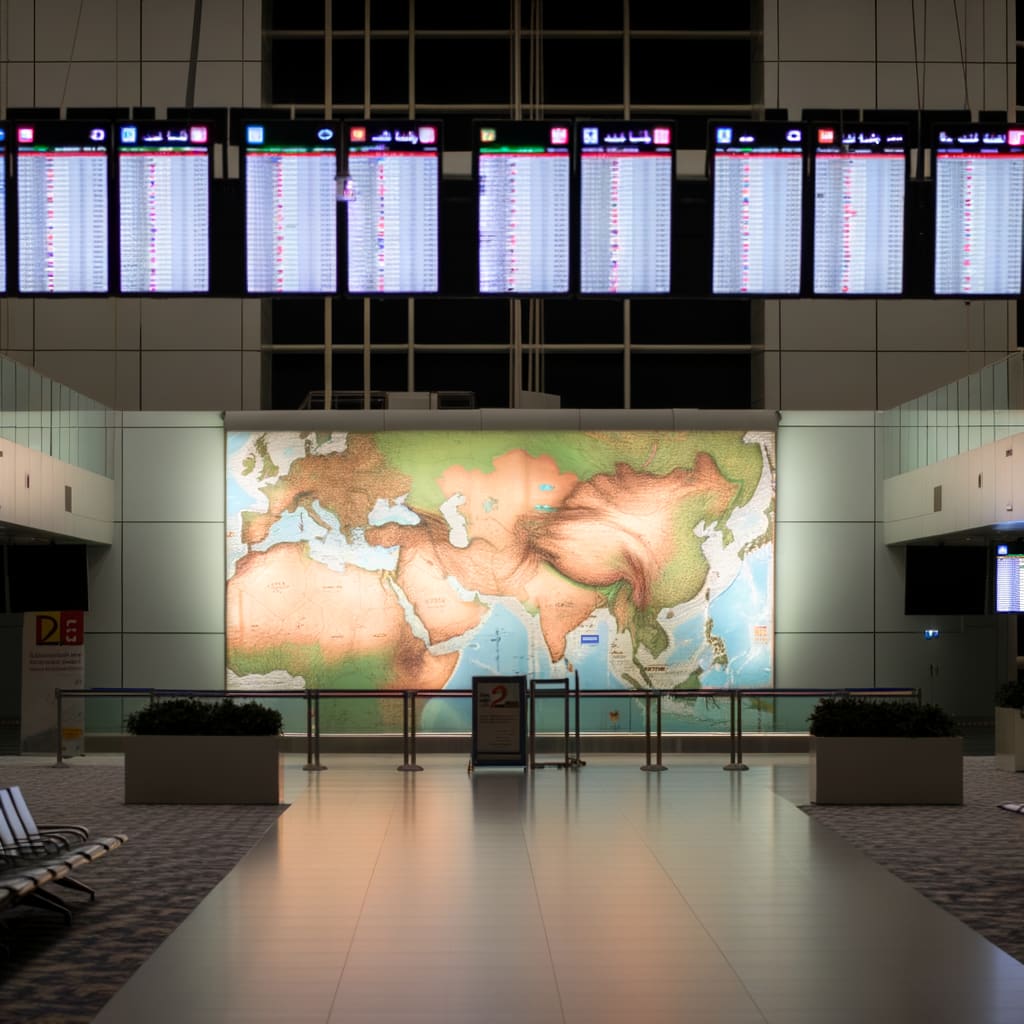
US and UK Advise Against Travel to Israel and Iran; Iran Closes Airspace Amid Rising Tensions
In a rapidly evolving situation that has seen a dramatic escalation of tensions in the Middle East, the United States and the United Kingdom have both issued advisories against travel to Israel and Iran. This comes as Iran temporarily closed its airspace to most flights, and the US began to withdraw some personnel from an airbase in Qatar. Amid the escalating tensions, the Israeli Defense Forces (IDF) have been put on high alert, though no special instructions have been issued for the country's civilian population.
Background and Context
The recent developments follow weeks of mass street protests in Iran against Ayatollah Ali Khamenei’s regime, which have heightened global tensions. The U.S. Embassy in Jerusalem issued a security alert reminding personnel and Americans in Israel to exercise good personal security and preparedness practices, further emphasizing the escalating situation.
Key Developments
Iran's decision to close its airspace temporarily was made without offering any explanation, adding to the growing sense of unease. This move has caused airlines to divert flights to avoid using Iranian and Iraqi airspace. At the same time, the US has advised its citizens to leave Iran immediately via land borders, emphasizing the elevated risk in areas such as Afghanistan, Iraq, and the Pakistan-Iran border.
The escalating tensions have also prompted the IDF to keep a close watch on developments around Iran. Brig. Gen. Effie Defrin stressed that despite the high alert, no special instructions have been issued for Israel’s civilian population.
Reactions and Implications
The UK Foreign Office (FCDO) issued an advisory recommending against all but essential travel to Israel
. The advisory cited a heightened risk of regional tension
and warned that an escalation could lead to travel disruption and other unanticipated impacts.
Meanwhile, Iran's Foreign Minister Abbas Araghchi stated that his country is ready for war but also for dialogue, a sentiment that reflects the precariousness of the current situation. US President Donald Trump has also expressed his belief that Iran's regime could fall following weeks of unrest across the country, while also considering potential intervention.
Current Status
As the situation continues to evolve, the potential for further escalation remains high. Iran has reopened its airspace, and the US has begun to withdraw some personnel from its airbase in Qatar. However, the advisories against travel to Israel and Iran remain in effect, indicating continued concern over potential regional instability.
While the US is considering various options, including a potential raid or hybrid war, the CIA warns that the Iranian regime still appears solid. On the other hand, Iran has expressed its readiness for both war or dialogue, leaving the international community on edge as it awaits the next development.