
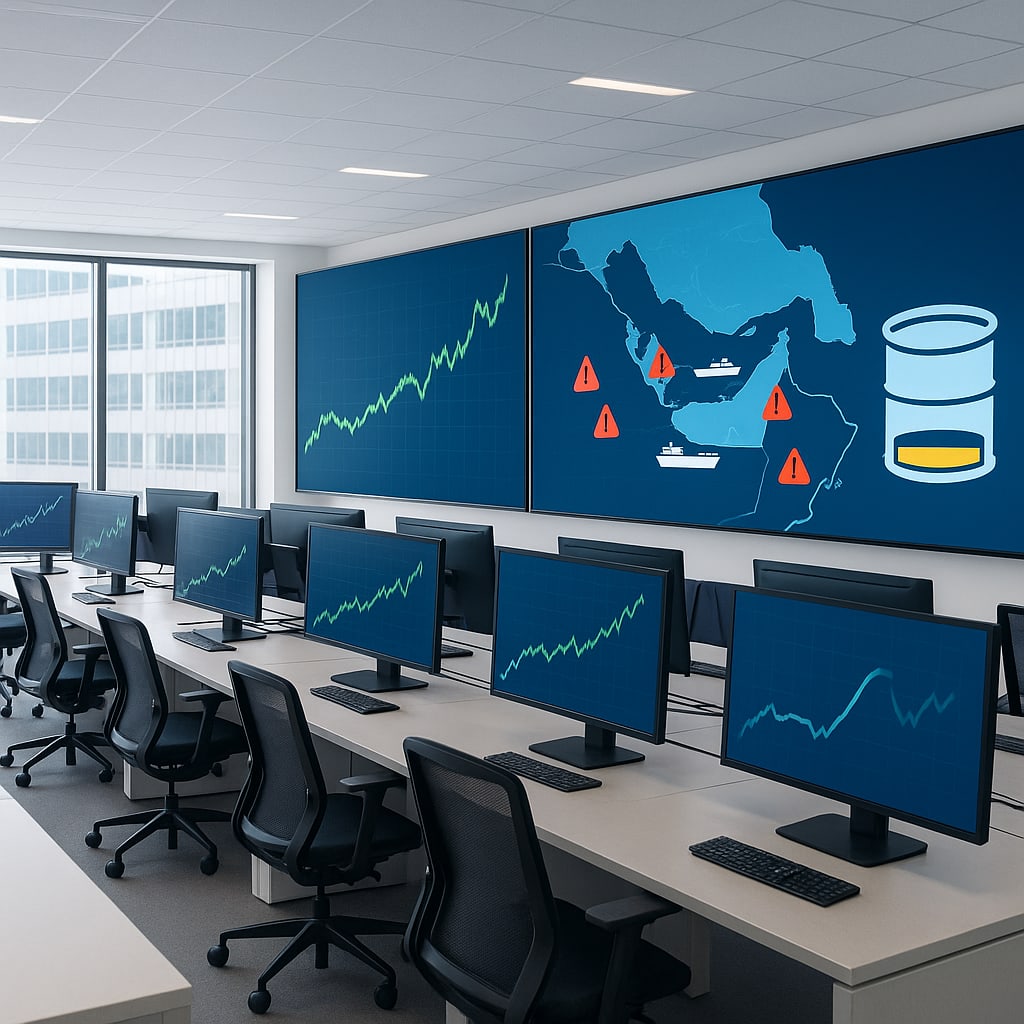
Hormuz crisis lifts oil to one-month highs as US reimposes blockade, Trump drops 20% toll, and watchdogs warn buffers are thin
Narrative Snapshot
Across outlets, the market signal is unambiguous while the policy signal is mixed. Multiple sources report oil rising to a one-month high on news of renewed US strikes on Iran and the reimposed naval blockade of the Strait of Hormuz, with the International Energy Agency’s chief warning oil security remains a critical concern if flows do not improve (South China Morning Post; Middle East Eye, 14 and 17 July; Al Jazeera). Simultaneously, the IMF is cited warning that much of the capacity to cushion an energy shock is already exhausted as spare capacity has been used, demand compressed, and inventories drawn down (TASS).
Regional resilience narratives are strongest in Asia-focused reporting. Coverage in Hong Kong and Southeast Asia emphasizes that the region is better positioned to absorb this shock than in earlier phases of the conflict, citing adaptation and resilience in Southeast Asian economies (South China Morning Post; The Diplomat). Latin American and European reporting tilt toward supply stress and spillovers into broader prices and logistics, highlighting the likelihood of rising energy, food, and air-travel costs and warning that reserves are near their limits (Clarín; Folha de S.Paulo; TASS).
Accounts diverge on Iran’s leverage. US-focused analysis suggests Tehran’s ability to weaponize Hormuz may be weakening given alternative export routes and shifting shipping patterns—even as Iran can still trigger short-term price spikes (Fox News). By contrast, Iranian military messaging warns that if Washington interferes with maritime routes, energy exports will be “for everyone or for no one,” signaling a readiness to disrupt broader flows (Middle East Eye). The International Maritime Organization, quoted in Serbian media, underscores that the strait remains dangerous for transit, reinforcing near-term operational risk (Politika).
Policy execution versus signaling also splits coverage. Initial reports that Washington tied the blockade to a 20% toll rattled markets (South China Morning Post; Folha de S.Paulo), but Italian reporting then noted a White House reversal—no 20% toll, with a pivot toward Gulf trade arrangements—even as clashes and maritime incidents continued (ANSA). That mix—tactical de‑escalation on terms of passage alongside ongoing military activity—defines the current ambiguity.
What Happened
Reporting indicates the United States reinstated a naval blockade at the Strait of Hormuz alongside renewed strikes on Iranian targets, sending oil to a one-month high—South China Morning Post cited $84.78 per barrel, and Middle East Eye noted a roughly two percent rise on the day. Initial US signaling linked the blockade to a 20% toll on passage, which jolted markets (South China Morning Post; Folha de S.Paulo). ANSA then reported a reversal: no 20% toll, replaced by trade arrangements with Gulf partners, while Tehran struck three tankers and US raids continued. Iran’s Islamic Revolutionary Guard Corps warned that if Washington interfered with maritime routes, energy exports could halt broadly (Middle East Eye). The IMO’s secretary-general cautioned that Hormuz remains dangerous for ship transit (Politika). Meanwhile, the US Department of Energy reported a 1.7 million barrel draw, leaving stocks six percent below the five-year seasonal average (TASS).
Why It Matters
The episode tests the resilience of global energy governance and crisis‑management tools. The IEA’s public warning that oil security remains critical, coupled with IMF assessments that spare capacity and inventories are already strained, indicates limited room for policy cushioning if flows through Hormuz remain impaired (Al Jazeera; Middle East Eye; TASS). Shipping risks flagged by the IMO underscore the operational exposure of maritime chokepoints to coercive statecraft and retaliatory disruption (Politika).
Regionally differentiated exposure is sharpening. Asia-focused outlets suggest Southeast Asia and broader Asian economies have adapted through diversification and demand management, at least relative to earlier phases of the conflict (South China Morning Post; The Diplomat). Other reporting emphasizes that reserves in key markets are near limits, raising the prospect of broader price pass‑through into energy, food, and travel if disruptions persist (Folha de S.Paulo; Clarín; TASS). For governments and multilateral bodies, this narrows the policy set to de‑escalatory maritime security steps, targeted trade arrangements, and transparent stock management—set against a backdrop of military activity that can quickly outpace economic tools.
Diverging Narratives
One line of coverage frames Iran’s leverage as eroding. US‑based analysis argues that growing non‑Hormuz routes and changed shipping patterns reduce Tehran’s strategic hold over global oil flows, even if it can still induce short‑term price spikes (Fox News). Opposing signals from Iranian military messaging threaten broader disruption—“for everyone or for no one”—if the US controls key routes, suggesting Tehran sees escalatory options that extend beyond localized harassment (Middle East Eye). The IMO’s safety warning supports the view that immediate navigational risks remain material (Politika).
Markets versus buffers is a second tension. Asia‑centric reporting stresses adaptation and resilience in Southeast Asia and a better regional position to absorb shocks (South China Morning Post; The Diplomat). By contrast, multilateral and Latin American coverage highlights thin systemic buffers: the IMF’s assessment of exhausted spare capacity and drawn‑down inventories, US stock declines relative to norms, and warnings that reserves are at their limits (TASS; Folha de S.Paulo). A third divergence concerns US policy signaling. Initial reports that a 20% toll would accompany the blockade gave way to ANSA’s account of a White House reversal in favor of Gulf trade arrangements, yet both European and Middle Eastern sources continue to document active strikes and tanker incidents, sustaining risk premia even without a formal toll (ANSA; Middle East Eye).
What Happens Next
Two decision points dominate. First, whether Washington and Tehran move—directly or via intermediaries—toward steps that improve flows through Hormuz, as urged by the IEA; absent movement, the agency warns oil security will remain a critical concern (Al Jazeera; Middle East Eye). Second, how the US operationalizes its policy pivot away from a stated 20% toll toward trade arrangements with Gulf partners, and whether that eases maritime frictions noted by the IMO while clashes persist (ANSA; Politika).
Analysts should track: Iranian follow‑through on threats to expand disruption beyond Hormuz or signals of restraint (Middle East Eye); the tempo of maritime incidents and strikes reported in regional outlets (Middle East Eye; ANSA); inventory dynamics as reported by the US Department of Energy and multilateral commentary on reserves and spare capacity (TASS); and whether Asia’s reported resilience continues to hold under prolonged strain (South China Morning Post; The Diplomat).