
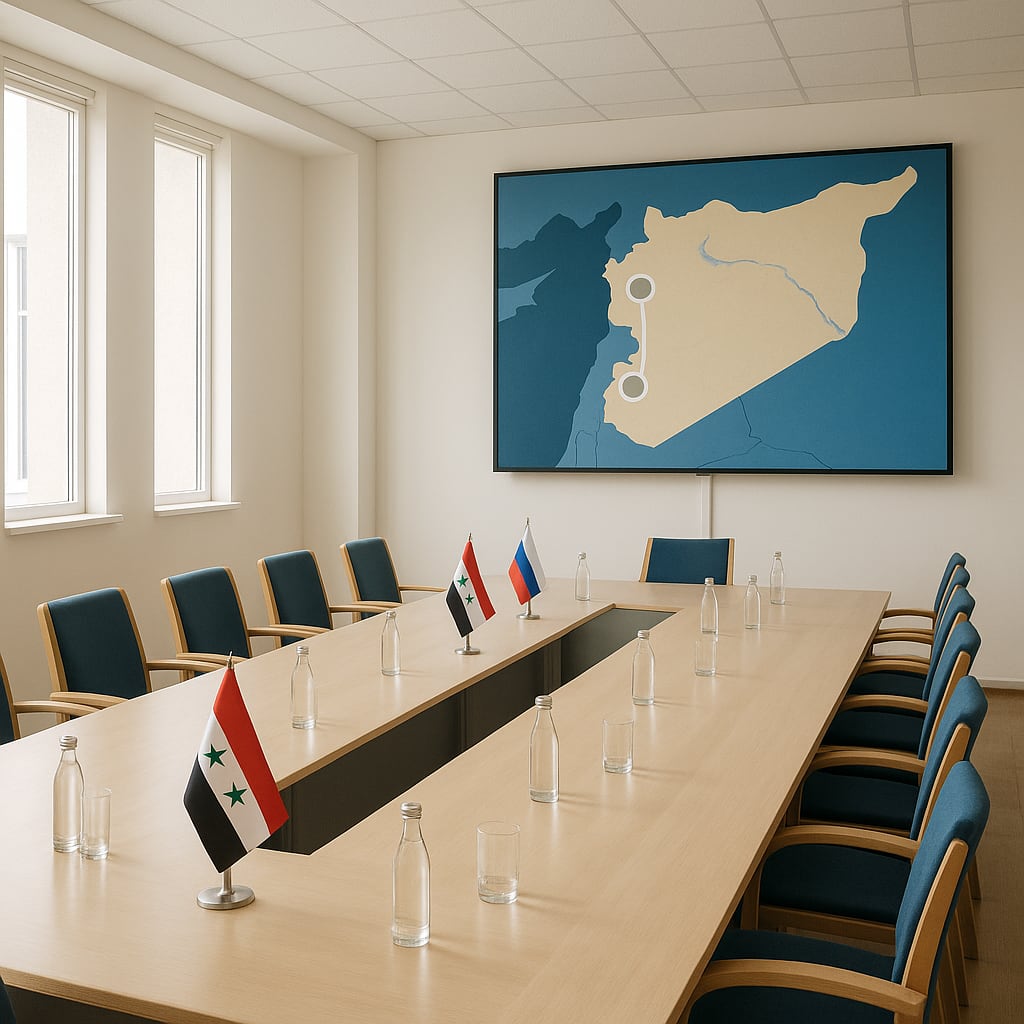
Syria and Russia agree to convert Hmeimim and Tartus into joint training centers, with Damascus assuming management
Narrative Snapshot
Across outlets, there is broad agreement that Damascus and Moscow have signed a memorandum altering Russia’s footprint at Hmeimim air base and the Tartus naval facility by converting them into joint training and capacity-building centers. That framing appears consistently in dispatches citing Syria’s Foreign Ministry or SANA, including Al Jazeera and The Hindu, and is echoed in Russian state media accounts that refer to a reorganization toward joint troop training (TASS). France24 adds that the outcome follows 18 months of talks, underscoring a negotiated reframing rather than an abrupt change.
Where coverage diverges is over the question of control and continued Russian basing. Several outlets emphasize a handover: Deutsche Welle reports Syria will take over management of the two bases; France24 says Russian forces will give up control; the Times of Israel and Middle East Eye say Syria will regain or reclaim control; and the Toronto Star’s Associated Press copy says the deal ends their use as military outposts for Moscow. In contrast, Telesur English states Russia will keep its two Mediterranean bases, albeit with a “redefinition” of functions. Russian coverage centers on specific transfers and administrative changes, notably the General Authority for Ports and Customs citing the handover of facilities at Tartus and the bases’ reorganization for joint training, without characterizing the move as a full relinquishment (TASS).
A number of outlets explicitly situate the deal against Moscow’s wartime support to Bashar al-Assad, with some describing him as ousted or deposed and referring to a “new Syrian regime” (Deutsche Welle, Bangkok Post, Kyiv Independent, Times of Israel, Politika), while others avoid that characterization and stick to technical terms and institutional actors (TASS, The Hindu). Several reports adopt Damascus’s and Moscow’s forward-looking language, highlighting an opening to a “new phase” in the relationship (Kyiv Independent; Times of Israel), and Al Jazeera’s analysis couches the accord as a pragmatic redefinition of past alliances in which “they need each other.”
Beyond the bases, multiple accounts point to a wider administrative shift along Syria’s coast. Ukrinform notes that the memorandum includes transferring civilian facilities to Syrian control, and TASS reports the Civil Aviation Authority has taken charge of Latakia Airport with plans to renovate it for international flights. Le Monde’s assessment that Russia’s military presence on the Syrian littoral is being restricted, with the bases’ scope downgraded even as training ties continue, captures the underlying stake for sovereignty and external military access.
What Happened
Damascus announced on August 9 that it reached an agreement with Moscow to convert the Hmeimim air base and the Tartus naval facility into joint training and capacity-building centers, language attributed to the Syrian Foreign Ministry and SANA (Al Jazeera; The Hindu). Russian and Syrian authorities signed a memorandum of understanding to reorganize Russia’s military presence along the coast, including turning the bases into joint training hubs and transferring certain facilities to Syrian control, according to Syria’s General Authority for Ports and Customs and related reporting (TASS; Ukrinform). France24 reports the accord followed 18 months of talks and that Russian forces will give up control of the two sites. In a related administrative step, Syria’s Civil Aviation Authority said it had taken control of Latakia Airport and would move to renovate it for international flights (TASS). Telesur English describes the arrangement as allowing Russia to maintain the two bases with a redefined function.
Why It Matters
Le Monde characterizes the agreement as setting a new framework for Russia’s last two bases in Syria, restricting the scope of Moscow’s presence on the Mediterranean coast while retaining a role in training Syrian forces. That shift recasts the bilateral defense relationship from a posture of direct basing toward capacity-building, a form many outlets note by citing the “joint training” and “capacity-building” mandate (Al Jazeera; The Hindu). The outcome’s negotiation over 18 months and codification in a memorandum (France24; TASS; Ukrinform) indicate an institutionalized recalibration rather than a rupture. Several reports frame the move as ushering in a “new phase” in ties (Kyiv Independent; Times of Israel), aligning with Al Jazeera’s analysis of a pragmatic redefinition of past alliances. For decision-makers, the steps to transfer port facilities and civilian aviation management to Syrian authorities (TASS; Ukrinform) are concrete indicators of reasserted state control over critical coastal infrastructure alongside a narrowed, formalized channel for continued Russian military cooperation.
Diverging Narratives
Outlets differ in how decisively they describe the change in control. France24 says Russian forces “will give up control” of the two bases; Deutsche Welle reports Syria will “take over management”; the Times of Israel and Middle East Eye emphasize that Damascus will “regain” or “reclaim” control; and the Associated Press copy in the Toronto Star says the deal “ends their use as military outposts for Moscow.” By contrast, Telesur English states that Russia “will keep its two military bases” with a redefined function. Russian state media focuses on the mechanics—transfer of certain Tartus facilities, reorganization into joint training, and related civilian handovers—without stating that Russian control ends outright (TASS).
There is also divergence in political framing. Several outlets explicitly reference Moscow’s support for Bashar al-Assad during the civil war and describe him as ousted or deposed, even referring to a “new Syrian regime” in Damascus (Deutsche Welle; Bangkok Post; Kyiv Independent; Times of Israel; Politika). Others hew to institutional language from Damascus and avoid that characterization (TASS; The Hindu). Across reports, the operational details remain thin: no outlet specifies command-and-control arrangements, troop levels, or access rights under the joint training rubric. The related transfer of Latakia Airport to Syria’s Civil Aviation Authority (TASS) and mentions of broader civilian facility transfers (Ukrinform) point to administrative change, but how these civilian steps intersect with military arrangements at adjacent sites is not spelled out in the reporting.
What Happens Next
Two paths are implicit in current coverage. If the France24, Deutsche Welle, and AP framings prevail operationally, subsequent steps would reflect Syrian managerial control: further announcements of civilian facility transfers along the coast (Ukrinform), formal statements from Syrian authorities about base governance, and visible prioritization of joint training over independent Russian operations. If the Telesur English framing takes precedence, Russia would retain a continuing on-base presence under redefined roles, signaled by communications from Moscow emphasizing continuity at Hmeimim and Tartus and by joint activities framed as extensions of existing cooperation.
Analysts should watch for implementing documents or official communiqués that clarify command arrangements for the joint training centers (TASS; Al Jazeera; The Hindu), the scope and timeline of Tartus facility transfers (TASS), and progress milestones on Latakia Airport’s renovation to resume international flights (TASS). Language from both capitals about a “new phase” in relations (Kyiv Independent; Times of Israel) and Al Jazeera’s assessment of pragmatic realignment will be tested by how each side publicly characterizes subsequent training, access, and management decisions.