
DR Congo’s Ebola outbreak becomes largest on record as WHO pushes for support and trials accelerate
Narrative Snapshot
Across outlets, the scale and velocity of the Democratic Republic of the Congo’s Ebola outbreak are not in dispute. Multiple sources report confirmed cases approaching or surpassing 3,800 and deaths above 1,600, with the World Health Organization repeatedly warning that transmission is outpacing the response and urging a broader mobilization of funding, staff, and protective measures for frontline workers. Coverage also converges on the compressed timeline: less than three months after the outbreak was declared, it has become DR Congo’s largest on record by confirmed cases, with the WHO Director-General visiting to press for stronger action.
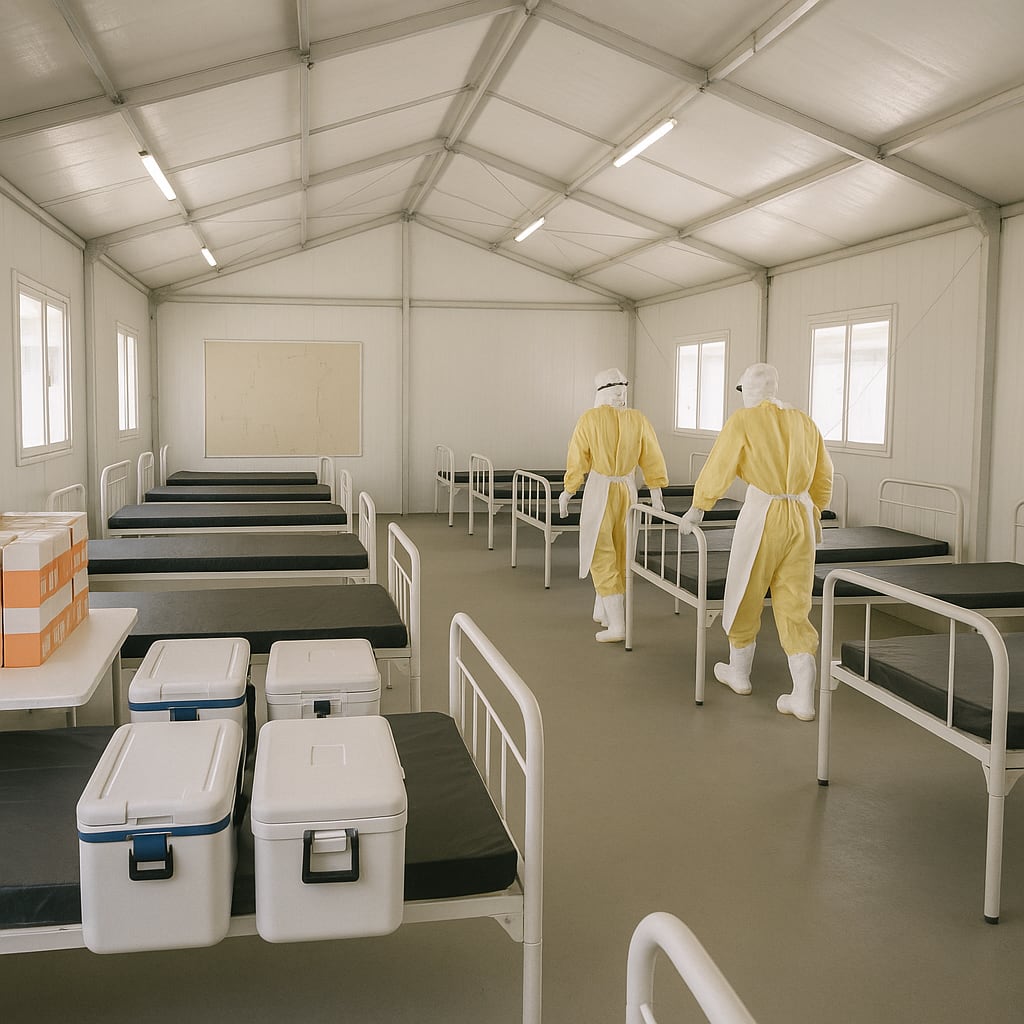
Where emphasis shifts is in describing the geography and operability of the response. Al Jazeera highlights that nearly 90 percent of reported cases are in Ituri province, while several updates note spread to multiple eastern provinces and rising hospitalizations in isolation, suggesting both concentration and diffusion. Reporting from UN channels and African institutions foregrounds the practical constraints—shortfalls in funding, food insecurity undermining public health compliance, and operational pressure on health systems—while France 24 focuses on an imminent expansion in treatment capacity through the country’s largest-ever Ebola facility.
A parallel thread tracks the scientific and diplomatic surge. WHO statements on accelerating trials, Brazilian coverage of promising early signals for Bundibugyo-specific tools, and Canadian approval of a Moderna mRNA trial point to a rapidly assembled R&D pipeline for a virus species without a licensed vaccine. Chinese media prioritize Beijing’s dispatch of a third expert team and pledges of continued assistance, underscoring external technical support as an immediate complement to domestic scale-up.
What Happened
In late July and early August, officials and international agencies reported that DR Congo’s Ebola outbreak—confirmed less than three months ago—has become the country’s largest on record by confirmed cases and is expanding faster than the response can match. WHO and national tallies put confirmed cases in the 3,500–3,800 range, with reported deaths rising from roughly 1,500 to over 1,700 within days. Case fatality is around 44 percent. Transmission is heavily concentrated in Ituri province, though spread to at least five eastern provinces is documented, and hundreds of patients are in isolation. The WHO Director-General traveled to Kinshasa urging stronger protections for health workers and wider support. In parallel, WHO says it is accelerating clinical trials; Canada authorized a Moderna mRNA trial targeting the Bundibugyo species, and UN reporting notes movement toward the first Bundibugyo-specific vaccine. China has deployed a third medical expert team, and DR Congo is preparing to open its largest Ebola treatment facility.
Why It Matters
The episode stress-tests core components of the global health security architecture. WHO’s appeals for financing, personnel, safe-burial and community teams, and expanded treatment capacity highlight the continuing gap between international response norms and fielded capabilities when outbreaks surge quickly. Africa CDC’s warnings about operational constraints, alongside UN reporting that hunger is undermining Ebola control, point to a recurrent systems issue at the humanitarian–health nexus: epidemic containment falters when basic needs go unmet. The scientific response carries structural significance: WHO’s acceleration of trials, Canada’s authorization of a Bundibugyo-specific mRNA candidate, and UN accounts of a first-in-class vaccine effort indicate a rapid attempt to close a long-standing product gap for this Ebola species. Externally provided assistance—China’s expert deployments among them—illustrates how health diplomacy and technical support are being mobilized in real time, with implications for how regional and global actors share roles across acute response, R&D, and domestic capacity-building.
Diverging Narratives
Discrepancies in reported totals reflect publication timing rather than competing facts: some outlets cite death tolls “over 1,600,” others “over 1,700,” as case counts rise from just over 3,500 to nearly 3,800 across successive daily updates. There is also a classification gap that evolves with the data. Africa CDC, speaking as numbers crossed 3,500, described the outbreak as the second-largest by total confirmed cases; within days, WHO reports show it surpassing the 2018–2020 eastern DRC epidemic, making it the country’s largest on record. Geography is framed differently: Al Jazeera stresses that nearly 90 percent of cases are in Ituri, while other reports underscore documented spread to five provinces, which together convey both a focal epicenter and a widening footprint. On response priorities, WHO communiqués and Bangkok Post coverage emphasize the need to protect health workers and scale operations; UN and African sources stress resource shortfalls and hunger’s impact on compliance; Folha and UN reporting accentuate promising, but still early, clinical tools for the Bundibugyo species. Telesur underscores that WHO maintains a global alert posture, situating the outbreak within broader emergency risk management.
What Happens Next
Three decision points will shape trajectory and impact. First is whether WHO’s call for expanded support is met quickly enough to bend transmission: new funding, deployment of investigation and safe-burial teams, and protective measures for health workers are explicit needs; observers should watch for additional donor commitments, expanded treatment bed capacity, and shifts in hospitalization and isolation figures. Second is operational scale-up inside DR Congo, including the commissioning of the country’s largest Ebola treatment facility; its timely opening and staffing will influence care quality, case fatality, and community confidence. Third is the R&D track: WHO-backed accelerated trials, Canada’s authorization of a Bundibugyo-targeted mRNA vaccine, and UN-noted vaccine candidates may take months to yield results; milestones to watch include trial enrollments, interim safety and immunogenicity readouts, and any WHO guidance adjustments. Parallel signals—China’s expert team activities and Africa CDC assessments of constraints—will indicate whether technical assistance is translating into measurable field capacity gains.