
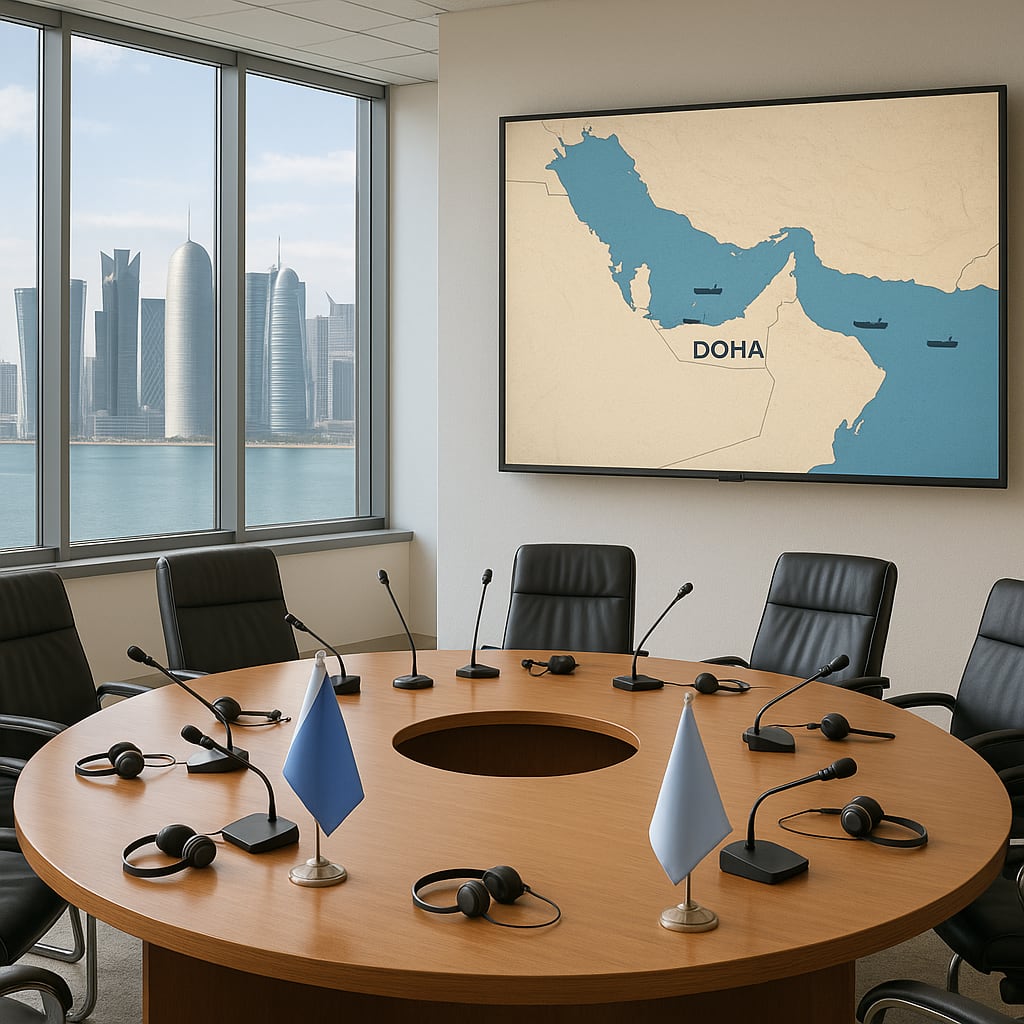
US–Iran stand-down sets up Doha talks under Qatari mediation, with asset and nuclear files in play
Narrative Snapshot
- Broad agreement: outlets across regions report a ceasefire/stand-down tied to a memorandum of understanding and Qatari facilitation, with technical tracks continuing (The Hindu, 28 Jun; TASS, 30 Jun; Middle East Eye, 1 Jul).
- Key divergence: whether a direct US–Iran meeting is set. The US president claimed one; Iranian officials denied it; Qatar emphasized US envoys were meeting mediators, not Iranians; and reporting highlighted indirect channels on assets (The Hindu, 29 Jun; The Guardian, 29–30 Jun; ANSA, 30 Jun).
- Framing differences: US outlets stress verification, budgets, and domestic politics around war powers and the evangelical right (Fox News, 24–26, 30 Jun). European and Latin American coverage elevates regional linkages (Lebanon track, Hormuz commerce) and EU involvement (ANSA, 27 & 30 Jun; Folha de S.Paulo, 24 Jun; Clarín, 29 Jun).
- What’s at stake: safe passage through the Strait of Hormuz; sequencing of sanctions/asset issues; and whether verification and regional spillovers (Lebanon/Hezbollah) derail or reinforce the Doha channel (The Guardian, 29–30 Jun; Fox News, 26 Jun; ANSA, 27 Jun).
What Happened
After a flare-up that disrupted shipping in the Strait of Hormuz, US and Iranian officials agreed to halt strikes and continue technical talks rooted in a recently signed memorandum of understanding, with Doha as the venue (The Hindu, 28 Jun; The Guardian, 29 Jun; TASS, 30 Jun). The White House dispatched envoys Steve Witkoff and Jared Kushner to Qatar; Witkoff also moved a nuclear negotiating technical team from Switzerland to Doha, according to reports cited by Middle East Eye (Clarín, 29 Jun; MEE, 29 Jun). Iran and the US were due to restart indirect discussions on unfreezing at least $6bn in Iranian assets, while Qatari officials stressed no face-to-face had occurred (The Guardian, 30 Jun). Qatar’s prime minister met the US envoys as Doha reaffirmed mediation (MEE, 1 Jul). Parallel developments include EU envoy Luigi Di Maio’s meetings in Qatar (ANSA, 30 Jun) and Hezbollah’s denunciation of the agreement (ANSA, 27 Jun).
Why It Matters
The Doha track links immediate maritime de-escalation to longer-running bargaining over sanctions relief, frozen assets, and nuclear verification. A functioning stand-down helps reopen a chokepoint central to global energy flows; its durability affects shipping risk premiums and Gulf economic stability (The Guardian, 29 Jun; TASS, 30 Jun). Negotiations intersect with institutional issues: IAEA access is flagged as pivotal to any durable nuclear understandings, while US budget requests would fund removal of nuclear materials and inspections (Fox News, 24 & 26 Jun). Qatar’s role underscores Gulf mediation capacity; ANSA also highlights EU engagement and reporting on an Iran–Oman payments mechanism at Hormuz, indicating multiple facilitation channels (ANSA, 30 Jun). Regionally, a US-brokered Israel–Lebanon framework and Hezbollah’s opposition show how the Lebanese front can either sustain or undercut progress with Tehran (Fox News, 26 Jun; ANSA, 27 Jun; Folha de S.Paulo, 24 Jun).
Diverging Narratives
A core split concerns format and momentum. The US president publicly asserted Iran had requested a meeting; Tehran said none was scheduled; Qatar emphasized mediator-only talks, and UK reporting noted no face-to-face since the ceasefire deal (The Hindu, 29 Jun; The Guardian, 30 Jun; ANSA, 30 Jun). On implementation, Clarín reports reciprocal accusations of ceasefire violations since the 17 June arrangement, while TASS cites Qatar stating a ceasefire remains in effect, reflecting differing assessments of compliance (Clarín, 29 Jun; TASS, 30 Jun). Financial sequencing is also framed differently: Middle East Eye reports US officials say Iran has not received funds under the MoU, even as The Guardian says asset discussions are set to restart (MEE, 29 Jun; The Guardian, 30 Jun). Verification is a potential hinge point: Fox News highlights expert assessments that IAEA access to long-blocked sites could be a deal-breaker, contrasting with diplomatic reporting that focuses more on process than inspection specifics (Fox News, 26 Jun). Domestically, US coverage notes a Senate defeat for efforts to constrain presidential war powers and a split among evangelical leaders over the MoU, indicating political cross-pressures on the US negotiating posture (Fox News, 25 & 30 Jun).
What Happens Next
- Directness of talks: Watch for official confirmation of any face-to-face US–Iran meeting in Doha versus continued shuttle mediation. Qatar’s spokesman has downplayed direct engagement; a shift would signal a new phase (The Guardian, 30 Jun; ANSA, 30 Jun).
- Asset channel: Indicators include announcements on banking mechanisms and any initial tranche movement from the at least $6bn under discussion; to date, US officials have said no funds have been released under the MoU (The Guardian, 30 Jun; MEE, 29 Jun).
- Verification terms: Look for IAEA statements or Iranian commitments on access to previously restricted sites; experts cited warn access is central to any sustainable deal (Fox News, 26 Jun).
- Ceasefire performance and Hormuz traffic: Shipping normalization and reduced claims of violations would reinforce the Doha process; renewed tit-for-tat fire would raise risk to the channel (The Guardian, 29 Jun; Clarín, 29 Jun).
- Regional linkages: Steps to implement the Israel–Lebanon framework and Hezbollah reactions will affect the broader equilibrium around the talks (Fox News, 26 Jun; ANSA, 27 Jun).
- Policy levers in Washington and Brussels: Movement on US supplemental funding for nuclear-related activities and the EU envoy’s mediation support would shape technical capacity and diplomatic cover (Fox News, 24 Jun; ANSA, 30 Jun).