
[SECTION 1]
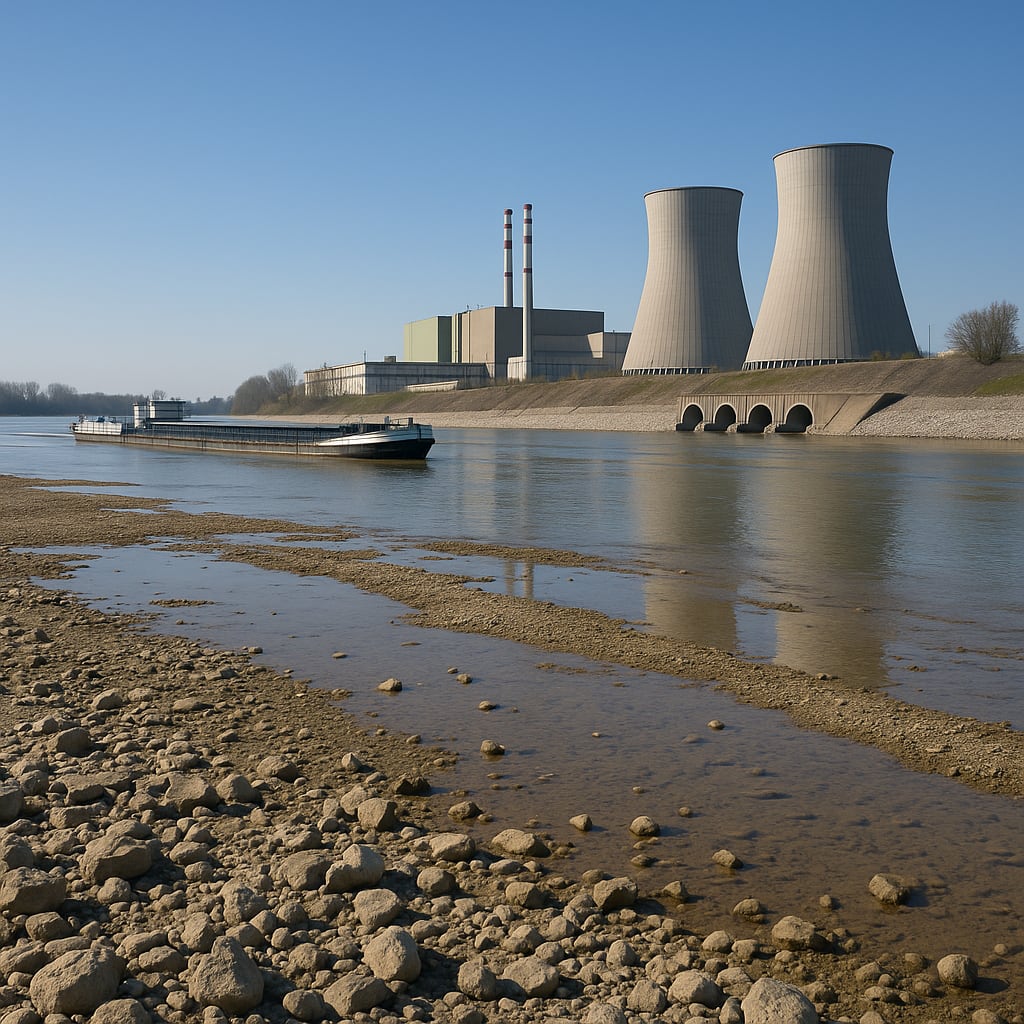
Elena: [quietly] A country just called its next five days “critical” because the river that cools its only nuclear plant has fallen too low to do the job.
Lukas: [short pause] That’s Hungary. Paks. [curious] Nuclear shuts down… for lack of river?
Elena: [carefully] Most of it is already powered down, with a full shutdown expected as Danube levels keep dropping. The core tension is simple: the thing sold as baseload reliability is turning out to be weather‑dependent.
Lukas: [skeptical] But—nuclear’s supposed to be the steady one. What actually fails here? A sensor? A rule?
Elena: Both the physics and the rules. Those reactors pull huge volumes of river water to carry heat away. You need enough flow, and you have discharge temperature limits to protect ecosystems. When levels dip this far, operators have to throttle back or stop. [short pause] Serbia’s Politika framed it clinically: the river at Paks fell below the critical gauge, experts standing by to halt reactors for the first time in 44 years.
Lukas: [exhales] Forty‑four years gives the decision some weight.
Elena: It does. And look at how outlets choose their front doors. One live blog in the UK tucked it into a rolling heatwave update: energy crunch risk, 37 degrees in Budapest, plant forced to cut output. It’s a systems story.
Lukas: [amused] And then there’s the archaeology feed. [short pause] I saw headlines about sunken Nazi warships reappearing. Even a mammoth bone somewhere?
Elena: Corriere ran a clip from Bulgaria: riverbed so exposed that mammoth remains popped up. It’s the same river, same drought—one frame sells wonder, the other screams infrastructure fragility.
Lukas: [dryly] The grid becomes a backdrop to a museum tour.
Elena: [dryly] And another ecosystem leans into spectacle plus geopolitics. A Russian state outlet pushed dramatic photos of warships, then segued to “EU countries forced into atomic power‑downs.” The implication isn’t climate stress; it’s Western weakness.
Lukas: [serious] Meanwhile in Hungary, it’s not an implication. It’s the lights.
Elena: And public tone management. Japan Times quoted the prime minister: first halt in over four decades, “most critical five days ahead.” That phrase does two jobs—signals emergency, but also a bounded window so people don’t panic about winter.
Lukas: [curious] Walk me through the mechanism like I’m staring at the intake pipe. What fails first?
Elena: [matter-of-fact] Intake pumps can’t get the volume they need; silt and debris concentrate; fish kill risks rise if discharge water runs hot; and regulators set hard lines on temperature and flow. Cross them, you ramp down. Cross them further, you trip offline.
Lukas: So even if the reactor is fine, the river is the bottleneck.
Elena: [softly] Exactly. The plant is a giant heater that needs a moving body of water to carry waste heat away. When the water stops moving or gets too shallow, reliability becomes a mirage.
Lukas: [short pause] This is the part that feels like a narrative crack. For years, nuclear advocates say “weather‑proof.” And then a heatwave makes a river vanish and the most stable thing in the country blinks.
Elena: That crack is where the framing fights happen. Do you show a shipwreck and move on? Do you put “heatwave forces shutdown” in the headline, like Al Jazeera did? Or do you reduce it to a line item in a heat map?
Lukas: [quietly] And what we choose to look at decides what we think the problem is. A curiosity problem. Or a climate adaptation problem.
[SECTION 2]
Lukas: [carefully] There’s also the political math. “Critical five days” suggests: hold your breath, we’ll muscle through. [skeptical] Is that realistic if the river keeps dropping?
Elena: It buys time—for triage, for voluntary demand cuts. One paper in Hong Kong noted the government asking businesses to ease consumption. It’s conservation by soft pressure, not rationing. Yet.
Lukas: [interrupts] And transport? If the Danube is this low, barges are stuck too.
Elena: [matter-of-fact] Hungary’s own transport officials say river traffic has nearly halted. Add that to electricity cuts and you get a compounding shock: fewer megawatts, slower logistics, hotter cities.
Lukas: [exhales] The heatwave stops being “weather” and becomes paperwork. Procurement, hospital generators, grid dispatch.
Elena: Different media profit from different stories. A European broadsheet frames it as a heatwave‑driven energy crunch—tie it to climate, warn, move on. A Serbian outlet leans technical and local—water gauge, protocols, precedent. A Russian state site strings war relics and “atomic power‑downs” into a narrative about EU fragility. None of them are lying; they’re choosing.
Lukas: [curious] What’s the operator’s choice set? Can you retrofit out of this—cooling towers, different intake, anything fast?
Elena: [thoughtful] You can add closed‑loop cooling or hybrid towers to reduce river dependence. But that’s money, multi‑year permitting, construction. Not five days. You can dredge intake channels, tweak discharge, stage temporary pumps. Those are Band‑Aids.
Lukas: [quietly] And Hungary is landlocked. There’s no coastal siting escape hatch.
Elena: Which is why the reliability slogan needs an asterisk. Baseload is stable—until hydrology isn’t. If summer low flows become the new normal, you’ve introduced seasonality into the thing you told voters was constant.
Lukas: [short pause] You can hear the incentives collide. Government: project control. Operator: avoid blame, point to river levels and safety rules. Climate folks: say “this is what warming looks like.” Pro‑nuclear voices: argue it’s still cleaner and usually reliable.
Elena: And all of them are partially right. But the power of the story is in the dependency it exposes. The Danube isn’t just a scenic border; it’s a single point of failure for a third of a country’s electricity.
Lukas: [dryly] And a great content farm for mammoth bones and WWII wrecks.
Elena: [amused] The relics are real. They just crowd out the part where engineers recalculate risk curves in a control room.
Lukas: [serious] What happens if next August looks like this August? Do we normalize “critical five days,” every year?
Elena: [long pause] If we do, the frame shifts again. From emergency to calendar event. And once it’s on the calendar, markets and households start pricing it in—diesel generators, new contracts, quiet inequality.
Lukas: [softly] The story you click changes the grid you get.
Elena: [quietly] Or the grid you get changes which stories you’re allowed to click.
Lukas: [short pause] That’s the part that stays with me. A river decides, and everyone pretends they chose.