
Iran sets conditions for reopening Hormuz as Oman route nears and US signals conditional blockade lift
Narrative Snapshot
Across outlets, there is convergence that Tehran and Muscat are close to a technical routing arrangement for shipping through the Strait of Hormuz, but Iranian officials and several reports stress that this alone will not reopen the waterway. Iranian state and semi-official media present the core constraint as Washington’s “behavior,” with references to alleged breaches of a June “Islamabad” memorandum of understanding; France 24 adds that many of the items now labeled as “new” were already captured—albeit broadly—in that June text. By contrast, a US official briefing cited by NHK (via Reuters) signals that Washington could lift its maritime blockade if an arrangement guarantees free navigation.
Outlets diverge in framing the scope of Tehran’s demands. Iranian sources and Al Jazeera describe a broad set of conditions; the Times of Israel and NBC emphasize the severity—withdrawal of US forces, a permanent end to hostilities, and full compensation—while Telesur centers sanctions relief, unfreezing assets, and reparations. DW highlights the Islamic Revolutionary Guard Corps’ line that reopening depends on US acceptance of Iran’s terms rather than on progress with Oman.
The security environment is a shared caveat. The UAE’s claim that an Emirati ship was hit by an Iranian missile is carried by the Guardian, NBC, and Haaretz, even as Oman publicly urges all sides to avoid steps that could derail the talks, according to TASS. Russian outlets present two contrasting emphases: one expert forecast of a prolonged closure of up to a year if conditions are unmet (TASS), and reporting—via Axios—of an interim deal that would grant Tehran greater control over routing (RT).
Finally, coverage splits on whether US–Iran talks exist at all. Trump’s assertions that negotiations are under way and this is Tehran’s “last chance” are reported by Middle East Eye, CGTN, and The Hindu, while Iranian officials insist there are no direct talks and say indirect messages continue through intermediaries. IRNA, Tehran Times, and Middle East Eye underscore that any resumption would require Washington to cease violations of the June MoU and provide compensation.
What Happened
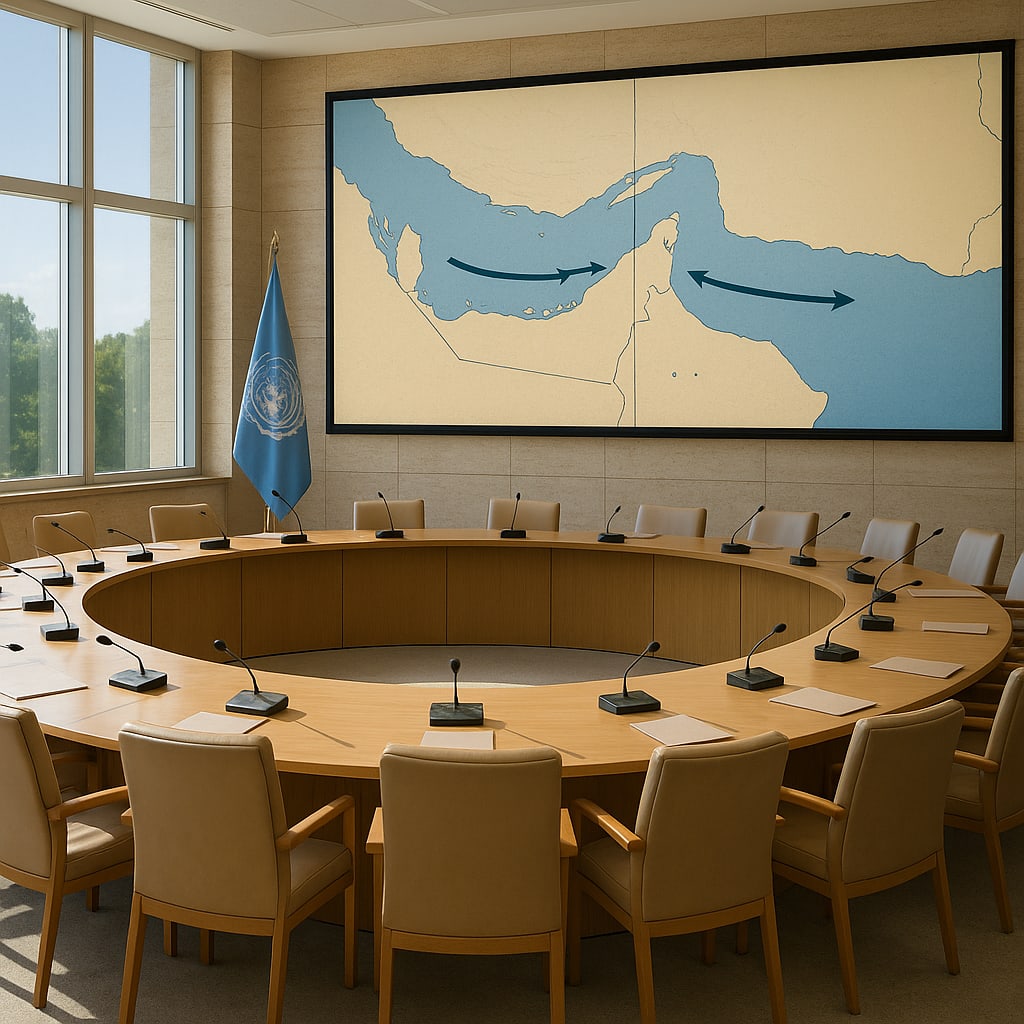
Iran’s Supreme National Security Council, via state channels, outlined conditions for reopening the Strait of Hormuz, including ending US military actions and sanctions, lifting a naval blockade, releasing frozen assets, paying compensation for war damage, and withdrawing US forces from the region or ending hostilities, as various outlets summarize. In parallel, Iranian and Omani officials say a temporary routing plan is close: CGTN and IRNA describe an in‑principle agreement on a single route within Iranian territorial waters for two to four months, with entry and exit coordinates agreed. Oman’s foreign ministry calls talks positive and urges restraint. A US official told Reuters, reported by NHK, that Washington could lift its maritime blockade if any deal guarantees free navigation. The UAE said one of its ships was hit by an Iranian missile, complicating diplomacy. Iranian Foreign Minister Abbas Araghchi said there are no US–Iran talks and that US “violations” of a June MoU must end before any resumption.
Why It Matters
The standoff fuses strategic transit, wartime bargaining, and sanctions architecture. Multiple outlets note the strait’s centrality to global seaborne energy flows, turning route management into leverage over conflict dynamics. If Iran and Oman implement a single, temporary corridor inside Iranian waters—as described by CGTN and IRNA—Tehran’s operational say over passage would increase, testing how “free navigation” is interpreted by the US and partners. The episode also stress‑tests informal understandings: France 24 reports that many Iranian demands track with a June Islamabad MoU, while IRNA and Tehran Times accuse Washington of breaching it. For decision‑makers, this raises questions about the credibility and durability of non‑treaty arrangements in crisis management, the threshold for lifting or reimposing coercive maritime measures, and the risks that kinetic incidents—like the Emirati ship strike reported by the Guardian, NBC, and Haaretz—pose to technical de‑escalation tracks even when route engineering advances.
Diverging Narratives
Whether a near‑term opening is plausible turns on competing claims about linkage. Iranian officials argue the Oman routing accord is necessary but insufficient; reopening, they say, hinges on the US changing course, addressing sanctions and military posture, and compensating Iran (IRNA, Tehran Times, Al Jazeera). The IRGC position, reported by DW, reinforces that talks with Muscat do not determine the strait’s status. Conversely, a US official cited by NHK suggests Washington could lift its blockade if freedom of navigation is assured, implying a narrower, maritime‑focused threshold.
There is also disagreement over the novelty of Tehran’s conditions. The Times of Israel and NBC frame them as steep or drastic, spotlighting troop withdrawals, a permanent end to the conflict, and full compensation. France 24 counters that many points were already encompassed—albeit in broad language—in June’s Islamabad MoU. Parallel narratives compete on diplomacy’s very existence: Trump’s claim that talks are under way (MEE, CGTN, The Hindu) versus Iranian denials and insistence on ending MoU “violations” before any talks (IRNA, MEE, Tehran Times). Finally, assessments of duration diverge: TASS relays an expert view that closure could last up to a year if demands are unmet, while NHK’s reporting of a potential US move to lift the blockade under a navigation deal gestures to a shorter‑term opening contingent on technical guarantees.
What Happens Next
Three decision points emerge from the reporting. First, whether Tehran and Muscat formalize the temporary routing plan and whether Washington deems it sufficient to constitute “free navigation.” An Iranian‑Omani announcement detailing a single corridor, coordinates, and traffic rules—as described by CGTN and IRNA—paired with a US statement echoing NHK’s condition would signal one pathway to easing the blockade.
Second, how the parties position around the June Islamabad MoU. If US officials publicly contest or accept France 24’s characterization that many Iranian demands are already embedded in that text, it will shape whether Tehran’s list is treated as escalation or codification. Any US move framed as addressing “violations,” or statements about compensation, would be pivotal given IRNA and Tehran Times’ linkage of reopening and talks to MoU compliance.
Third, incident management around the strait. Further strikes like the Emirati ship attack reported by the Guardian, NBC, and Haaretz would validate Oman’s warning, via TASS, about actions that could derail progress, hardening positions in Tehran and Washington. Conversely, a measurable lull in attacks alongside messaging via intermediaries noted by Middle East Eye could preserve space for implementing the route while larger conditions remain unresolved.