
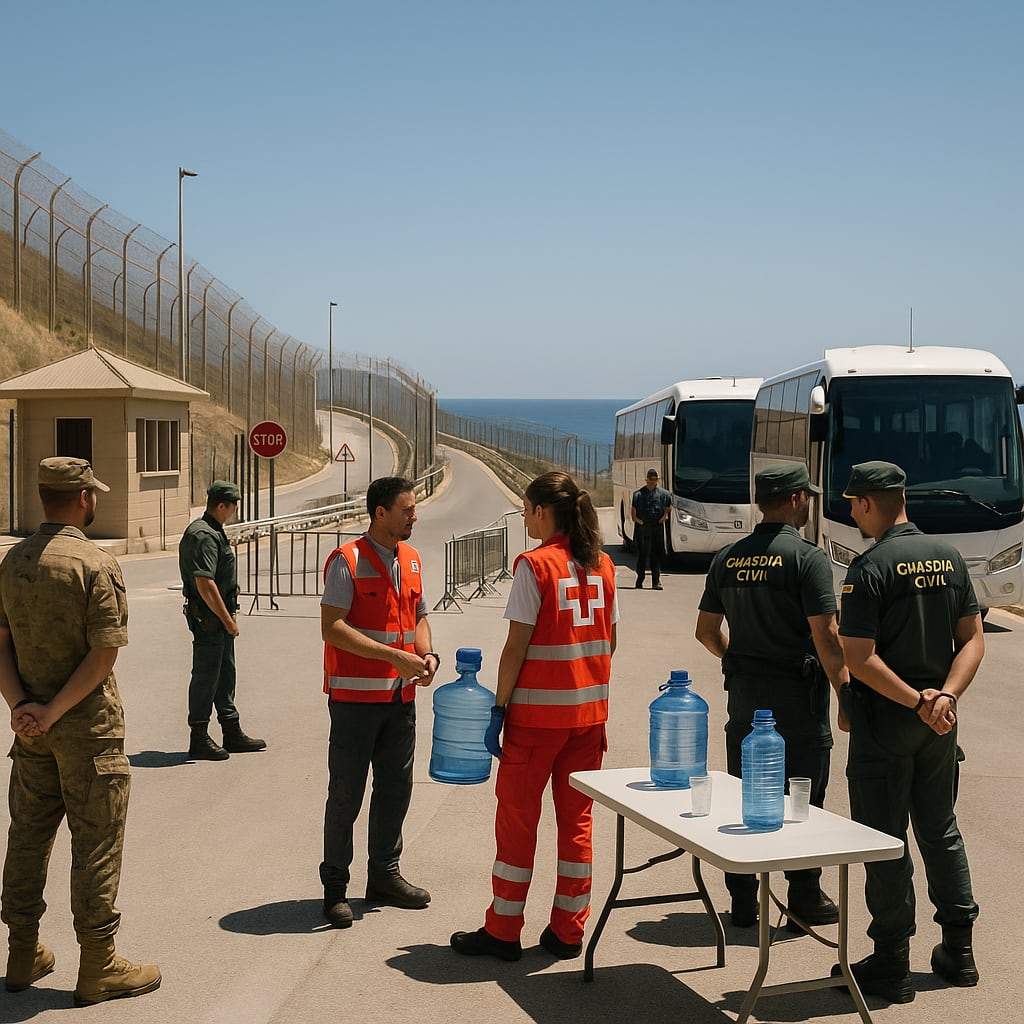
Spain deploys troops to Ceuta as mass crossings from Morocco surge; officials report large inflows and fatalities
Narrative Snapshot
Across outlets, there is broad convergence that local security in Ceuta was overwhelmed and that Spain moved military units to reinforce the Guardia Civil after local authorities sought central support. International and Spanish-language reporting consistently describes requests for an emergency posture from Ceuta and a central-government decision to send troops rather than invoke a formal national emergency, with Deutsche Welle, Sky News, Toronto Star/AP and Bangkok Post emphasizing the local appeals and Madrid’s deployment. South China Morning Post adds that Spain’s interior ministry said it could not declare a national emergency over migration concerns while pledging to safeguard the border.
The most pronounced divergence is over scale. Early counts placed arrivals in the low thousands—Le Monde and La Repubblica reported 1,500–2,000 over recent days, and Japan Times cited 2,000–3,000 on Thursday—while later tallies in BBC and France 24 cite roughly 49,000–50,000 in a 24‑hour period. RT presents a contrasting picture of central restraint, claiming only 60 troops were dispatched and relaying assertions that up to 30,000 people were massed at the frontier. Fatality figures also vary: several outlets cite at least 18 deaths (TASS, France 24, Clarín), while Fox News and CGTN report at least nine.
Interpretive frames differ. New York Times and Corriere della Sera situate the episode in a longer pattern of mass crossings and political tensions around Spain’s North African enclaves, with Corriere noting that Rabat has in recent years “used” Ceuta and Melilla to pressure Madrid. Most others foreground operational stress on policing and reception. Downstream European responses appear in limited reporting: Telesur English says President Macron ordered tighter controls on France’s border with Spain and offered Frontex support; it also uniquely reports that Spain returned over 40,000 people to Morocco following the surge.
What Happened
Regional authorities in Ceuta reported large numbers of people entering from Morocco, initially by sea, with Le Monde describing video of men and adolescents swimming to the enclave and La Repubblica noting that some women, children and entire families attempted the crossing, with at least 20 people reported missing. As crossings accelerated, local officials asked Madrid to declare a national emergency and send the army (Deutsche Welle, Sky News, Toronto Star/AP). Spain’s interior ministry pledged to secure the border but could not declare a national emergency on migration grounds (South China Morning Post). The government deployed armed forces to support the Guardia Civil, reinforced by specialized police units, and Prime Minister Pedro Sánchez planned to travel to Ceuta (Bangkok Post, CBC, Clarín, Fox News, CGTN). Casualty counts differ by outlet, ranging from at least nine to at least 18 deaths (Fox News, CGTN, TASS, France 24). The scale of arrivals escalated sharply in late reports, with BBC citing about 49,000 and France 24 nearly 50,000 over 24 hours.
Why It Matters
Ceuta’s geography and status—Spanish-administered for centuries on Morocco’s coast—make it a focal point where migration control, bilateral diplomacy and European border policy intersect (New York Times). The episode revives a pattern noted by Corriere della Sera in which Morocco has, in recent years, leveraged the enclaves to signal or exert pressure on Madrid, and echoes Spain’s 2021 experience when more than 8,000 people entered Ceuta in two days, triggering a diplomatic dispute (Fox News). The immediate Spanish response—eschewing a national emergency while surging military and police reinforcement—highlights institutional thresholds for crisis designation and the operational limits of local authorities (South China Morning Post, Deutsche Welle).
European spillovers are plausible if secondary movements occur or if member states tighten internal borders. Telesur English reports that President Macron ordered stricter controls at France’s border with Spain and offered Frontex support, indicating potential EU‑level engagement. For decision-makers, the episode tests Spain‑Morocco cooperation on border management, reception and returns, and raises humanitarian protection concerns given reports of deaths and missing people (France 24, TASS, La Repubblica).
Diverging Narratives
Disagreement centers first on magnitude and tempo. Initial figures in Le Monde and La Repubblica cite 1,500–2,000 arrivals over days, and Japan Times reports 2,000–3,000 on Thursday, while BBC and France 24 attribute to officials roughly 49,000–50,000 crossings in a 24‑hour span. RT, by contrast, emphasizes limited Spanish reinforcement—“just 60” troops—and suggests tens of thousands more were gathered at the frontier. Second, casualty reporting is inconsistent: Fox News and CGTN cite at least nine deaths, while TASS, France 24 and Clarín report at least 18; La Repubblica adds that at least 20 are missing. Third, assessments of Madrid’s posture differ: multiple outlets highlight the deployment of troops and planned high‑level visits, whereas RT and South China Morning Post stress that the central government did not grant Ceuta’s request for a national emergency.
There are also divergences on outcomes. Telesur English alone reports that Spain returned over 40,000 people to Morocco following the surge. Separately, Telesur says President Macron ordered tighter controls on the French‑Spanish border and referenced Frontex support, a development not echoed elsewhere in this set. Meanwhile, New York Times and Corriere frame the crossings within a history of political tension around the enclaves, a context less present in operationally focused reports.
What Happens Next
Key decisions will shape immediate trajectories. On Spanish domestic response, outlets indicate a choice between continued reinforcement and any escalation toward exceptional legal measures; South China Morning Post reports the interior ministry ruled out a national emergency on migration grounds while vowing to maintain border integrity. Monitoring troop and police deployments, reception capacity, and whether Prime Minister Sánchez outlines further measures during his visit will be indicative (CBC, Clarín, Fox News).
On cross‑border management, reporting diverges on returns: Telesur English cites over 40,000 returned to Morocco, a claim to watch for corroboration. Signals from Rabat on cooperation, and any changes in flows, will determine operational burden and humanitarian risk. At the European level, Telesur’s account of tighter French border controls and potential Frontex support suggests a pathway to broader engagement; confirmation by French or EU authorities would be a marker. Finally, casualty and missing‑person figures remain fluid; updates from Spanish and Moroccan authorities, as reported by mainstream outlets, will refine the humanitarian picture (France 24, TASS, La Repubblica).