
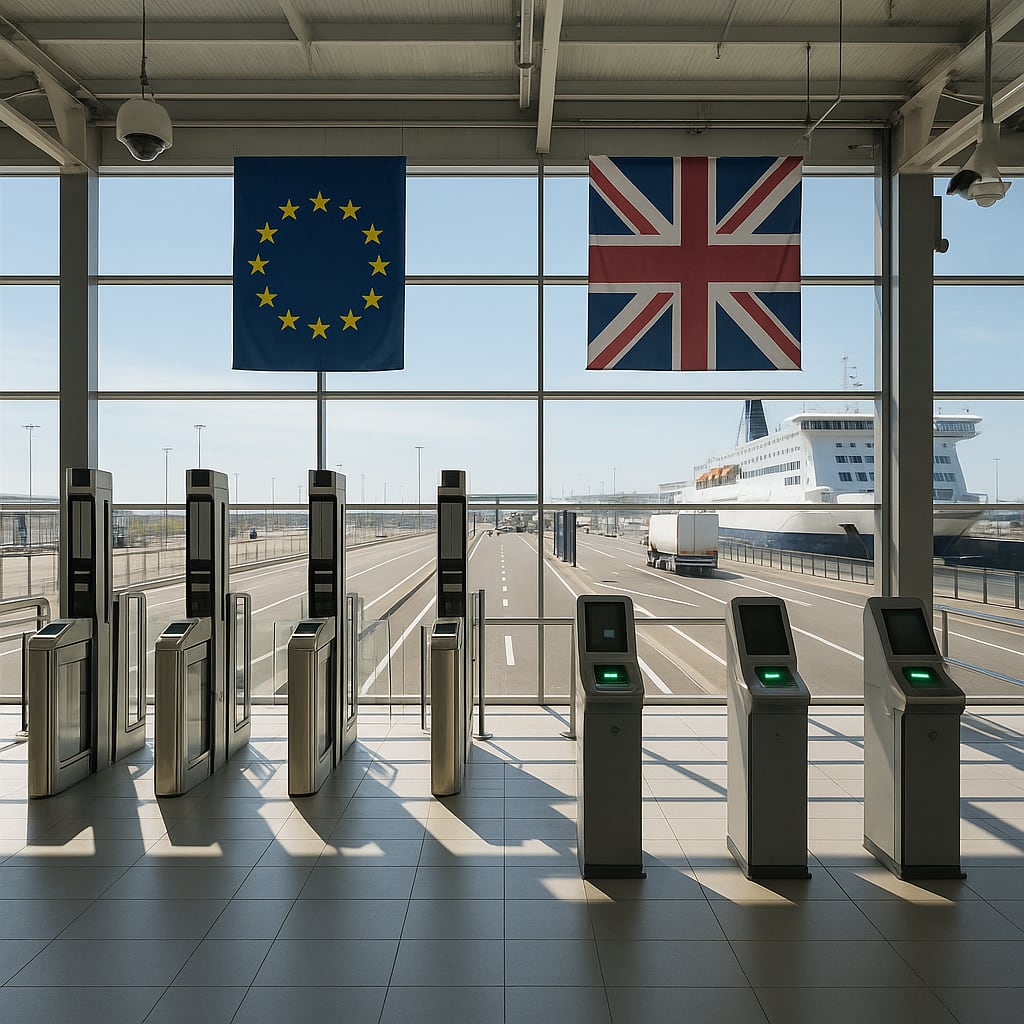
Ten years after Brexit, Brussels advances a Channel plan as the UK confronts its legacy and new EU border checks
Narrative Snapshot
- Economic diagnosis converges: Le Monde’s interview with Sarah Hall, the New York Times, and Corriere della Sera all depict measurable economic drag from Brexit, especially for goods trade and EU-labor-dependent sectors, with Corriere adding a paradox of higher immigration alongside lower growth.
- Political trajectories diverge: Corriere states London will not return to the EU; Folha de S.Paulo says the rejoin debate now looks unavoidable after Keir Starmer’s fall; Clarin highlights regret and Irish passport demand; RT frames a desire to “return” blocked by EU terms. In France, Le Monde notes “Frexit” has receded from major-party agendas.
- Border governance is the live policy arena: Le Monde reports the European Commission’s Channel action plan as a step toward EU-level handling; the BBC details imminent frictions from the EU Entry/Exit System for UK travelers.
What Happened
Marking the referendum’s tenth anniversary, multiple outlets reassessed Brexit’s consequences. The European Commission presented a Channel-crossings action plan that France welcomed as acknowledging the issue’s European dimension, as a bilateral “One in, One out” Franco‑British arrangement approaches its October expiry (Le Monde, 23 June). In the UK, political context has shifted: after cautioning in 2024 against reopening the rejoin debate, Keir Starmer has since lost the premiership, and discussion of the UK‑EU relationship has resurfaced (Folha de S.Paulo, 23 June). Economic coverage emphasizes ongoing disruption: exports and sectors reliant on EU workers were hardest hit, and the UK has begun a limited rapprochement with Brussels (Le Monde interview with Sarah Hall, 23 June; New York Times, 23 June). Meanwhile, the EU’s new Entry/Exit System will alter travel for UK passengers to 29 countries, with warnings of holiday delays (BBC, 24 June).
Why It Matters
These developments redefine where Brexit-era frictions are being managed: migration and border processes are moving toward EU-level coordination, away from ad hoc bilateralism. The Commission’s Channel action plan, welcomed by France as a Europeanization of cross-Channel management, could embed collective responsibility for an issue previously dominated by UK‑France bargaining (Le Monde, 23 June). The EU’s Entry/Exit System operationalizes a third‑country border regime for the UK, with practical implications for ports, carriers, and police cooperation (BBC, 24 June). Economically, assessments pointing to lasting trade and labor-market costs (Le Monde/Sarah Hall; New York Times; Corriere) reinforce incentives for targeted UK‑EU technical alignments short of reentry—consistent with reporting of a recent “rapprochement” (Le Monde, 23 June). Politically, French parties’ retreat from “Frexit” narrows exit contagion risk within the EU (Le Monde, 23 June), even as UK outlets and foreign coverage record persistent domestic contestation over Brexit’s settlement.
Diverging Narratives
- On destination: Corriere della Sera asserts the UK will not return to the EU, presenting reentry as off the table despite economic underperformance. Folha de S.Paulo, by contrast, treats renewed debate as unavoidable post‑Starmer, while Clarin stresses popular remorse and a turn to Irish passports as a pathway back to EU mobility. RT characterizes the UK as wanting back “but not on the EU’s terms.” These are different readings of public sentiment, political feasibility, and EU conditionality.
- On costs: Le Monde’s interview with Sarah Hall, the New York Times, and Corriere align on negative economic effects, pinpointing goods exports and EU‑labor‑intensive sectors. Middle East Eye’s opinion column goes further, branding the legacy “universal disappointment,” a normative claim beyond the empirical focus of the other outlets.
- On governance locus: Le Monde frames the Commission’s Channel plan as a first step toward EU‑level management; the BBC anchors attention on the concrete border consequences of the EU Entry/Exit System for UK travelers. Together they center implementation challenges, while UK‑focused pieces emphasize macroeconomic and political fallout.
What Happens Next
- Channel governance choice: With the “One in, One out” accord expiring in October, watch whether member states and the UK operationalize elements of the Commission’s action plan and whether France shifts cooperation from a bilateral to an EU‑anchored track (Le Monde, 23 June). Indicators: Council/Commission follow‑up, funding decisions, and UK engagement with EU fora.
- Border implementation risk: The EU Entry/Exit System’s rollout will test port/terminal capacity and carrier readiness (BBC, 24 June). Indicators: staffing commitments at UK–EU choke points, contingency measures by operators, and any phased implementation agreements.
- UK–EU relationship bandwidth: Reporting of a limited rapprochement (Le Monde/Sarah Hall) alongside renewed domestic debate (Folha) and skepticism on reentry prospects (Corriere) points to potential sectoral fixes rather than treaty redesign. Indicators: proposals on mobility for workers, regulatory cooperation in affected sectors, and leadership signals on reopening negotiations versus maintaining the current framework.
- EU political context: The decline of “Frexit” discourse in France (Le Monde) reduces immediate centrifugal pressures, shaping how far EU institutions and Paris invest in collective migration management.