
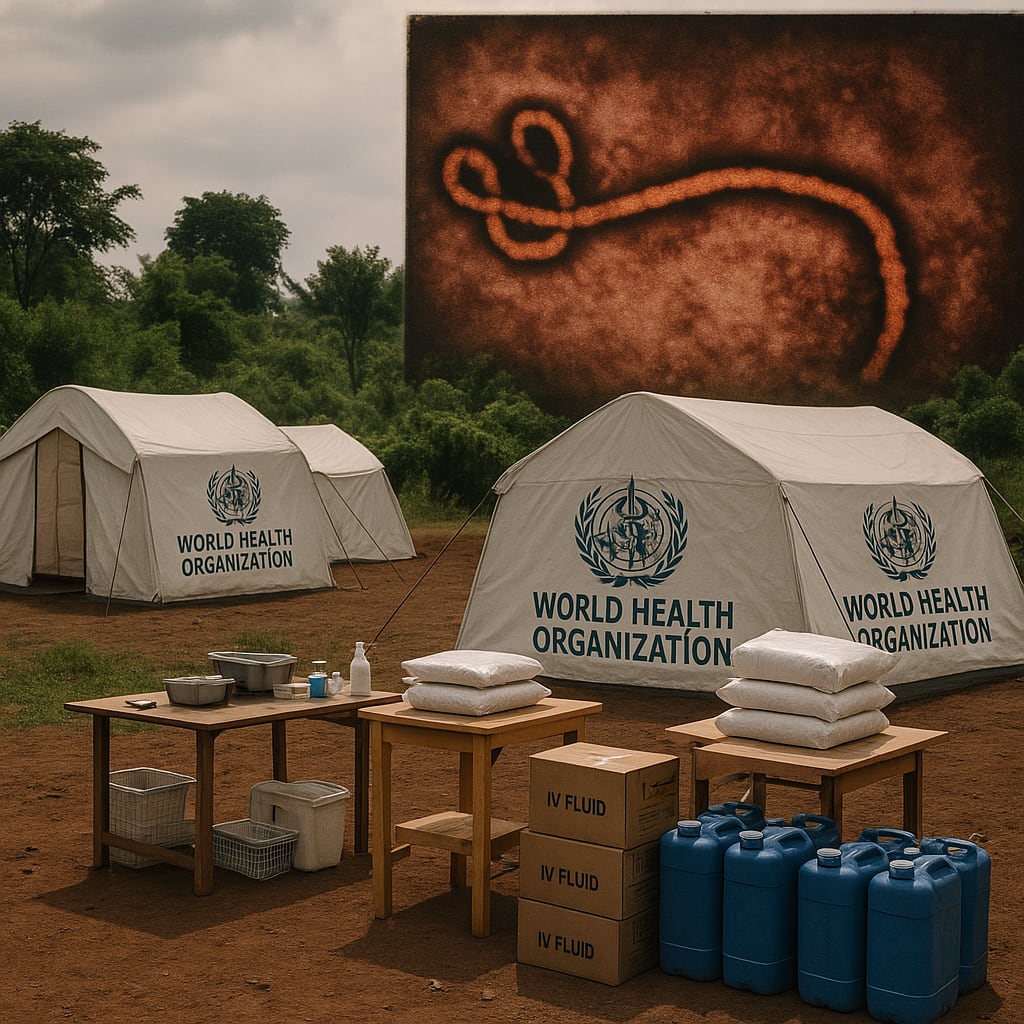
Ebola Outbreak Escalates in Eastern Congo Amid Fears of Cross-border Spread
The Ebola outbreak in eastern Congo is growing at a worrying pace, with the World Health Organization (WHO) and other health authorities raising concerns over the rapid spread of the virus and its potential to cross borders. The rare Bundibugyo strain of the virus, which has no approved vaccine or treatment, is reportedly causing the surge in infections.
Background and Context
The recent upsurge in Ebola cases in the Democratic Republic of Congo (DRC) is causing alarm among international health officials. As of May 21, authorities reported 83 confirmed infections, 746 suspected cases, and 1,603 identified contacts. However, health workers were only able to follow up with about 21% of the total under monitoring, according to the South China Morning Post.
The outbreak is further complicated by issues such as a new strain of the virus, aid cuts, cultural norms around burials and touch, and a fragile healthcare system struggling to cope. The WHO recently raised the Ebola risk level in the DRC to very high,
its highest level, amid fears of the disease spreading further in the region.
Key Developments
The number of suspected Ebola cases in DRC has now passed 900, with over 200 suspected deaths. Health authorities are worried about the virus spreading to other countries, with ten African nations, including Uganda, considered at risk.
The US State Department raised its travel advisory for the DRC to Level 4, warning Americans not to visit the nation. Despite these measures, an American doctor contracted the virus and has been flown to Germany for treatment, alongside his family who are being monitored for symptoms.
As the situation escalates, there have been attacks on Ebola treatment centers and reports of residents clashing with authorities over the bodies of suspected victims. The volatile situation is further fueling the spread of the disease.
Implications and Responses
The escalating crisis prompted WHO Chief, Tedros Ghebreyesus, to call for urgent action and improved pandemic preparedness. The organization declared the outbreak a global emergency, highlighting the scale and speed of the epidemic.
Despite the grim situation, the WHO maintains that the risk of the disease spreading globally remains low. However, the organization has faced criticism for its delayed response, with US Senator Marco Rubio stating that the WHO was a little late
in identifying the outbreak.
Current Status
Responses to the outbreak are ongoing, with the US State Department pledging to fund up to 50 Ebola treatment centers in the DRC or Uganda through $13 million in initial funding. Despite these measures, the situation remains critical, with the WHO warning of the scale and speed
of the Ebola epidemic.
In the face of these challenges, health workers and international bodies continue to work tirelessly in an effort to contain the outbreak. However, as the virus continues to spread, the situation remains precarious, with the global community closely monitoring developments.