
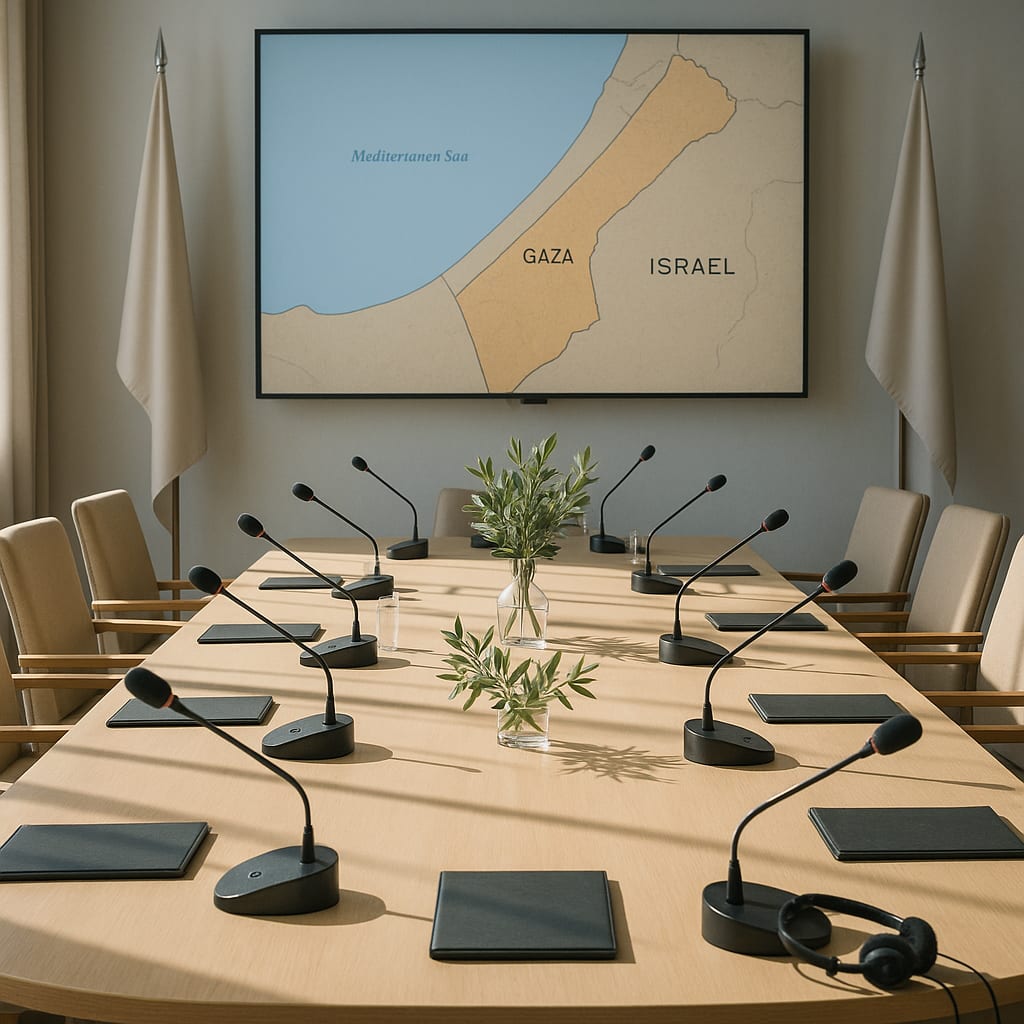
Hamas accepts phased Gaza disarmament framework tied to Israeli withdrawal, as Board of Peace presses reluctant Jerusalem
Narrative Snapshot
Across outlets, there is broad acknowledgment that Hamas has signaled acceptance of a phased disarmament roadmap embedded in the second phase of last year’s Gaza ceasefire, with implementation conditioned on Israeli steps. US- and Board of Peace–aligned sources emphasize a “historic” breakthrough and “complete disarmament” (Fox News; Le Monde), and cite a short window to lock in an implementation schedule (TASS citing AP; The Times of Israel on a 14‑day sprint). By contrast, regional reporting foregrounds Hamas’s stipulations—full Israeli withdrawal, cessation of attacks, and sequencing guarantees—before any weapons transfer (CBC/Reuters; Al Jazeera; Tehran Times; Telesur English; NHK).
Where the weapons go and who governs Gaza are framed differently. Several reports say arms would be placed under a Palestinian technocratic or transitional authority rather than handed to Israel (Bangkok Post; CGTN; Middle East Eye), while a Board of Peace spokesperson is cited saying Hamas will be excluded from any administrative governance structures (TASS, July 30). The Times of Israel’s publication of the deal’s text spotlights an ambition to link this to Palestinian self-determination and statehood, while France 24 highlights Israeli insistence on “genuine disarmament” before any pullout and notes official silence in Jerusalem.
Coverage of Israel’s response diverges. US and Israeli media describe pushback from the prime minister’s office and warnings from Washington against obstruction (The Times of Israel), with Le Monde characterizing Trump’s effort as trying to “force the hand” of Israel amid far-right opposition (Itamar Ben Gvir). Simultaneous reporting of continued Israeli strikes in Gaza underlines the gap between diplomatic framing and battlefield realities (CGTN; RT; Middle East Eye; Telesur English).
What Happened
US President Donald Trump announced that his Board of Peace had secured Hamas’s agreement to a roadmap for Gaza’s “complete disarmament,” brokered with Egypt, Qatar and Türkiye (Fox News; RT). The Board of Peace—described as created by Trump (Le Monde)—said Hamas accepted a framework to implement the next phases of the ceasefire, including new governance, security, relief and reconstruction arrangements (Middle East Eye). The Times of Israel published the deal’s text, which aims to end cycles of destruction and open a credible path to Palestinian self-determination. Board interlocutors outlined destruction of tunnels and arsenals and said Hamas would not participate in Gaza’s administrative governance (TASS, July 30). Hamas officials publicly conditioned any handover on Israeli withdrawal and an end to attacks (CBC/Reuters; Al Jazeera; Tehran Times; NHK), with multiple reports that weapons would be placed under a Palestinian technocratic or transitional authority (Bangkok Post; CGTN; Middle East Eye). Israel offered no formal response amid signaling of reservations and political turbulence, as Washington warned against obstruction and cited a two‑week window to set timelines (The Times of Israel; CGTN; France 24). Strikes in Gaza continued after the announcement (CGTN; Middle East Eye; Telesur English; RT).
Why It Matters
If implemented, the framework would reorder Gaza’s security and political architecture by moving armed capabilities under a Palestinian, non-Hamas authority and excluding Hamas from governance while linking demilitarization to Israeli withdrawal (Bangkok Post; CGTN; TASS, July 30). It tests whether a US-led ad hoc vehicle—the Board of Peace—can supplant or complement existing mediation channels with Egypt, Qatar and Türkiye (Fox News; Middle East Eye) and manage sequencing disputes that have derailed prior efforts. The published text’s references to Palestinian self-determination and statehood raise stakes for Israel’s coalition politics and for partners weighing recognition pathways or interim governance designs (The Times of Israel; Le Monde). European signaling that Hamas must “truly lay down arms” (Politika) and France 24’s reporting of Israel’s precondition of “genuine disarmament” underscore verification and enforcement as central institutional challenges. Continued hostilities, reported by several outlets, threaten to erode any confidence needed to launch second‑phase implementation (CGTN; Middle East Eye; Telesur English; RT).
Diverging Narratives
Trump’s announcement and Board of Peace messaging frame a decisive, “historic” leap toward “complete disarmament” (Fox News; Le Monde; Middle East Eye live), whereas multiple reports characterize Hamas’s step as acceptance of a phased roadmap with strict conditions on sequencing and Israeli conduct (CBC/Reuters; Al Jazeera; Tehran Times; Telesur English; NHK). On custodianship, several outlets say weapons would be stored under a Palestinian technocratic or transitional authority—“not” handed to Israel (Bangkok Post; CGTN; Middle East Eye)—and note Board claims that Hamas will be barred from governance (TASS, July 30). Communication inconsistencies also surface: some cite a 20‑point plan (Al Jazeera English), others a 15‑point proposal with Israeli reservations (CGTN), while The Times of Israel posts the full text and a US official describes a 14‑day window to set timelines.
Sequencing remains the crux. Hamas ties any handover to a complete Israeli withdrawal and end of attacks (CBC/Reuters; TASS, July 31; Telesur English), while Israeli sources insist on “genuine disarmament” before withdrawal and the prime minister’s office signals the proposal is unacceptable (France 24; The Times of Israel; CGTN). Analysts and correspondents caution that deep mistrust, political constraints in Israel, and ongoing strikes in Gaza complicate implementation despite the diplomatic framing (BBC; France 24; CGTN; Middle East Eye; Telesur English; RT).
What Happens Next
Three decision points will shape the trajectory. First, Israel’s official position: Jerusalem’s acceptance, rejection, or attempts to renegotiate sequencing will determine whether the Board of Peace’s cited 14‑day push to fix implementation timelines proceeds (The Times of Israel; CGTN; Le Monde). Indicators include a formal government response, coalition statements—including from far‑right ministers—and alignment or friction with Washington’s warning against obstruction (The Times of Israel; Le Monde).
Second, the mechanism for custody and verification: whether a Palestinian technocratic/transitional body is constituted to store arms and oversee tunnel and arsenal destruction, and whether any international forces are mandated, as referenced by Hamas conditions (Bangkok Post; CGTN; TASS, July 31). Watch for nominations to an administrative committee, terms of reference, and third‑party monitoring arrangements.
Third, battlefield dynamics and sequencing: reports of continued Israeli strikes and Hamas’s insistence on withdrawal-first sequencing could stall or truncate steps (CGTN; Middle East Eye; Telesur English; CBC/Reuters). Observable signals include IDF posture changes in Gaza, declared pauses, and mediator statements from Qatar, Egypt and Türkiye on compliance and next steps (Fox News; Middle East Eye).