
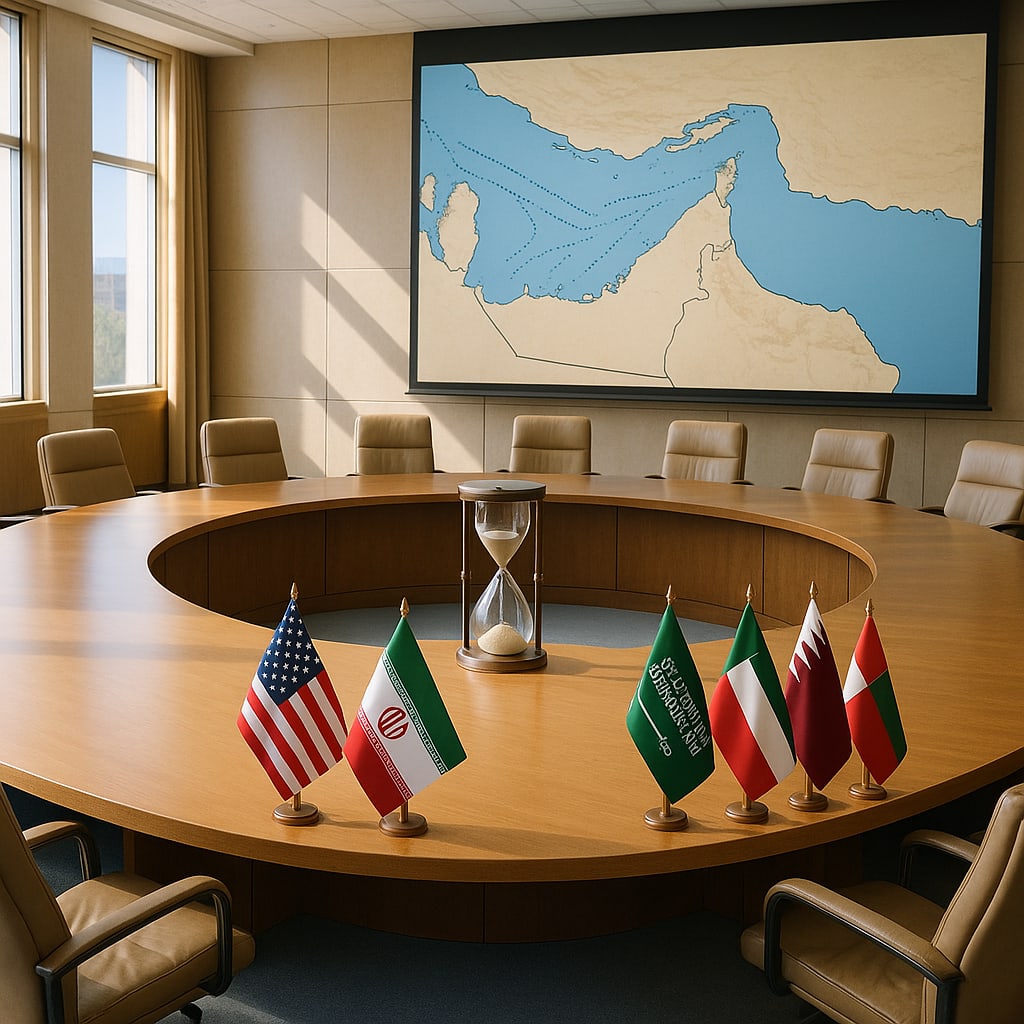
Trump says US-Iran talks under way, calls it Iran’s ‘last chance’; Tehran denies amid Hormuz tensions
Narrative Snapshot
Across outlets, reporters converge on two elements: the US president’s insistence that negotiations with Iran are happening or imminent, and Tehran’s denial that direct talks are under way. Several accounts emphasize that Washington’s stated aims are reopening the Strait of Hormuz and creating a path to address concerns about Iran’s nuclear program, with The Hindu underscoring a near-term window for talks to begin and Haaretz noting that any discussions acknowledged by Iran are limited to maritime issues in the strait.
Coverage diverges most visibly on tone and framing. Multiple international outlets foreground Donald Trump’s use of the term “decapitation” in threatening consequences if no deal is reached (South China Morning Post, France24, Bangkok Post), while NHK highlights Iran’s deterrent posture through President Masoud Pezeshkian’s pledge to take any measures needed to defend national interests, reinforcing Tehran’s rejection of direct talks. Fox News introduces process detail via expert commentary that engagement appears ongoing but does not amount to formal, face-to-face negotiations.
Other narratives widen the frame. CGTN reports Trump’s claim that contacts are occurring “at the request of Iran,” backed by Saudi Arabia, the UAE, and Qatar, assigning regional stakeholders an enabling role. Al Jazeera situates the moment in a pattern of prior “last chance” declarations. Tehran Times casts the US rhetoric as evidence of shrinking American leverage, while RT links the rhetoric to a reported overnight strike on a cargo ship in the Strait of Hormuz and portrays the conflict as a US-led war since late February—characterizations not echoed by other outlets.
What Happened
Speaking in the Oval Office on August 3, President Trump said negotiations with Iran were “going on right now” or would begin within “the next day or two,” calling it Iran’s “last chance” to sign a “good” agreement aimed at reopening the Strait of Hormuz and addressing US concerns about Iran’s nuclear program (ANSA; The Hindu; South China Morning Post; France24; Bangkok Post). Several outlets quoted him warning of “decapitation” if Tehran refused (SCMP; France24; Bangkok Post). Iran denied direct talks, with President Masoud Pezeshkian vowing to take all measures necessary to defend national interests and territory (NHK; Haaretz; CGTN). Fox News reported that Tehran has only acknowledged limited discussions with Oman, and cited expert assessment that engagement continues without formal sit-downs. CGTN relayed Trump’s claim that talks were requested by Iran and backed by Saudi Arabia, the UAE, and Qatar. RT reported a cargo ship was struck by an “unknown projectile” in the Strait after Trump’s remarks, as tensions in the five‑month conflict persisted (SCMP; RT).
Why It Matters
The dispute centers on the Strait of Hormuz, a critical maritime chokepoint that multiple reports say Washington wants reopened as part of any understanding with Iran (The Hindu; Haaretz; CGTN). The agenda also touches Iran’s nuclear program, raising the stakes beyond maritime deconfliction and into a domain where verification, sequencing, and scope become determinative for any sustainable arrangement (The Hindu; Fox News; France24). The coverage points to competing diplomatic architectures: US claims of active or imminent talks, potentially with Gulf backing and Omani facilitation, versus Iran’s insistence on no direct negotiations and a narrow focus on the strait (CGTN; Fox News; Haaretz).
For policymakers, the contradiction itself is consequential. CGTN notes it suggests limited short‑term prospects for a comprehensive diplomatic resolution. Simultaneously, the emphasis on indirect engagement and limited channels highlights the continued relevance of regional intermediaries like Oman and the roles of Saudi Arabia, the UAE, and Qatar as potential amplifiers of de‑escalation—or pressure—depending on alignment with Washington’s approach (Fox News; CGTN). The language used by the US president, prominently reported across outlets, also shapes perceptions of coercive credibility and risk tolerance.
Diverging Narratives
Two factual seams drive the differences. First is whether talks exist in the way Washington describes them. Trump says they are under way or imminent, even claiming they were requested by Iran with backing from Saudi Arabia, the UAE, and Qatar (ANSA; The Hindu; CGTN). By contrast, Tehran denies direct talks and frames any contact as limited, with Fox News reporting Iran’s acknowledgment only of discussions with Oman and Haaretz stating that Iranian officials say any discussions are confined to the Strait of Hormuz (Fox News; Haaretz; NHK; CGTN). An expert quoted by Fox News bridges these accounts, describing ongoing engagement that does not constitute formal negotiations.
Second is how the risk environment is characterized. Several outlets highlight Trump’s “last chance” and “decapitation” rhetoric, underscoring a high‑pressure approach (SCMP; France24; Bangkok Post). NHK emphasizes Tehran’s readiness to take all measures to defend its interests, while Tehran Times argues the rhetoric reflects waning US leverage. RT further links the rhetoric to a reported strike on a cargo ship in the strait and portrays the conflict as a US‑launched war—framing not present in other coverage (RT; NHK; Tehran Times). Al Jazeera adds temporal context, noting this is not the first time Trump has paired threats with claims of imminent diplomacy, which may inform external assessments of credibility and intent.
What Happens Next
Three decision points emerge from the reporting. First is whether any channel progresses from indirect or limited contacts to a broader negotiation. Statements from Tehran rejecting direct talks but acknowledging Oman’s role, alongside US claims of Gulf‑backed engagement, suggest Oman and Gulf capitals are key venues to watch for confirmations or denials of expanded scope (Fox News; Haaretz; CGTN). Second is the agenda: if discussions remain confined to maritime security, reopening the strait becomes the immediate test; any movement toward nuclear issues would signal a more ambitious track consistent with US statements (The Hindu; Haaretz; Fox News). Third is escalation management. Fox News notes pauses linked to diplomacy, while RT cites a ship incident following the latest threats. Indicators include changes in US strike posture, Iranian naval signaling, reported maritime incidents, and public messaging by President Pezeshkian on thresholds and red lines (Fox News; RT; NHK).