
Hamas elects Khalil al-Hayya to lead its political bureau
Narrative Snapshot
Across outlets, the basic contours are consistent: Khalil al-Hayya, long a senior Hamas figure and the movement’s lead negotiator in indirect ceasefire talks with Israel, has been chosen to head the political bureau. International wires and broadcasters emphasize his negotiation portfolio and current base in Doha, as well as the fact that he succeeds Yahya Sinwar, who was killed by Israeli forces in Gaza in 2024 (South China Morning Post; BBC; France24; IRNA). Regional press adds that he has been one of Hamas’s most influential operatives for years (Politika).
Interpretations diverge over what his elevation signals. Coverage framing him as a hardened figure aligned with Iran appears in Israeli and some European and Brazilian outlets, which spotlight assessments that he will resist disarmament and eschew significant concessions to Israel (Haaretz; La Repubblica; Folha de S.Paulo). RT, citing Arab media, characterizes him as “more hardline” than rival Khaled Meshaal and notes Israeli claims that he was targeted in a 2025 strike in Doha (RT). By contrast, Al Jazeera and France24 foreground his negotiating experience and a prospective focus on the Gaza arena, rather than external alliances (Al Jazeera; France24).
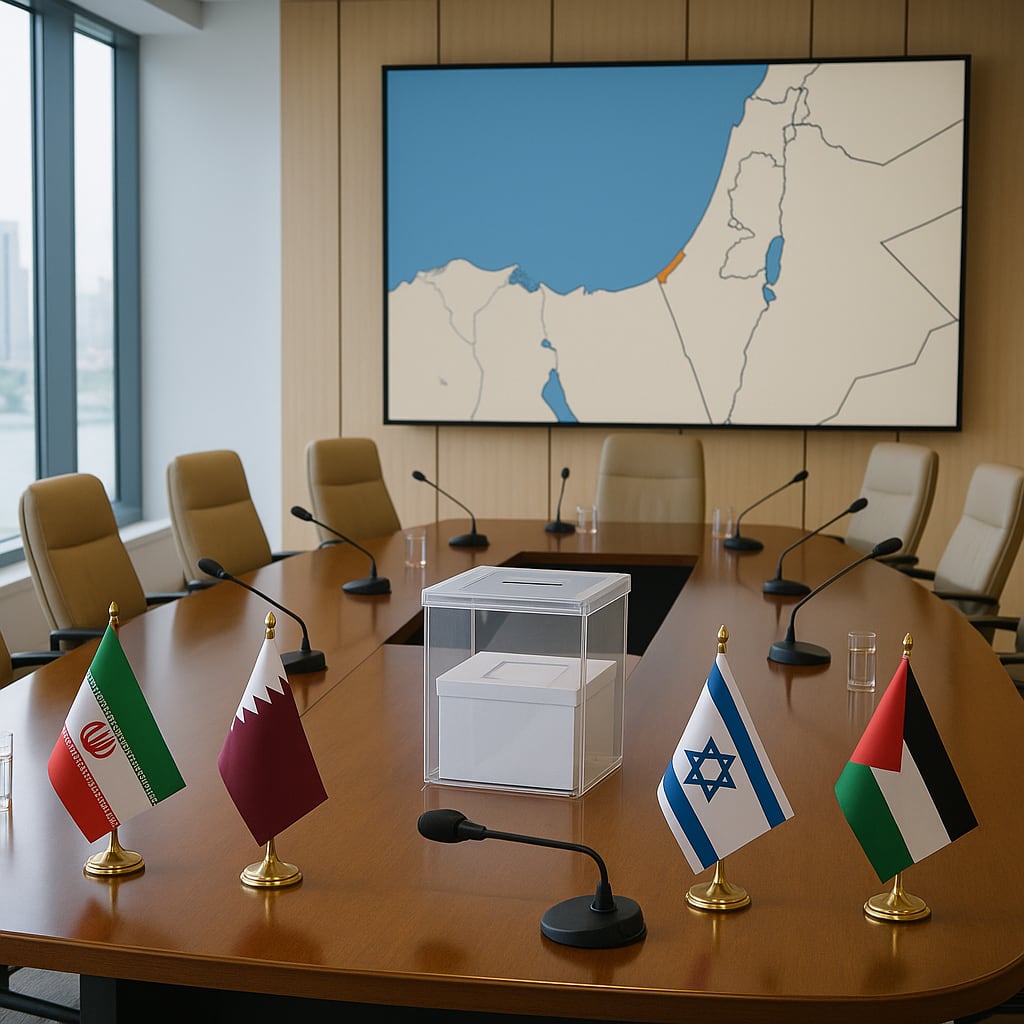
There is also variation in how the internal process is portrayed. Al Jazeera reports a single-vote margin, suggesting a tightly contested mandate, while Middle East Eye and La Repubblica highlight the secrecy of Hamas’s internal ballot and a months-long selection procedure that followed two years of collective leadership after Sinwar’s death (Al Jazeera; Middle East Eye; La Repubblica). Public sentiment in Gaza, as reported by Al Jazeera, appears mixed, underscoring uncertainties about governance priorities under the new leadership (Al Jazeera).
What is most at stake in the coverage is how al-Hayya’s mix of negotiation credentials and hardline reputation will translate into Hamas’s posture in ongoing indirect talks and responses to external disarmament pressure, and whether Tehran’s swift embrace of his elevation will deepen the movement’s alignment with Iran (IRNA; Middle East Eye; Haaretz; Folha de S.Paulo).
What Happened
Hamas announced on July 20, 2026, that Khalil al-Hayya has been elected head of its political bureau, succeeding Yahya Sinwar, who was killed by Israeli forces in Gaza in 2024 (South China Morning Post; BBC; IRNA). Multiple outlets describe al-Hayya as the group’s lead negotiator in indirect ceasefire talks with Israel and note he is based in Doha (South China Morning Post; France24; BBC). Middle East Eye says the result followed an internal leadership ballot, and La Repubblica reports a secret selection process that began in January after two years of collegial leadership (Middle East Eye; La Repubblica). Al Jazeera reports he won by a single vote (Al Jazeera). RT adds that he competed against former bureau chief Khaled Meshaal and, citing Israeli officials to Reuters, says he was among those targeted in a 2025 Israeli attack in Doha (RT). Iran’s foreign minister Abbas Araghchi publicly congratulated al-Hayya (IRNA; Middle East Eye).
Why It Matters
Al-Hayya’s elevation places Hamas’s ceasefire negotiator at the movement’s political helm at a moment when indirect talks have been the main channel for managing the Gaza war (South China Morning Post; France24; BBC). Several outlets argue the choice signals continuity with a confrontational posture toward Israel and resistance to disarmament—positions that would complicate core objectives articulated by Israel and the United States, according to Brazilian and Israeli reporting (Folha de S.Paulo; Haaretz). Tehran’s prompt endorsement highlights the Iran-Hamas link; some European coverage frames al-Hayya as closely tied to Iran’s “axis of resistance,” which, if sustained, could affect regional alignment dynamics and external leverage over Hamas (IRNA; La Repubblica; Haaretz). Internally, narrow reported margins and a secretive process point to factional balancing within Hamas, shaping the authority al-Hayya brings to decisions on Gaza governance, military posture, and negotiating red lines (Al Jazeera; La Repubblica; Middle East Eye).
Diverging Narratives
One line of reporting emphasizes al-Hayya’s negotiating pedigree and the prospect that his leadership could prioritize the Gaza file, reflecting his months leading indirect ceasefire contacts with Israel from Doha (South China Morning Post; France24; BBC; Al Jazeera). Another highlights assessments from Israeli, European, and Brazilian sources that his selection entrenches a harder line against disarmament and a reluctance to make substantive compromises, with Haaretz citing a Palestinian faction official and Folha de S.Paulo citing specialists to that effect (Haaretz; Folha de S.Paulo). La Repubblica’s description of al-Hayya as “the man of Tehran” and IRNA’s coverage of Araghchi’s congratulations are read by some as reinforcing the Iran connection; Al Jazeera instead focuses on a narrow electoral margin and Gaza-centered implications (La Repubblica; IRNA; Al Jazeera).
There are also differing treatments of risk and reach. RT reports, citing Israeli officials to Reuters, that al-Hayya was targeted in a 2025 Israeli attack in Doha and portrays him as “more hardline” than Khaled Meshaal (RT). Meanwhile, Middle East Eye deploys movement-aligned terminology, describing Gaza as facing “Israeli genocide” and situating the election within a wider “resistance” frame (Middle East Eye). Public opinion coverage from Gaza notes mixed reactions, underscoring uncertainty about how leadership choices will affect daily life amid ongoing conflict (Al Jazeera).
What Happens Next
Two near-term decision points emerge from the sources. First is Hamas’s negotiating posture: whether al-Hayya leverages his Doha-based channels to sustain indirect ceasefire talks or, as Haaretz and Folha de S.Paulo anticipate, resists concessions tied to disarmament. Indicators include any public terms he articulates, modifications to existing proposals, or explicit rejections of disarmament-linked frameworks (France24; BBC; Haaretz; Folha de S.Paulo). Second is external alignment. Iran’s visible endorsement suggests continued engagement; additional Iranian statements or coordination signals would clarify the depth of that track (IRNA; Middle East Eye; Haaretz; La Repubblica). Internal authority will matter: reports of a single-vote margin and a secretive process point to potential intra-movement calibration, with Gaza-based reactions a barometer of political space for policy shifts (Al Jazeera; La Repubblica; Middle East Eye). Security risks to exiled leadership—highlighted by RT’s account of a 2025 Doha attack—may also shape where and how talks are conducted (RT).