
The US-Israeli Conflict with Iran: Devastating Toll and Regional Spread
The ongoing US-Israeli war on Iran has resulted in over 15,000 Iranian casualties and more than 1,200 deaths, including around 200 children, according to the Iranian Ministry of Health. The conflict, which has spread beyond Iran's borders and caused severe regional instability, has also resulted in approximately 140-150 US service members being wounded, significantly higher than previously revealed figures.
Widespread Destruction and Casualties
The war, now in its second week, has seen US and Israeli forces striking over 3000 targets, with 43 Iranian vessels reported to have been sunk or damaged. The Iranian Red Crescent has reported that 14 medical centres have been damaged in the attacks. Civilian infrastructures, including oil storage facilities and a water desalination plant in Bahrain, have also been hit, causing extensive damage and potential environmental hazards.
Iranian officials have also accused the US and Israel of striking multiple civilian and medical facilities since the conflict began. In the capital, Tehran, the population continues to suffer from continual bombing, with no sirens or shelters to provide warning or protection.
“Our act of defence cannot be interpreted as an act of hostility towards any of these countries,” said Ismail Baghaei, spokesperson for Iran's foreign ministry, while denying any offensives initiated from Iranian territory towards Turkey, Cyprus, or Azerbaijan.
Expanding Conflict Zone
The conflict has had far-reaching implications, with nearly every country in the Middle East sustaining damage from missile hits, drone strikes, or shrapnel. Iran's retaliatory strikes have reached as far as Turkey and Azerbaijan, causing European powers to rush additional warships, fighter jets, and air defences to the eastern Mediterranean and Gulf to contain the fallout.
The situation has become so precarious that foreign governments have urged their citizens to leave Middle East countries. However, Iran has thanked Saudi Arabia for keeping its airspace closed to attacks, showing some regional cooperation amid the crisis.
Global Reactions and Future Implications
The escalating conflict has drawn sharp responses from global powers. China's Foreign Minister Wang Yi said the US-Israel war on Iran should never have happened
, while Russian officials have called for de-escalation. Meanwhile, US President Donald Trump has claimed that the US and Israel have decimated
the Iranian regime, indicating the potential for further escalation.
The spread of the conflict beyond the Middle East is a growing concern. Iranian missiles and drones have already reached Turkey and Azerbaijan, and analysts warn that the longer the war continues, the greater the risk of activating long-simmering regional fault lines.
Current Status
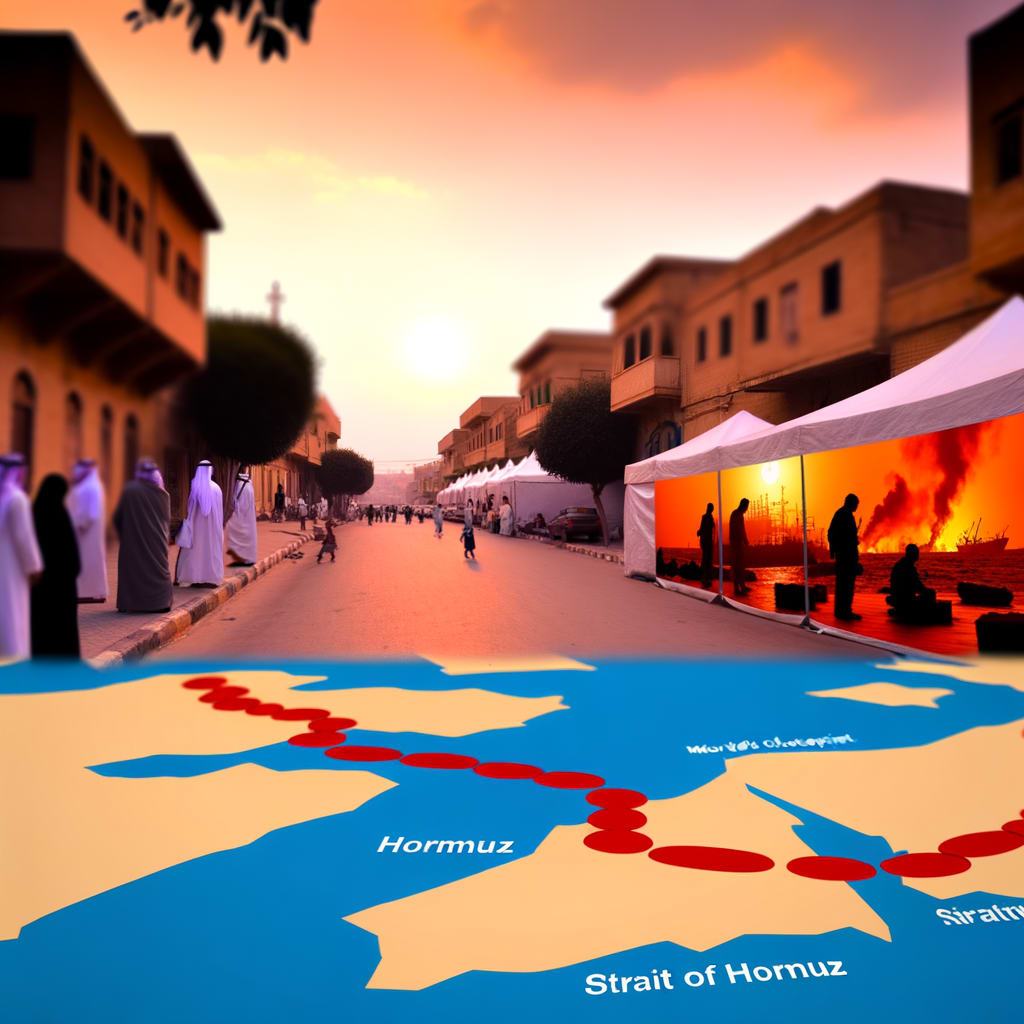
As the conflict continues to escalate, Iran's Revolutionary Guard has claimed control over the Strait of Hormuz, a crucial route for global oil and gas shipments, warning of potential missile or drone attacks on ships moving through the area. The conflict has already seen large crowds in Tehran supporting Mojtaba Khamenei, Iran's newly appointed supreme leader, despite ongoing strikes.
As the world watches this rapidly evolving conflict, the toll — both human and infrastructural — continues to rise, with the potential for even broader regional and global fallout if a diplomatic solution is not found soon.