
Escalation in the Middle East: Iran targets US Embassies, Trump vows Response
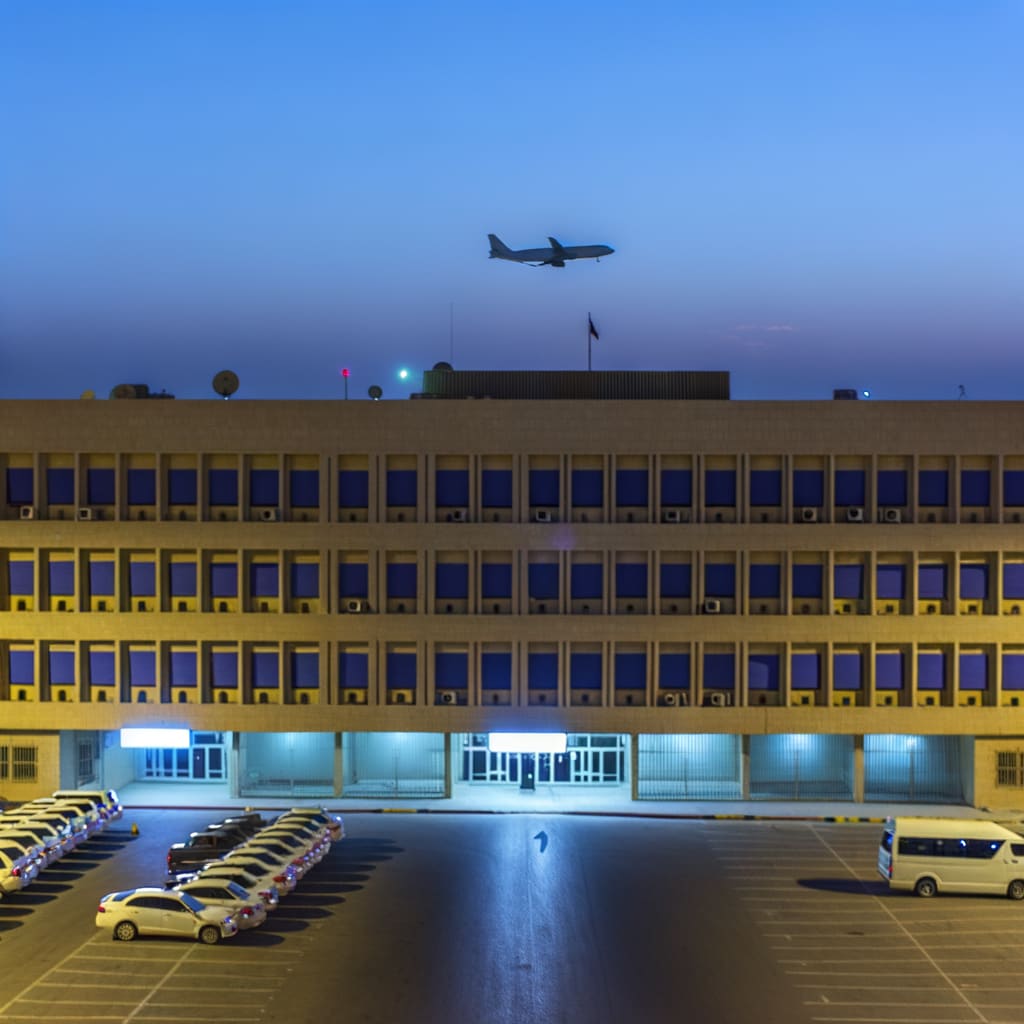
In an escalating wave of violence, Iranian drones have attacked US embassies and facilities in the Middle East, causing significant damage and prompting the US to evacuate its military personnel. The US embassy in Riyadh, Saudi Arabia, was notably hit, causing a partial collapse of the roof and a minor fire. While the embassy was unoccupied at the time, the attacks have led to increasing tensions in the region and a strong response from the US.
Background and Context
The attacks are part of an increasingly regional war in the Middle East, with tensions rising between Iran, the US, and Israel. The drone strikes on the US embassy in Riyadh followed an earlier Iranian drone strike on the US embassy in Kuwait. Additionally, a drone was shot down near Baghdad's international airport, and the US embassy's logistics support centre in Iraq was targeted. In response, the US has shut its embassies in Saudi Arabia and Kuwait, and non-emergency staff have been ordered to leave Bahrain, Iraq, Jordan, Kuwait, Qatar, and the UAE.
Key Developments
A series of Iranian drone attacks targeted not only the US embassy in Riyadh, but also the CIA's station located within the embassy complex. According to sources cited by The Washington Post, the attack caused part of the embassy roof to collapse, although no CIA employees were reported injured.
Meanwhile, in Bahrain, a bridge linking the country to Saudi Arabia was targeted in another drone strike. The bridge had been a potential route for the US to evacuate its military personnel. A similar situation occurred in Jordan, where missiles and drones were reported in the airspace, prompting a security alert from the US embassy.
Implications and Reactions
The attacks have triggered widespread international condemnation. Ukrainian Foreign Minister Andrii Sybiha strongly condemned Iran's attack on the US Embassy in Riyadh, expressing solidarity with the United Kingdom. President Donald Trump also vowed a response to the attacks, suggesting that the US-Israeli war on Iran could continue for up to a month.
On the other hand, a senior Iranian official told Al Jazeera that Tehran’s response to the joint US and Israeli attacks “continues with no set timeframe.” The official warned that there are “no red lines in defending our country” and that “everything American or Israeli has become a legitimate target for the Iranian armed forces.”
Conclusion
The situation continues to evolve, with the US amassing military force in the Middle East while also participating in negotiations in Geneva on Tehran's nuclear program. The US State Department has urged Americans to depart immediately from more than a dozen countries across the Middle East, warning of serious safety risks
as the conflict intensifies.
As the war continues, the international community watches on anxiously, hoping for a peaceful resolution to the ongoing crisis.