
After Venezuela’s Twin Quakes, Deaths Top 5,000 as La Guaira Drives Debris Removal and Aid Intake
Narrative Snapshot
Across outlets, the basic toll and geographic center of impact are consistent, but emphases diverge. Official figures placing the death count at 5,069 and injuries at 16,740 are widely repeated, with NHK presenting them neutrally, TASS citing a daily bulletin and adding 17,907 homeless, and Politika noting over 20,000 in temporary camps. Folha reports the same numbers while characterizing the government as a dictatorship, signaling a distinct editorial frame even as it relies on official data.
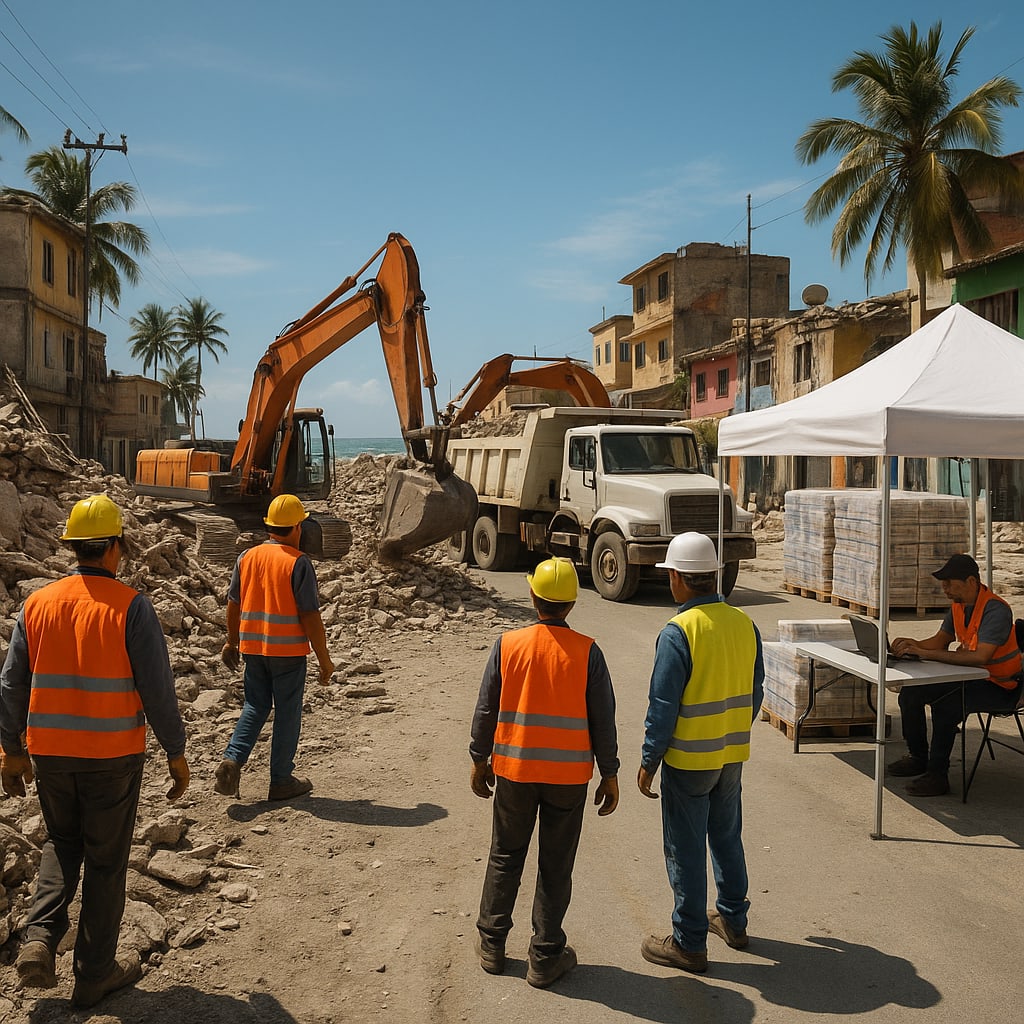
State and Global South-aligned coverage highlights organized recovery and solidarity. Telesur details the opening of 11 debris sites in La Guaira, environmental monitoring to protect coastal areas, a housing plan with a biometric registry, and aid from Mexico and CARICOM. CGTN’s video reporting centers community volunteers and donations. By contrast, Clarín’s sustained presence in La Guaira foregrounds operational gaps, including families’ public pleas for heavy machinery and the return of foreign rescuers weeks after the quakes.
Anglophone reporting splits between social and apolitical humanitarian angles. The New York Times situates the disaster within Venezuela’s mass migration, describing how absence and displacement shape loss and recovery. A Fox News op-ed from a U.S. NGO leader seeks to bracket politics, stressing local resilience and civil society’s role in relief.
What Happened
Two major earthquakes struck Venezuela on June 24, with La Guaira among the hardest-hit areas. By July 17, Venezuelan authorities reported 5,069 fatalities and 16,740 injuries; a TASS summary added 17,907 homeless, while Politika said more than 20,000 people were in temporary camps. Clarín, reporting from La Guaira over 12 days, documented persistent recovery challenges and families’ calls for the return of foreign rescue teams and heavy equipment weeks after the event. Authorities estimate more than two million tons of debris; La Guaira has opened 11 temporary debris sites as part of cleanup and mapping operations, paired with coastal environmental monitoring to prevent improper disposal. The government announced a housing reconstruction plan featuring a biometric registry and rapid housing measures. External assistance includes 341 tons of aid from Mexico and 88 containers from CARICOM, alongside ongoing volunteer-led efforts highlighted by CGTN and U.S. NGO operations described in Fox News.
Why It Matters
The response is unfolding under constraints and political crosscurrents with regional and international implications. Telesur reports U.S. Representatives urging the lifting of sanctions after the quakes, linking humanitarian effectiveness to the sanctions regime; any adjustment would affect financing, procurement, and access to relief supplies. The scale of debris and the activation of 11 disposal sites, coupled with coastal monitoring, test Venezuela’s institutional capacity for complex, environmentally sensitive urban recovery. The biometric-based housing plan introduces a technocratic approach to beneficiary identification in a high-displacement setting, with implications for social policy administration and public trust.
Regionally, aid from Mexico and CARICOM underscores South–South disaster cooperation and complements community mobilization inside Venezuela. The New York Times’ focus on migration patterns points to cross-border family dynamics that will shape recovery needs and remittance flows. For multilateral actors and donors, harmonizing assistance with local systems—while addressing equipment gaps spotlighted by Clarín’s reporting—will be central to accelerating safe debris clearance, sheltering, and reconstruction.
Diverging Narratives
Coverage differs most on the depiction of state capacity and the framing of the government. Telesur emphasizes a technical, coordinated recovery—organized rubble removal, environmental safeguards, and biometric housing registration—alongside prominent acknowledgments of aid from Mexico and CARICOM. CGTN likewise foregrounds community cohesion and volunteerism. Clarín gives salience to unresolved operational deficits, including appeals for cranes and the return of foreign rescue teams three weeks on, and situates these concerns in on-the-ground accounts from La Guaira. Folha reports the same official casualty figures but labels the authorities a dictatorship, signaling skepticism about governance even as it cites state data.
There is also variance in displacement metrics and presentation. TASS cites 17,907 homeless, Politika references more than 20,000 in camps, and Telesur points to a network of 94 shelters without a consolidated population figure. Telesur’s report on U.S. Representatives urging sanctions relief injects a policy vector into the humanitarian narrative, whereas a Fox News op-ed consciously de-emphasizes politics in favor of NGO-led relief and local resilience. The New York Times adds a distinct lens—migration’s imprint on who is present, who is absent, and how grief and recovery unfold—less visible in the state- and region-focused coverage.
What Happens Next
Three decision points emerge. First, debris governance: authorities in La Guaira have designated 11 disposal sites and initiated coastal monitoring; how systematically photogrammetric mapping and recycling advance will determine clearance pace and environmental risk, per Telesur’s reporting. Second, housing delivery: the government’s biometric registry and rapid housing strategy will hinge on implementation—watch enrollment progress and visible reconstruction starts as indicators of administrative capacity and coverage. Third, external enabling conditions: members of the U.S. Congress have called for easing sanctions after the quakes; any movement would affect procurement channels and funding for relief and rebuilding.
Operationally, Clarín’s accounts of families urging the return of foreign rescuers and heavy machinery point to a near-term test of whether additional international search-and-recovery assets are invited back or domestic capacity is scaled. Displacement trends bear monitoring through updates on camp populations and shelter networks reported by Politika and Telesur. The migration-shaped social landscape described by the New York Times will influence where aid needs persist and how quickly communities reconstitute.