
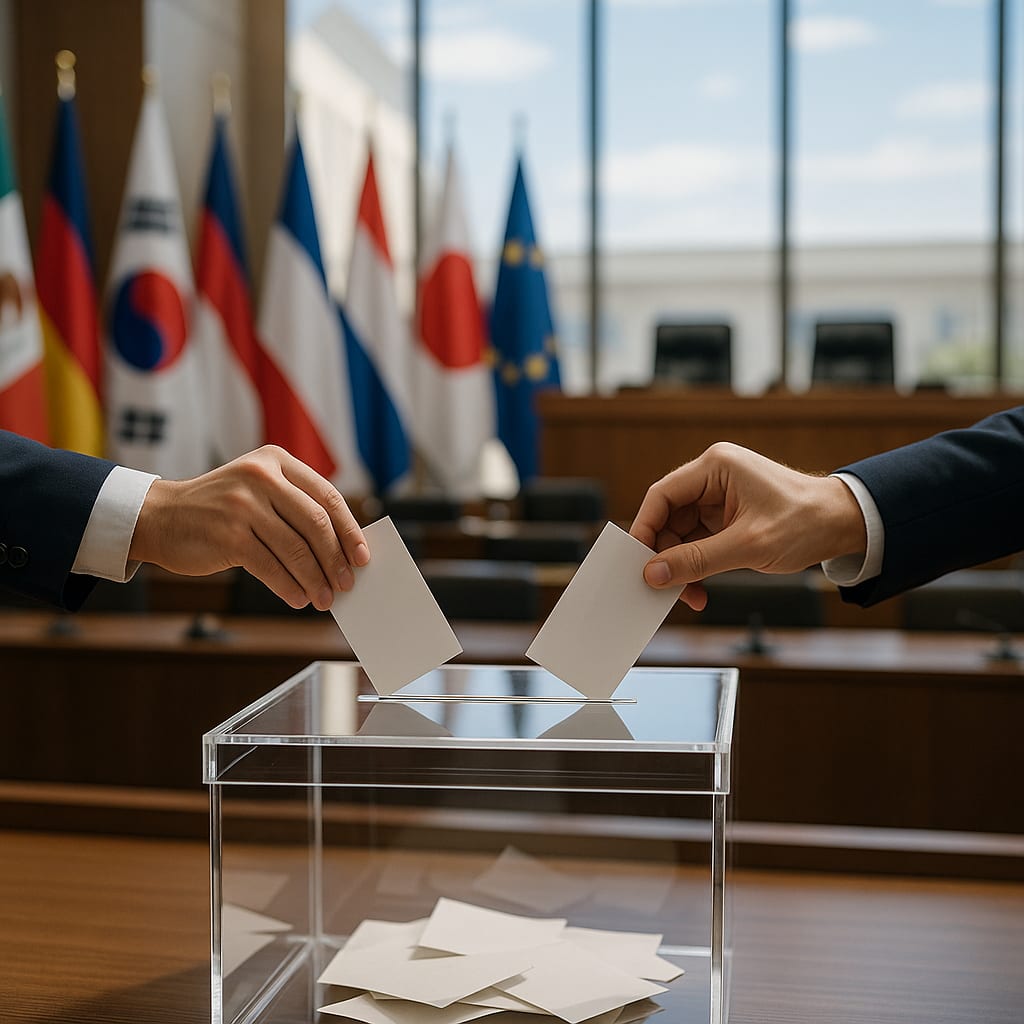
ICC member states vote to dismiss Chief Prosecutor Karim Khan over sexual misconduct allegations
Narrative Snapshot
Across outlets, there is broad alignment that ICC member states removed Karim Khan following sexual misconduct allegations, with multiple reports citing a secret ballot and an absolute-majority threshold. Several publications emphasize the gravity and novelty of the decision: the Guardian characterizes the ouster as an unprecedented step and notes a finding of “serious misconduct,” while France 24 and Deutsche Welle report the result on the basis of diplomatic sources. Where details appear, they rest on anonymous briefings: South China Morning Post, Middle East Eye, and the Times of Israel each cite diplomatic sources saying 82 of 125 states supported removal, while other outlets report the outcome without a tally.
Coverage diverges on framing and implications. Al Jazeera and Le Monde focus on process and context, underscoring the secret ballot and situating the decision amid sustained U.S. attacks on the court. Middle East Eye reports a sharp U.S. reaction that the removal changes nothing in Washington’s stated aim to dismantle the ICC, while Folha de S.Paulo highlights that Khan had been criticized by the United States even before this vote. By contrast, the Times of Israel narrows to case management, asserting the removal will not affect arrest warrant proceedings against Israel’s prime minister and defense minister because only ICC judges can withdraw them.
Outlets also vary in how they present the allegations and the procedural fairness debate. The BBC specifies that Khan denied an improper relationship with a junior staff member and any effort to stymie her complaint. Le Monde earlier framed the matter as “abuse of power or authority” involving an assistant. South China Morning Post relays the defense position that the process was unlawful and procedurally unfair, and the Daily Nation reports Khan intends to challenge it. The Toronto Star flags institutional harm from a drawn‑out scandal, an angle echoed by the Guardian’s description of a “damaging episode” for the court.
What Happened
Member states of the International Criminal Court voted by secret ballot on July 24 to remove Prosecutor Karim Khan from office over sexual misconduct allegations. France 24 and Deutsche Welle report the dismissal based on diplomatic sources; South China Morning Post, Middle East Eye, and the Times of Israel cite diplomats saying 82 of 125 member states backed removal, exceeding the absolute majority threshold. Al Jazeera had previewed a secret‑ballot vote by the court’s 125 members, and Middle East Eye says it occurred during a special session at UN headquarters in New York. The Guardian reports the move as unprecedented and notes a finding of “serious misconduct.” The BBC details allegations of an improper relationship with a junior staffer and efforts to halt her complaint; Le Monde earlier described an “abuse of power or authority” over an assistant. Khan denies wrongdoing; his lawyers call the process unlawful and unfair, and he plans to challenge it, according to South China Morning Post and the Daily Nation.
Why It Matters
The removal of a sitting ICC prosecutor by member states sets a significant institutional precedent, with the Guardian describing it as unprecedented and the Toronto Star warning of reputational damage from a protracted scandal. The episode unfolds amid sustained political pressure on the court, particularly from the United States; Le Monde situates the decision in that context, and Middle East Eye reports Washington saying Khan’s ouster will not alter its plans to dismantle the ICC. At the same time, case continuity is a central concern for states and litigants: the Times of Israel reports that arrest warrant proceedings against Israel’s leaders remain in the hands of ICC judges and cannot be withdrawn by a prosecutor. NHK underscores how politically sensitive dockets—such as warrants pursued against Russia’s president and Israel’s prime minister—frame the stakes for the court’s legitimacy and operational resilience.
Diverging Narratives
Two interpretive tracks are visible. One emphasizes institutional accountability: the Guardian reports a finding of serious misconduct and presents the vote as an unprecedented assertion of member‑state oversight. Another highlights due‑process concerns, with South China Morning Post citing Khan’s lawyers that the process was unlawful, procedurally unfair, and unsupported, and the Daily Nation noting his plan to challenge the decision. These contrasts reflect differing weights placed on enforcement versus procedural integrity.
There are also divergent emphases on consequences. Middle East Eye quotes a U.S. statement that Khan’s removal does not change Washington’s aim to dismantle the ICC, reinforcing Le Monde’s broader context of U.S. pressure. The Times of Israel stresses legal continuity, reporting that arrest warrant matters against Israeli officials are insulated from prosecutorial turnover because only ICC judges can withdraw them. Outlets vary in specificity and sourcing on vote details: some provide the 82‑vote figure via anonymous diplomats (South China Morning Post, Middle East Eye, Times of Israel), while others simply report the outcome (France 24, Deutsche Welle, BBC), reflecting the opacity inherent in a secret ballot.
What Happens Next
Three decision points emerge from the reporting. First, Khan’s response: he denies wrongdoing, and his lawyers label the process unlawful and unfair, with the Daily Nation noting he plans to challenge it; observers should watch for filings or statements that test the procedural basis for removal. Second, case management: per the Times of Israel, ICC judges, not the prosecutor, control whether to withdraw warrants in the Netanyahu and Gallant matters, so analysts should track judicial scheduling and orders to gauge continuity. Third, external pressure: Middle East Eye reports that Washington’s plans to dismantle the ICC are unchanged, suggesting continued U.S. actions or messaging irrespective of leadership change. Together, these indicators—legal challenges from Khan, judicial handling of high‑profile cases, and U.S. posture—will shape the court’s near‑term trajectory as reported in these sources.