
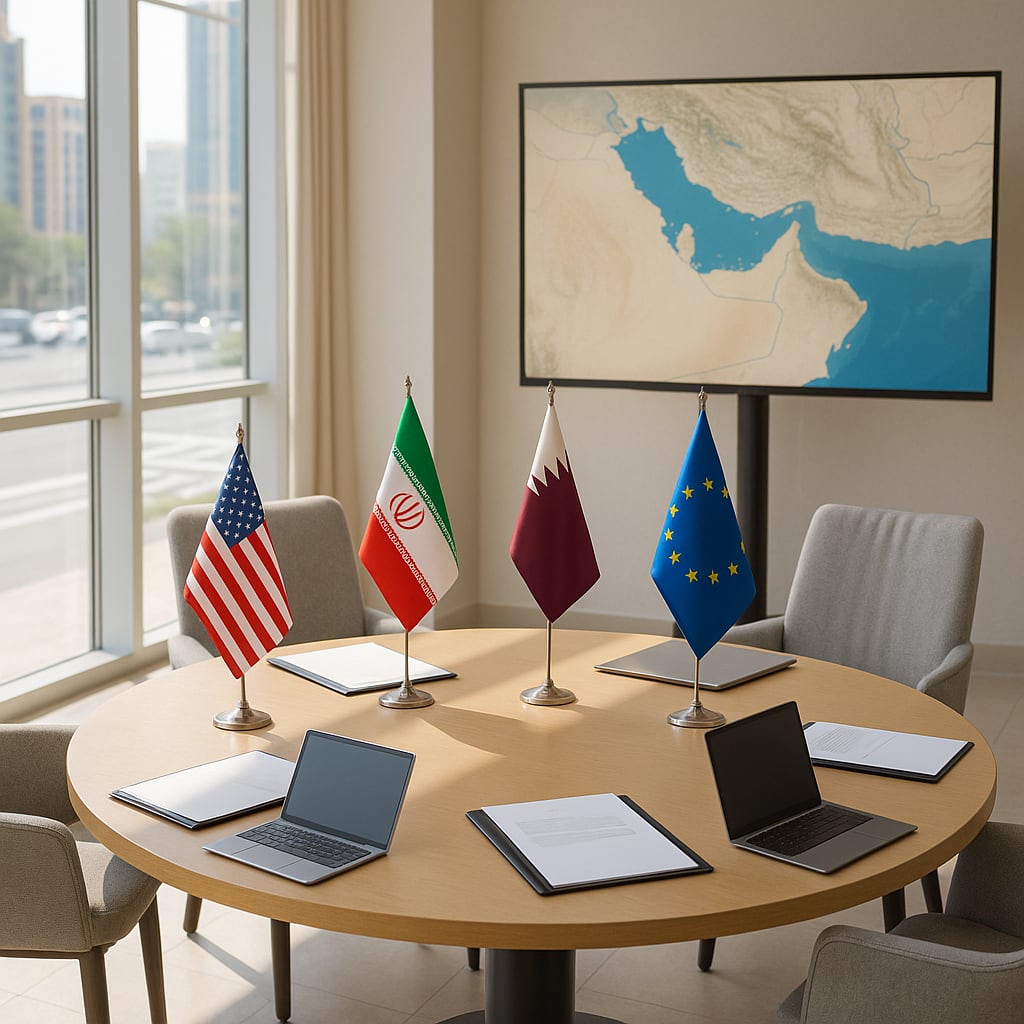
US announces Doha push on Iran as Tehran denies talks and Qatar rules out direct meeting
Narrative Snapshot
- Broad agreement that Washington is moving personnel to Doha: multiple outlets report Jared Kushner and envoy Steve Witkoff are traveling, with a technical team shifted from Switzerland to Qatar. Tehran and Doha publicly narrow the scope, denying any direct, high-level US–Iran talks in the coming days.
- US-aligned narratives emphasize momentum and process (“great progress” in Switzerland; potential denuclearization track; planned meetings with Qatari leadership). Iranian and Qatari statements stress mediation and routine consultations, not a summit.
- Coverage diverges on what is being negotiated: US and some regional outlets frame nuclear and de-escalation aims; Iranian and regional readouts point to frozen funds and indirect channels. Europeans surface as supporting actors via the EU envoy’s presence in Doha.
- What is most at stake is whether the channel consolidates into a structured negotiating format (with verifiable nuclear and de-escalation components) or remains a mediated, issue-specific dialogue focused on technical and financial files.
What Happened
On June 29, US President Donald Trump said a meeting with Iran would occur in Doha on Tuesday, claiming Tehran requested it. Iranian officials publicly denied any planned sit-down in Qatar this week, a line echoed by senior Iranian diplomat Kazem Gharibabadi, who said consultations with Qatar continue as usual. The White House announced that Special Envoy Steve Witkoff and senior adviser Jared Kushner would travel to Doha for high-level meetings, with technical talks also planned; Witkoff told lawmakers the nuclear negotiating team had left Switzerland for Qatar. Reporting relayed by TASS from Axios added that Witkoff and Kushner would meet Qatar’s prime minister. On June 30, Qatar’s foreign ministry spokesman said no direct, high-level US–Iran meetings were scheduled in the coming days, while European envoy Luigi Di Maio met Qatari officials in support of the Iran nuclear track.
Why It Matters
- Negotiating architecture: The episode tests whether US–Iran engagement can consolidate after reported “progress” in Swiss talks led by Vice President JD Vance, or remains limited to mediated exchanges. The shift of a US technical team to Doha and possible meetings with Qatar’s prime minister signal reliance on Qatari facilitation.
- Issue linkage: Competing framings—denuclearization, de-escalation, and frozen funds—will shape sequencing. US officials have touted “robust” inspection commitments reached in Switzerland, while other outlets note Tehran’s delegation focus on financial issues and assert no funds have been disbursed under a memorandum of understanding.
- Conflict management: Washington-linked reports of a mutual refrain from hostilities following recent skirmishes place these talks within a crisis-management context. Whether that restraint holds affects maritime security and regional escalation dynamics referenced in European and regional coverage.
- Multilateral roles: The EU’s envoy in Doha underscores European interest in anchoring any steps within a broader nonproliferation framework, even as the immediate channel appears heavily mediated by Qatar.
Diverging Narratives
- Meeting or not: Trump and the White House assert Iran requested a meeting and dispatched Kushner and Witkoff to Doha, while Iranian officials and Qatar’s foreign ministry deny any direct, high-level US–Iran meetings are scheduled in the coming days. Several outlets register the gap between US announcements and Tehran/Doha denials.
- Scope of talks: US and some regional reporting emphasizes a nuclear track and potential “denuclearisation” aims; a Middle East Eye brief cites US officials saying Iran has not received funds under an MoU. Al Jazeera notes Iran’s stated delegation purpose concerns frozen funds, not direct political negotiations.
- Progress vs. propaganda: US officials told Fox News that the Switzerland talks made “great progress,” including “robust” inspections, and criticized other media for amplifying Iranian state media claims that Tehran would not honor inspection commitments. Other outlets present Iran’s nonconfirmation of Doha talks and continued mediation as the operative reality.
- Mediation vs. direct diplomacy: TASS, citing Axios, highlights a planned meeting with Qatar’s prime minister, reinforcing a mediated format. Iranian statements to TASS similarly frame activities as routine consultations with Qatar, not bilateral US–Iran engagement.
What Happens Next
- Format of engagement: Watch for formal confirmation from Qatar’s foreign ministry of any US–Qatar–Iran shuttle or trilateral framework. A confirmed meeting between Kushner/Witkoff and Qatar’s prime minister would indicate a structured mediated channel; an Iranian announcement of direct talks would mark a shift from current denials.
- Agenda consolidation: Indicators include US or Iranian readouts specifying nuclear verification steps or timelines (referencing the “robust” inspections claimed by US officials) versus technical discussions on frozen funds (as noted by Al Jazeera and Middle East Eye). Movement on funds under any MoU—or confirmation that none are disbursed—will signal which file is advancing.
- De-escalation durability: DW reports Washington’s claim of a mutual refrain from hostilities; absence or resumption of skirmishes will affect negotiating space. Public statements from Tehran and Washington confirming or disputing such restraint are key signals.
- European support: Outcomes from EU envoy Luigi Di Maio’s Doha meetings—statements aligning with a nuclear track or backing technical mediation—will indicate how multilaterals might buttress or channel the process.