
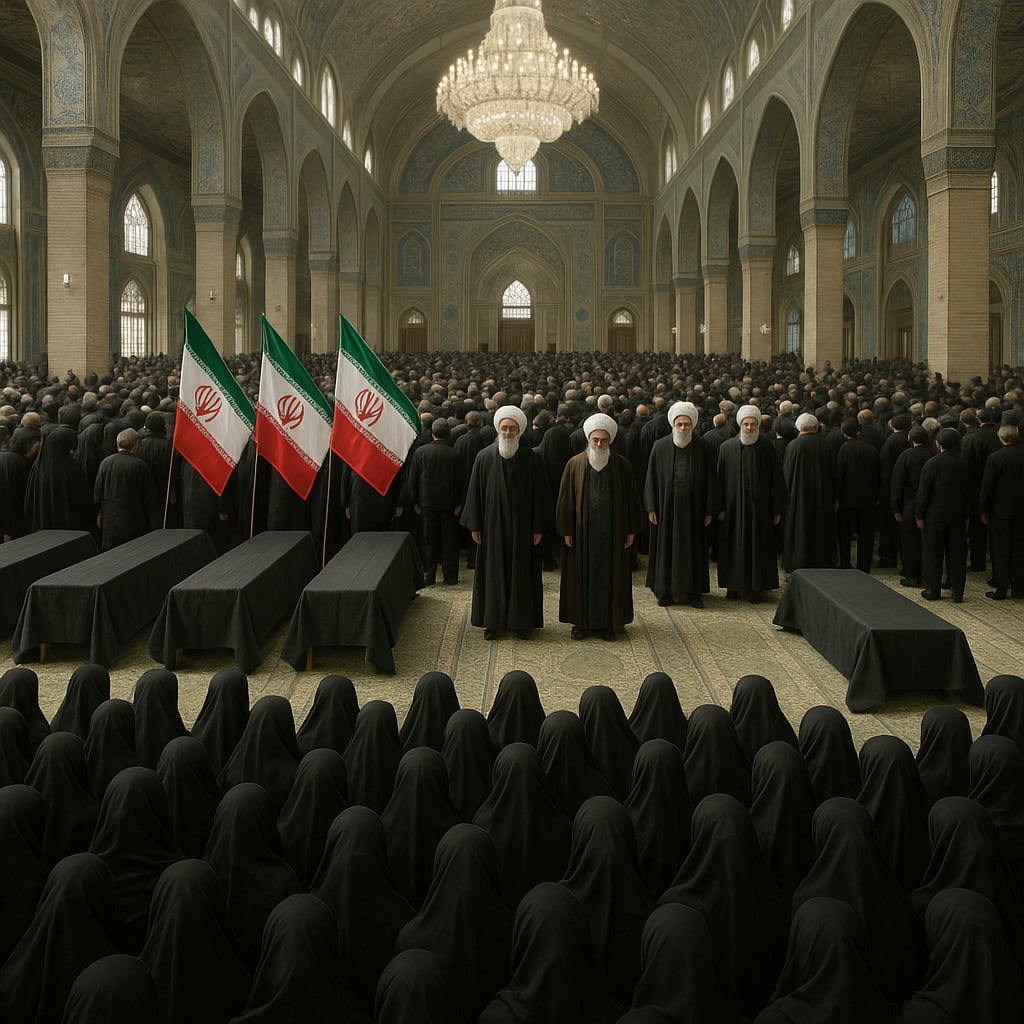
Iran holds mass funeral for Ali Khamenei; successor Mojtaba not seen at public rites
Narrative Snapshot
- Broad alignment: outlets report state TV images from Tehran’s Imam Khomeini Mosalla showing three of Ali Khamenei’s sons—Mostafa, Meysam, and Masoud—at the coffins, and note large crowds and senior officials in attendance (Guardian; CBC; DW; Folha; Middle East Eye).
- Emphasis diverges on framing: Al Jazeera, Corriere della Sera, and La Repubblica foreground chants and vows of “revenge” against the US and Israel, including a promise of “divine punishment” by senior cleric Naser Makarem Shirazi, while BBC, DW, and The Guardian focus on the unusual optics of the new leader’s absence and the mechanics of the ceremonies.
- Scale and mobilization appear differently across regions: Argentina’s Clarín highlights declared public holidays and anticipated turnout in the millions, details largely absent from Anglophone reports.
- Interpretation splits: Italian coverage includes an interview arguing that Mojtaba’s absence can reinforce symbolic authority and signal “no space for dissent,” contrasting with BBC’s reference to speculation about his condition and Corriere’s “regime senza volto” framing.
What Happened
Day two of Ali Khamenei’s funeral rites centered on prayers at Tehran’s Imam Khomeini Mosalla, broadcast on state TV and attended by senior officials and vast crowds (Guardian; DW; CBC). Mostafa, Meysam, and Masoud Khamenei appeared publicly, while Mojtaba—who has succeeded his father as supreme leader—was not shown (Guardian; BBC; Folha; Middle East Eye). Authorities declared Sunday and Monday public holidays to facilitate participation, with expectations of massive turnout (Clarín). Rhetoric at the ceremonies included chants calling for revenge against the United States and Israel (Al Jazeera), and the prominent Shia cleric Naser Makarem Shirazi promised “divine punishment” for those responsible (Corriere della Sera). The government has planned a week of mass processions, including transporting Khamenei’s remains to Shia sites in neighboring Iraq (Guardian).
Why It Matters
The optics and messaging of the funeral have implications for regime consolidation, deterrence posture, and regional signaling. The absent-public-role of the new supreme leader intersects with elite cohesion and succession legitimacy; DW underscores unified attendance by top officials, while BBC notes public speculation about Mojtaba’s condition. The narrative of vengeance—amplified by chants reported by Al Jazeera and vows cited by Corriere and La Repubblica—interfaces directly with US- and Israel-facing deterrence dynamics. The planned processions to Iraqi Shia sites (Guardian) highlight cross-border religious networks central to Iran’s regional influence. State-declared holidays and orchestrated turnout (Clarín) reflect mobilization capacity. For governments and multilateral actors, these signals shape assessments of near-term escalation risks, the durability of elite alignment under Mojtaba, and the extent to which transnational ceremonies project continuity across Iran’s alliances and constituencies.
Diverging Narratives
- Authority versus visibility: BBC points to speculation about Mojtaba’s condition; Corriere frames a “regime without a face.” In contrast, La Repubblica’s interview with writer Kader Abdolah argues that an “absent yet destined to return” leader can accrue symbolic authority and project strength while narrowing space for dissent.
- Mobilization and scale: Clarín stresses state-orchestrated participation—public holidays and expectations of millions—while Anglophone outlets largely avoid turnout estimates, focusing on imagery of crowds and official attendance (Guardian; CBC; DW).
- External confrontation framing: Al Jazeera spotlights chants for revenge against the US and Israel; Corriere and La Repubblica report pledges of punishment and the assertion that “revenge is a right of our people.” By contrast, BBC, DW, and The Guardian maintain a descriptive focus on ceremony logistics and succession optics, offering less thematic emphasis on retaliation.
- Continuity cues: DW emphasizes the visibility of senior officials and the first public appearances of Khamenei’s three sons in months, reinforcing a picture of institutional continuity, even as multiple outlets underline the anomaly of Mojtaba’s absence (Guardian; BBC; Folha).
What Happens Next
- Leadership visibility: Whether Mojtaba appears later in the week’s program or during the Iraq leg of the processions (Guardian) will shape readings of authority consolidation. Indicators: state TV coverage, official schedules, clerical endorsements.
- Retaliation signaling: The trajectory of “revenge” rhetoric—already voiced via chants (Al Jazeera) and clerical vows (Corriere; La Repubblica)—will matter for escalation risk. Indicators: formal statements by senior clerics or state bodies, any codification of “punishment” language into official communiqués.
- Cross-border ceremonies: Transporting the remains to Shia sites in Iraq (Guardian) requires coordination and will test the regime’s capacity to project unity abroad. Indicators: Iraqi reception, participation of transnational Shia networks, security posture around the processions.
- Domestic mobilization: The use of public holidays (Clarín) and high-visibility ceremonies (CBC; DW) suggests a continued emphasis on mass participation. Indicators: extended or additional mobilization directives, messaging that, per La Repubblica’s interview, frames the ceremonies as affirmations of unity with “no space for dissent.”