
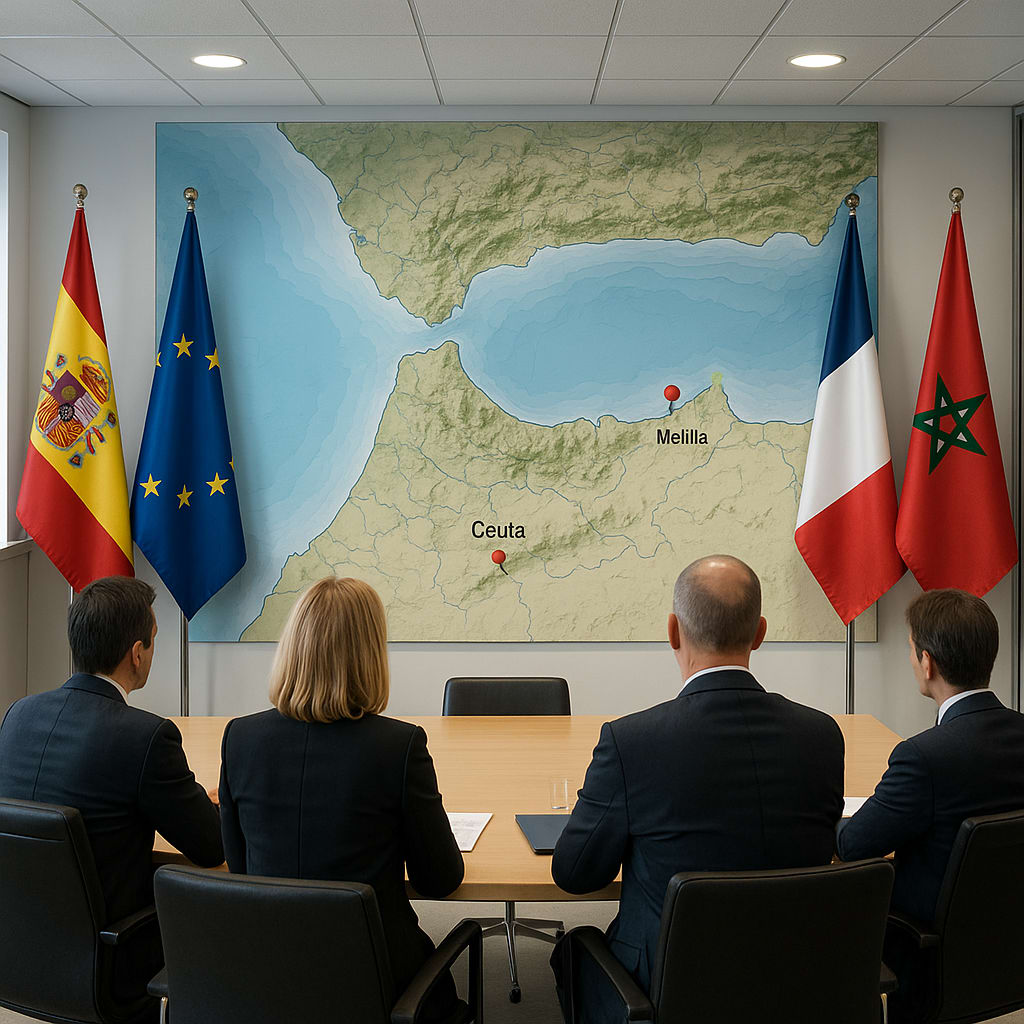
Tens of thousands cross from Morocco into Spain’s Ceuta, prompting EU border moves and rapid returns
Narrative Snapshot
Across outlets, there is broad agreement that an exceptional number of people crossed from Morocco into Ceuta within roughly 24 hours, with reported totals clustering between about 49,000 and 60,000 and varying death tolls that rose as reporting advanced. Spanish, French and Brazilian outlets underscore the scale and the reversals: by late Friday and into Saturday, authorities said tens of thousands had returned to Morocco, with figures ranging from 37,500 to about 48,000 and, by one account, “almost all” having left by Saturday (France24; Le Monde; South China Morning Post; Bangkok Post; Corriere della Sera). Mortality counts diverge sharply, from initial reports of at least nine to later tallies of 34, 57, 67, and 72 deaths (CGTN; The Guardian; France24; Le Monde citing El País; Clarín; Folha de S.Paulo).
Causality and framing differ by source. Spanish and international reporting relay official claims that criminal networks played a role, while leaving the ultimate trigger unresolved (France24; Tehran Times; BBC). From Morocco’s side, on-the-ground accounts highlight a “rumour of a rare border opening” that spurred a rush (Bangkok Post). Some migrants told a Serbian outlet they were encouraged by Moroccan authorities, a claim presented as their testimony rather than official fact (Politika). A fact-check cautions that unsubstantiated assertions about Spain’s policies and the causes of the surge proliferated online (Toronto Star/AP). Russian state media pushes a geopolitical interpretation that implicates Moroccan pressure and Western divisions, positioning the episode within a broader “hybrid” lens (RT).
Policy emphasis also splits. European coverage details the immediate security response in Ceuta and knock-on effects for Schengen: Italy and France tightened border checks, while Madrid criticized what it called “selfish” reactions and sought urgent EU talks (South China Morning Post; Fox News; Clarín; Telesur English). Brussels signaled coordination rather than punitive steps, with an extraordinary EU videoconference scheduled and the Commission rejecting calls to suspend Spain from Schengen; far-right figures in several countries demanded tougher measures (CGTN; Telesur English). Backgrounders stress Ceuta and Melilla’s status as the EU’s only land borders with Africa, a structural feature that shapes crisis responses (ANSA).
Field reporting foregrounds human impacts. Accounts from Ceuta and the Moroccan border town of Fnideq describe sea crossings, crushes, and clashes, alongside scenes of unaccompanied minors sleeping outdoors and rapid voluntary returns driven by hunger, exhaustion, and local hostility (Middle East Eye; Telesur English; The Times of Israel; CBC; Folha de S.Paulo; Bangkok Post). This humanitarian-security dualism runs through much of the coverage.
What Happened
Local officials in Ceuta reported an unprecedented influx from Morocco beginning Thursday, with estimates ranging from roughly 49,000 to 60,000 people entering the Spanish enclave by land and sea in about 24 hours (Toronto Star; South China Morning Post; France24; BBC; Clarín). Spain deployed military and police reinforcements to support border forces, while Ceuta’s authorities urged Madrid to declare a national emergency and send the army; the Interior Ministry said it could not declare a national emergency for migration concerns (The Guardian; CGTN; Toronto Star; South China Morning Post). Deaths mounted during attempts to swim around coastal barriers or in crowd crushes, with reported tolls escalating from at least nine to higher counts in subsequent days (CGTN; The Guardian; Le Monde; Folha de S.Paulo). By Friday evening and into Saturday, officials said tens of thousands had returned to Morocco and only a small fraction remained in Ceuta (France24; South China Morning Post; Bangkok Post; Fox News). Italy and France tightened checks on arrivals from Spain as Madrid sought urgent EU coordination (South China Morning Post; Fox News; CGTN; Telesur English).
Why It Matters
Ceuta and Melilla are the EU’s only land borders with Africa, making crises there immediate tests of the Union’s external border governance and Schengen’s resilience (ANSA). The episode exposed how quickly a localized breach can cascade into intra-EU controls, with Italy and France reintroducing checks and far-right figures calling for Spain’s suspension from Schengen, while the European Commission rejected suspension and scheduled a bloc-wide discussion instead (South China Morning Post; Fox News; Telesur English; CGTN). For decision-makers, this underscores the dependence on third-country cooperation—here, Morocco—for border management and how uncertainty over triggers complicates attribution and response (France24; BBC; Politika; Bangkok Post). Operationally, it highlights gaps in rapid-reaction capacity at a critical external gate, with only a limited Frontex presence reported in Ceuta and ad hoc measures like new containment fencing under consideration (Telesur English; CBC). The political salience for Madrid and Brussels is immediate: align security, humanitarian, and legal obligations without fracturing EU unity.
Diverging Narratives
Accounts diverge on causation and responsibility. Spain’s prime minister publicly blamed trafficking networks, while other reporting emphasized the absence of a confirmed trigger; some migrants told a Balkan outlet that Moroccan authorities encouraged crossings, and Moroccan-side reporting described a rumour of a border opening as the proximate spark (France24; Tehran Times; Politika; Bangkok Post). A fact-check warned of unverified claims circulating about Spain’s policies and the event’s origins, reflecting contested online narratives (Toronto Star/AP). Russian state media framed the surge as geopolitical pressure and contrasted the EU’s response with its 2021 Belarus stance, an interpretation largely absent from mainstream European coverage (RT).
Quantification is another fault line. Authorities and outlets cite different entry totals—around 49,000, 50,000, or 60,000—and sharply varying death tolls, from single digits to more than 70 as counts evolved, complicating assessments of scale and lethality in real time (The Guardian; Le Monde; Clarín; Folha de S.Paulo; CGTN; France24). Framing also differs on Europe’s response: some coverage stresses EU unity calls and coordination, others foreground unilateral controls and intra-EU recriminations, notably Madrid’s criticism of Rome’s move to restore checks (Le Monde; CGTN; Fox News; South China Morning Post). On the ground, humanitarian-focused reporting highlights unaccompanied minors and hardship-driven returns, while security-led accounts emphasize clashes and the need to restore the frontier (The Times of Israel; CBC; Middle East Eye; Telesur English; Toronto Star).
What Happens Next
EU coordination is the immediate hinge. An extraordinary videoconference will test whether member states prioritize joint external border measures and operational support—potentially including additional Frontex deployments—over extended national controls, after Italy and France tightened checks and Brussels rejected suspending Spain from Schengen (CGTN; South China Morning Post; Telesur English). Analysts should watch for statements assigning responsibility or outlining new agreements with Morocco, given conflicting accounts of triggers and the Spanish premier’s focus on trafficking networks (France24; Tehran Times; Politika; Bangkok Post).
In Ceuta, authorities are moving from emergency policing to stabilization, including physical containment steps; monitoring whether temporary fencing or force postures become semi-permanent will indicate the balance struck between deterrence and humanitarian management (CBC; CGTN; The Guardian). The scale and speed of returns suggest the immediate surge has ebbed, but updated casualty figures, handling of remaining minors, and any spillover attempts at Melilla will signal whether pressures persist and how Madrid calibrates policy in response (Telesur English; Fox News; Bangkok Post).