
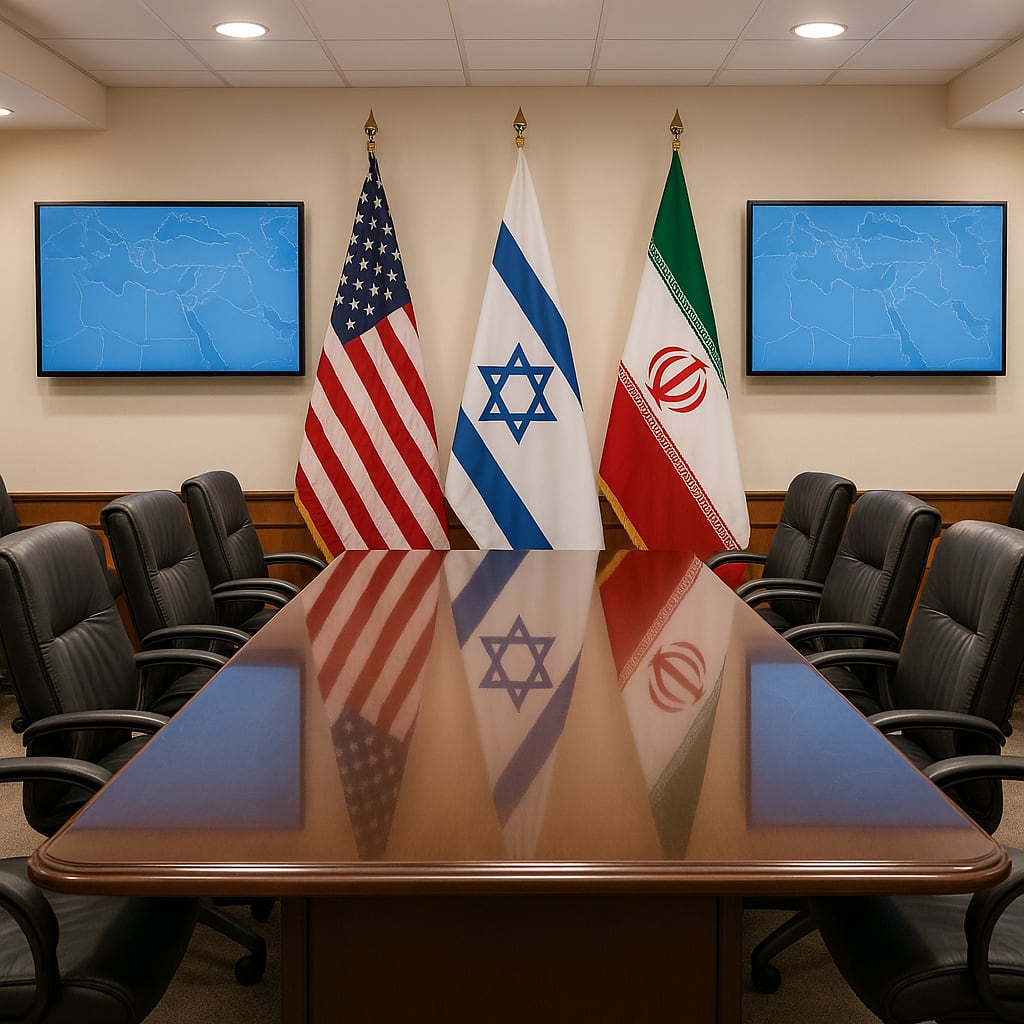
Trump threatens strikes on Iran after Israeli warning of assassination plot; Tehran signals retaliation and talks uncertain
Narrative Snapshot
Across outlets, Trump’s escalatory language is the focal point, but the emphasis varies. Chinese and Serbian state-linked coverage amplify the deterrent posture, quoting his claim that “1,000 missiles are locked and loaded” and that orders are in place to prepare strikes if Tehran attempts to assassinate him, framing a high-readiness U.S. stance (CGTN; Politika). Canadian reporting narrows to process and authority, noting Trump’s suggestion of a standing order while underscoring that “Vance would make the call” in the event of a presidential assassination, highlighting constitutional and chain-of-command constraints rather than rhetoric (Toronto Star). Japanese public broadcasting balances both tracks, noting Trump’s continued openness to talks while stressing Iran’s stated intent to answer any attack, leaving diplomacy unresolved (NHK World). UK-based Middle East Eye ties the threats to an Israeli intelligence warning of an assassination plot, shaping the frame as reaction to allied intelligence rather than standalone signaling.
Israeli and regional narratives contest the caliber and function of the intelligence itself. Haaretz reports that while senior Iranian officials were said to have discussed assassinating Trump, “no actionable plans were made,” and U.S. officials questioned whether the warning was intended to steer policy; Trump himself reportedly dismissed Israel’s input to the New York Post as having “come up with nothing.” By contrast, the South China Morning Post traces U.S. law enforcement’s years-long tracking of Iranian threats against Trump, with signals rising since the latest war began and rooted in cycles that “began six years ago” outside Baghdad, situating the episode in a longer security arc rather than a single brief.
On the Iranian side, the messaging split is sharp. Iran’s parliamentary speaker vowed retaliation if attacked, while pro-government media in Tehran cast Trump’s threats as “bluster” masking U.S.-Israeli “disarray” and seeking an off-ramp from a months-long conflict (NHK World; Tehran Times). A cluster of Middle East Eye opinion pieces asserts that Israel killed Ali Khamenei, decries muted Western condemnation, and frames mourning inside Iran as under-acknowledged. While these are opinion essays, they illustrate a narrative of grievance and legitimacy that informs perceptions of escalation and deterrence in Tehran’s information space.
A set of adjacent debates underscores structural stakes. A former U.S. Central Command chief argues Washington should consider moving bases from Gulf states to Israel (Middle East Eye), while a separate Middle East Eye report on blocked Saudi-UAE payments spotlights Gulf frictions that could complicate collective regional postures. Another Middle East Eye op-ed on NATO contends alliance fissures are feeding a “permanent war economy,” signaling that allied bandwidth and procurement cycles may shape how far partners can align with Washington’s Iran choices.
What Happened
Following an Israeli intelligence warning that Iran was plotting to assassinate him, U.S. President Donald Trump publicly threatened massive strikes on Iran if Tehran attempted or carried out such an attack (Middle East Eye; CGTN). Trump said the military was prepared and invoked “1,000 missiles” ready to fire, while suggesting he had issued standing orders; Canadian reporting clarified that in the event of an assassination, “Vance would make the call,” underscoring decision authority in succession scenarios (Toronto Star). Haaretz reported U.S. officials questioned whether Israel’s warning was meant to shape Trump’s policy, noting the report found no actionable plans and that Trump dismissed the warning’s substance. NHK World said Trump still indicated willingness to continue talks even as he hinted at possible strikes, while Iran’s parliamentary speaker warned Tehran would respond to any attack. The South China Morning Post linked the episode to years of U.S. tracking of Iranian threats and to the end of a ceasefire “this week.”
Why It Matters
The episode spotlights how assassination threats and retaliatory doctrines now intersect with presidential protection, alliance intelligence, and high-velocity military signaling. If allied warnings are perceived as policy-shaping attempts without firm evidentiary thresholds, U.S. decision-makers face credibility and escalation-management costs, as highlighted by Haaretz’s account of internal skepticism. The South China Morning Post’s linkage to a longer arc of targeted killings and a recently ended ceasefire places current deterrence moves in a cycle with demonstrated blowback potential. Parallel debates about U.S. force posture—such as a former CENTCOM commander’s call to relocate bases from Gulf states to Israel—suggest structural reconfiguration pressures that would alter regional risk distribution and host-nation politics (Middle East Eye). Frictions among Gulf partners over cross-border payments and NATO’s contested political economy, as flagged in Middle East Eye reporting and commentary, point to coalition management constraints that could limit or fragment external support during any renewed U.S.-Iran confrontation.
Diverging Narratives
Key differences center on the intelligence trigger and its policy utility. Haaretz reports that while senior Iranian figures allegedly discussed assassinating Trump, “no actionable plans were made,” and U.S. officials queried whether Israel’s brief sought to influence the president; Trump reportedly brushed it off. By contrast, the South China Morning Post emphasizes continuity in U.S. threat-tracking, arguing agencies have followed Iranian intent for years with rising signals since the war’s onset, and that Israeli officials presented new details before the ceasefire collapsed. Media also diverge on U.S. intent: CGTN and Politika foreground a prepared, overwhelming strike capability, whereas the Toronto Star elevates institutional guardrails by pointing to who would authorize force if the president were incapacitated. NHK World situates Washington’s position alongside an open door to negotiations and Tehran’s explicit vow to retaliate, reinforcing uncertainty over diplomacy’s viability. Inside Iranian and sympathetic commentary, Middle East Eye opinion columns present Khamenei’s killing as Israeli-perpetrated terrorism and criticize Western reactions, while Tehran Times depicts Trump’s posture as evidence of U.S.-Israeli strategic strain, framing Iran as resilient. These frames differ over whether current U.S. moves reflect regained deterrence or a search for an exit.
What Happens Next
Three decision points emerge. First, whether Washington validates or distances itself from Israel’s assassination warning will shape thresholds for action; confirmation of specific, actionable plotting would strengthen the deterrent line described by CGTN and Middle East Eye, while continued skepticism of the type reported by Haaretz would constrain rapid escalation. Second, the fate of talks hinges on simultaneous signaling: NHK World notes Trump’s openness to continued dialogue even as Iran’s parliamentary speaker vows retaliation if attacked, so watch for quiet diplomatic contacts or public preconditions that either reopen or foreclose channels. Third, posture choices could shift the regional balance. A former CENTCOM commander’s proposal to move U.S. bases to Israel places basing on the agenda; any discussion of site surveys or host-nation consultations would indicate traction (Middle East Eye). Analysts should also monitor Saudi-UAE financial frictions for signs of deepening rifts that could complicate coalition logistics, and allied cohesion debates highlighted in NATO-focused commentary for constraints on partner support.