
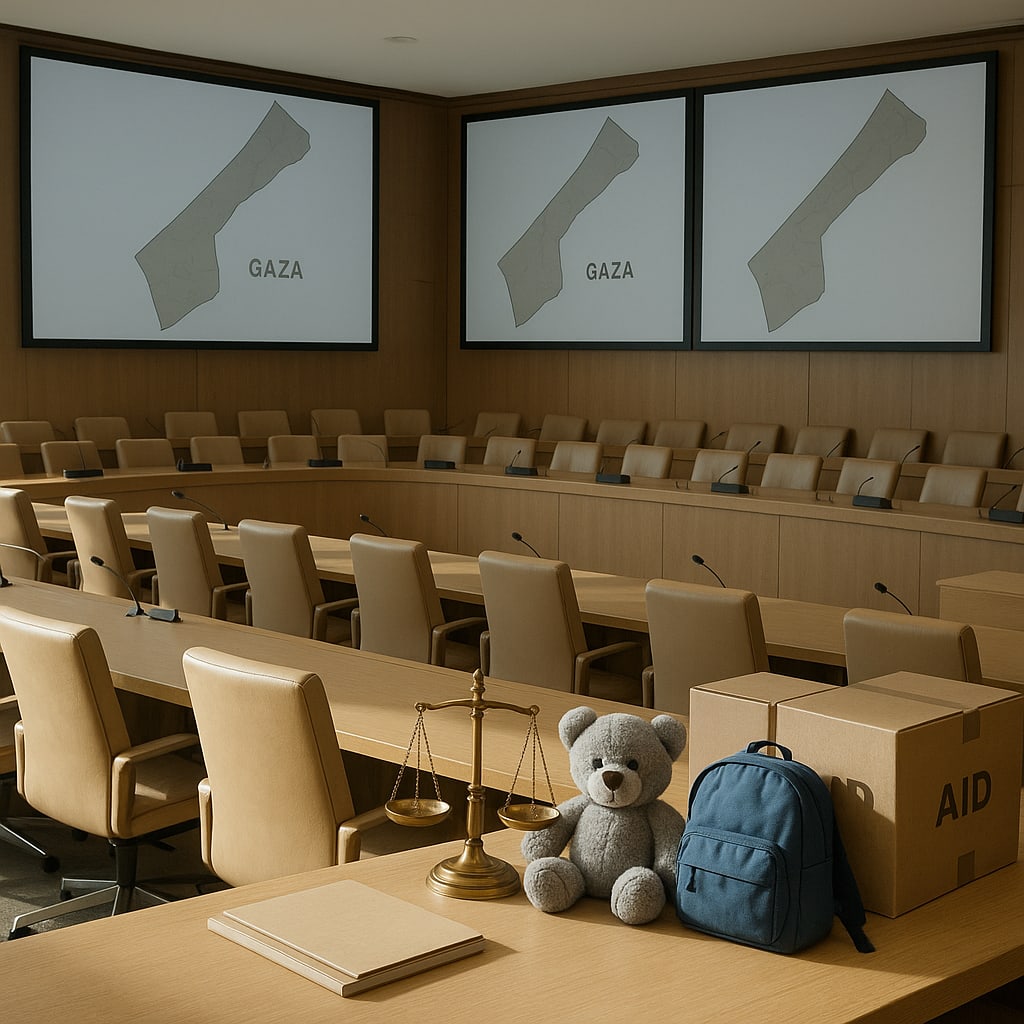
1,000 days after Oct. 7: child tolls, devastation metrics, and accountability claims define cross-border coverage
Narrative Snapshot
- Child-focused harm is the common thread. Save the Children reports at least 21,000 minors killed and widespread displacement and malnutrition risk in Gaza, while Al Jazeera highlights a UN commission’s allegation about children shot in the head—an allegation Israel rejects. Fox News centers Israeli children’s trauma and safety anxieties after years of conflict.
- On scale and control, Al Jazeera asserts Gaza is 90% destroyed and that Israel has seized roughly 80% of the strip; Italian outlets and Middle East Eye cite death tolls exceeding 70,000 Palestinians. CBC stresses a “humanitarian purgatory” despite a reported ceasefire nine months earlier.
- Accountability and sanction pathways surface unevenly: The Guardian reports Australian federal police assessing alleged IDF war crimes; Middle East Eye spotlights renewed calls for FIFA action after an athlete’s killing and carries an opinion on UN findings being ignored.
What Happened
Marking roughly 1,000 days since October 7, 2023, multiple outlets foreground civilian costs and contested responsibilities. Save the Children (via ANSA) says at least 21,000 minors have been killed, about 80% of Gaza’s children are displaced, and 245,000 face malnutrition risk; it publishes testimonies from youths who say they fear death and want peace, home, and a future. Al Jazeera reports that 90% of Gaza is destroyed and 80% has been seized by Israel. Middle East Eye cites the Gaza Government Media Office’s figure of over 73,000 Palestinians killed. CBC describes a territory stuck in “humanitarian purgatory,” with heavy aid dependence months after a ceasefire. The Guardian says Australian federal police are assessing alleged IDF war crimes. Fox News documents Israeli children’s trauma. Additional pieces track health system collapse, sport-related advocacy after a player’s killing, and disability and resilience through an amputee women’s team.
Why It Matters
The coverage clusters around international law, humanitarian governance, and the durability of conflict settings. Domestically applied accountability mechanisms—such as Australian federal police assessing a civil-society brief on alleged IDF war crimes—test states’ willingness to exercise jurisdiction in politically sensitive theaters. UN fact-finding is a parallel venue: Al Jazeera notes a commission alleging deliberate targeting of children, which Israel rejects, underscoring the contested traction of international norms. Humanitarian architecture remains central: CBC cites UN OCHA data showing reliance on aid by most households in key Gaza areas, while ANSA relays child malnutrition risk and displacement on a mass scale. Sectoral levers—sport governance in FIFA’s case—are being mobilized alongside health-system distress (breast cancer care under blockade) and civil society narratives. Israeli domestic sentiment, as reported by Middle East Eye (“wars will never end”), and Fox News’s focus on child trauma suggest a posture that complicates transitions from ceasefire to recovery.
Diverging Narratives
Outlets emphasizing Palestinian civilian harm (Al Jazeera, Middle East Eye, La Repubblica, and ANSA via Save the Children) foreground destruction metrics, casualty figures exceeding 70,000, and acute child impacts. Al Jazeera adds territorial control claims (80% seized) and cites a UN commission’s allegation about children shot in the head; it notes Israel’s rejection of claims that its army deliberately targets children. Italian coverage (La Repubblica) anchors the timeline by recalling Hamas’s killing of 1,200 people on Oct. 7, 2023, then detailing the toll of Israel’s response on bodies and minds. Fox News focuses on Israeli civilians—particularly children—coping with trauma amid perceived antisemitism abroad and insecurity near Lebanon, naming Oct. 7 a Hamas-led “massacre.” Accountability frames vary: The Guardian reports a concrete legal assessment by Australian authorities, while Middle East Eye presses for FIFA action after a Palestinian goalkeeper’s killing and runs an opinion arguing Western disregard for UN findings. CBC’s “humanitarian purgatory” highlights the disconnect between a reported ceasefire and stalled normalization.
What Happens Next
- Domestic legal action: Australian federal police are “assessing” a civil-society brief alleging IDF war crimes (The Guardian). Watch for a decision to open a formal investigation, requests for mutual legal assistance, or a decision to take no further action. Each path signals how far national authorities will carry accountability efforts tied to Gaza.
- Humanitarian access and recovery: CBC reports extreme aid dependence months after a ceasefire; ANSA relays child malnutrition risk figures. Indicators include sustained access corridors, nutrition and displacement data, and any easing of the blockade that Middle East Eye says is driving drastic care choices (e.g., immediate mastectomies).
- Normative and sectoral pressure: Following a Palestinian goalkeeper’s killing, Middle East Eye notes fresh calls for FIFA to act. Watch for any FIFA statements, disciplinary processes, or member association initiatives.
- Conflict posture and civilian protection: Middle East Eye’s press review quotes Netanyahu as saying wars will not end; Fox News describes Israeli families near Lebanon hoping for normalcy. Monitor cross-border security developments and official messaging that could either entrench a protracted-security framing or open space for de-escalation and reconstruction planning.