
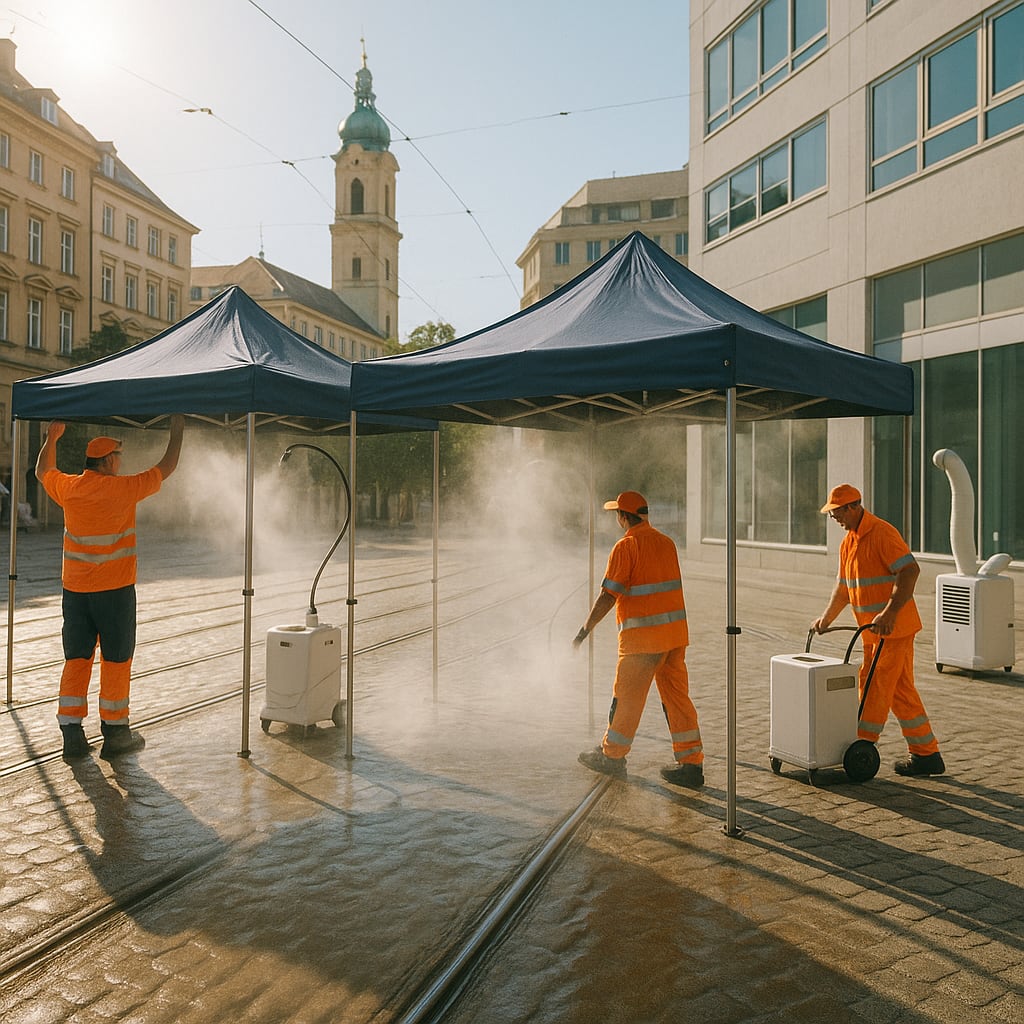
Europe’s record heatwave drives excess deaths and disrupts infrastructure as temperatures exceed 40C
Narrative Snapshot
- Most outlets converge on severity and geographic reach: records fell from France and Germany to Denmark, Switzerland and the Czech Republic, with infrastructure and public services struggling (BBC; The Guardian; CBC; DW; Japan Times; Folha de S.Paulo; New York Times).
- Mortality reporting differs by measure and timing. France’s public health agency cited roughly 1,000 excess deaths during the heatwave (DW; South China Morning Post), while earlier tallies focused on specific causes or shorter windows, such as drownings and isolated incidents (The Times of Israel) or a one‑day figure in Paris reported via Franceinfo (RT).
- Coverage splits between immediate management (closures, bans, event curbs) and structural adaptation. French and Italian reports highlight operational restrictions and relief spaces (Clarin; Fox News; Le Monde live; Al Jazeera English; La Repubblica), while Le Monde and the New York Times foreground long‑term infrastructure and budget constraints.
- Worker exposure and economic productivity feature prominently in UK and pan‑European reporting (Al Jazeera English; Corriere della Sera; The Guardian business), underscoring tensions between continuity of activity and heat‑safety standards.
What Happened
An intense heatwave linked by forecasters to an omega blocking pattern stalled over Europe drove temperatures above 40C in multiple countries (The Hindu; The Guardian). France recorded unprecedented nighttime heat, with Paris matching Dubai temperatures, train disruptions, and landmark closures including the Eiffel Tower and curtailed Louvre hours (Clarin; Fox News). Authorities imposed alcohol bans and delayed mass gatherings, including a Pride parade, while parts of Germany saw road surfaces fail (CBC; Folha de S.Paulo). France experienced power outages amid peak demand (Al Jazeera English, 24 Jun). Excess mortality rose: France’s health authorities cited about 1,000 excess deaths during the event, noting the total may climb as care‑home data are integrated (DW; South China Morning Post). A Paris‑area daily death count of 109 was reported via Franceinfo (RT). Records fell across Germany, Denmark, Switzerland and the Czech Republic; the UK set new June records three days running (BBC; Japan Times; CBC; The Hindu). Italy opened churches and climate refuges as emergency rooms saw 10–15% surges, especially among older and vulnerable people (La Repubblica; ANSA).
Why It Matters
The episode tests Europe’s heat governance and adaptation capacity. French debate centers on a “wall of investments” needed to retrofit cities, health systems, and housing versus the escalating costs of inaction (Le Monde). UK analyses similarly argue the country is “built for a climate that no longer exists,” spotlighting gaps in resilience planning (The Guardian, 24 and 26 Jun). Infrastructure vulnerabilities—from rail buckling and road failures to energy and industrial cooling constraints—were exposed across multiple systems (New York Times; Folha de S.Paulo). Workplace safety and productivity costs are moving from episodic disruptions to structural headwinds, with economists warning of growth impacts and workers facing acute exposure in high‑heat environments (The Guardian business; Al Jazeera English; Corriere della Sera). For decision‑makers, the heatwave revalidates the need to expand heat‑alert systems, surge public‑health capacity, harden infrastructure, and align labor regulations to extreme heat baselines already materializing.
Diverging Narratives
Outlets differ on emphasis and framing. Public‑health reporting ranges from broad excess‑mortality estimates (about 1,000 in France during the heatwave, per DW and SCMP) to incident‑based tallies (e.g., drownings and isolated fatal exposures noted earlier in the week by The Times of Israel) and a one‑day Paris figure carried via Franceinfo (RT). Several sources stress that mortality figures are preliminary and likely to rise as institutional data are consolidated (South China Morning Post). On causation, meteorological accounts focus on the omega block’s role in stalling hot air masses (The Hindu), while some UK coverage explicitly frames the event as a direct result of global heating and a signal of systemic adaptation shortfalls (The Guardian, 26 Jun; 24 Jun briefing). Operational reportage highlights immediate restrictions—alcohol bans, early museum closures, cancellation of non‑elite sports components—even as others foreground longer‑term investment constraints and infrastructure limits (CBC; Fox News; Al Jazeera English, 26 Jun; Le Monde; New York Times). Worker‑exposure pieces draw on thermal imaging and case studies to center occupational risk, contrasting with macroeconomic and governance lenses elsewhere (Al Jazeera English; Corriere della Sera; The Guardian business).
What Happens Next
- Heat governance and funding: In France, the adaptation “investment wall” identified by Le Monde sets a decision point on whether to accelerate capital spending on cooling‑resilient housing, urban shade, and health capacity versus incremental measures under fiscal constraints. Watch for budget signals, national adaptation plan revisions, and local heat‑action protocols.
- Public health and data reconciliation: With France’s excess‑mortality estimate provisional and expected to adjust as care‑home data arrive (South China Morning Post), tracking finalized mortality audits and ER load trends—especially amid Italy’s reported 10–15% surge and staffing gaps (ANSA)—will indicate health‑system stress and policy recalibration.
- Infrastructure operations: Rail restrictions, road integrity, and power stability remain operational pivots (New York Times; Folha de S.Paulo; Al Jazeera English, 24 Jun). Monitor transport advisories, grid operator interventions, and cooling‑water constraints on industry and services.
- Event and workplace protocols: Organizers’ moves to narrow or reschedule activities—as in Paris’s Diamond League limiting events to professional athletes with safety measures (Al Jazeera English, 26 Jun)—and employers’ heat‑safety provisions (The Guardian business) will signal whether temporary adaptations become standard operating practice across sectors.