
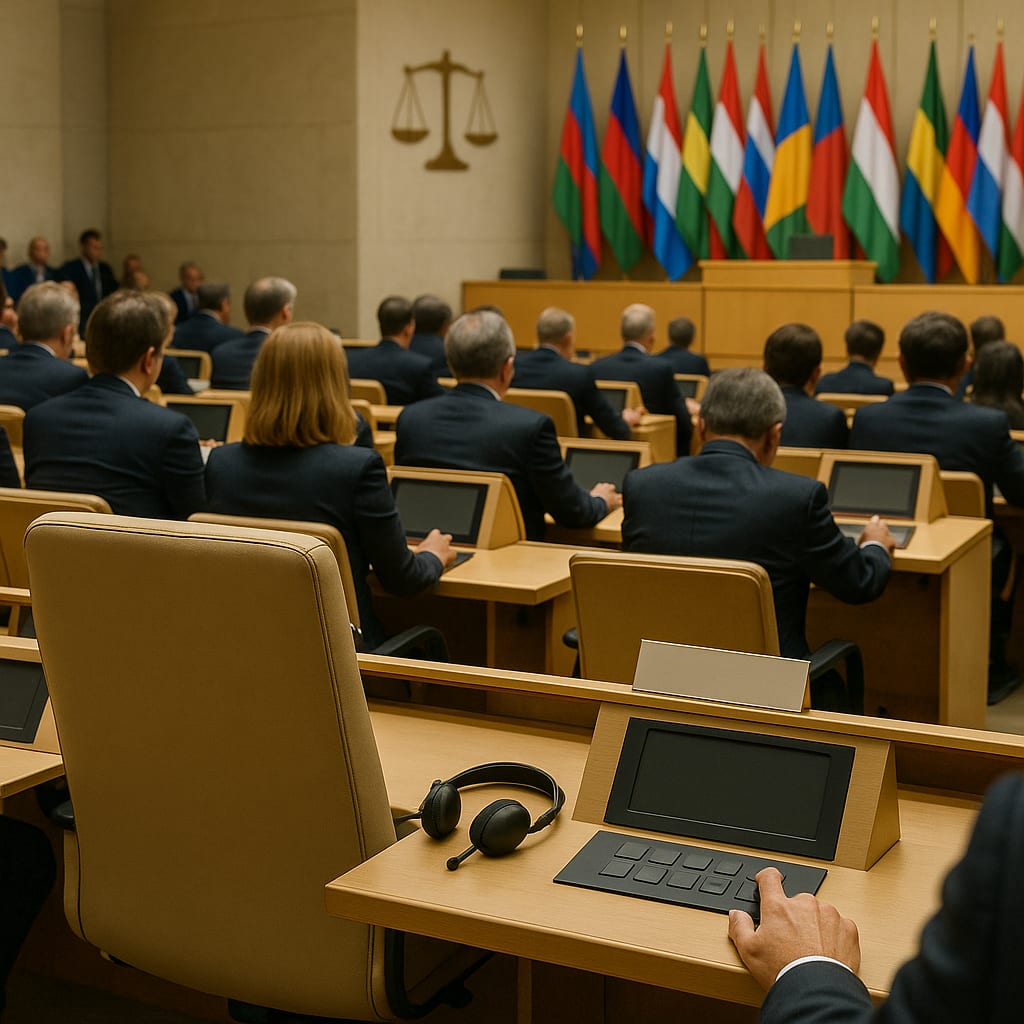
States poised for unprecedented vote on ICC prosecutor as US sanctions bar his attendance
Narrative Snapshot
Across outlets, there is broad agreement that the impending vote by states on whether to remove International Criminal Court chief prosecutor Karim Khan is without precedent and that U.S. sanctions are preventing him from traveling to New York for the session. Where coverage diverges is in framing the process and its stakes. Reporting carried by the Toronto Star and The Hindu centers on the mechanics of the vote and Khan’s inability to attend under sanctions. The Times of Israel situates the moment in the wake of Khan’s 2024 arrest warrants against Israel’s prime minister and defense minister, while emphasizing the sexual misconduct allegations behind the proceeding.
Middle East Eye’s timeline and commentary foreground process concerns, citing a UN-led inquiry and a judicial panel that unanimously cleared Khan, followed by a bureau decision to press ahead with a vote, alongside warnings from Palestinian rights groups that politicization is corroding the court’s independence. Tehran Times and Middle East Eye opinion pieces cast the episode as a test of whether powerful states, particularly the U.S. and Israel, can undercut the Rome Statute system. TASS amplifies a hostile U.S. posture toward the court, reporting remarks by Marco Rubio denouncing the ICC and warning against action targeting Americans, underscoring the geopolitical overlay rather than the disciplinary specifics.
What Happened
Diplomats are convening at United Nations headquarters in New York on Friday for an unprecedented vote on whether to permanently remove ICC chief prosecutor Karim Khan, who faces sexual misconduct allegations that he has denied. Both the Toronto Star and The Hindu report that U.S. sanctions are keeping Khan from attending. The Times of Israel says 125 countries will participate and notes Khan’s 2024 arrest warrants against Israel’s Benjamin Netanyahu and Yoav Gallant; it also attributes his travel barrier to sanctions imposed by the Trump administration. Middle East Eye outlines a two-year saga that included a UN-led investigation and a judicial panel that unanimously cleared Khan, followed by a bureau decision to proceed to a removal vote. TASS reports Marco Rubio calling the ICC a “stupid organization” and warning the U.S. would not tolerate actions against Americans. Tehran Times recalls the ICC’s creation under the 1998 Rome Statute, in force since 2002.
Why It Matters
The vote tests whether the Assembly of States Parties can discipline its top prosecutor without eroding the court’s independence, a core tenet of the Rome Statute system highlighted by Tehran Times’ reminder of the treaty’s origins. Middle East Eye’s timeline and rights-group statements argue that proceeding despite a judicial panel’s unanimous clearance signals politicization, while its opinion piece urges the ICC’s founding states to prevent institutional damage. The Toronto Star and The Hindu underscore the operational impact of U.S. sanctions that physically bar the prosecutor from the venue, illustrating how non-party state measures can constrain court officials. TASS’s reporting on U.S. rhetoric highlights sustained resistance by a major power that, according to Marco Rubio’s comments, rejects ICC jurisdiction over Americans. For governments and multilateral bodies, the outcome will reverberate through cooperation calculus, norm adherence, and the perceived reliability of international justice mechanisms in politically salient cases.
Diverging Narratives
One line of coverage emphasizes the allegations and the unprecedented nature of the remedy, treating the vote as an institutional accountability mechanism; the Toronto Star, The Hindu, and The Times of Israel anchor their reports in the fact of the vote, the sexual misconduct claims, and Khan’s inability to attend due to sanctions. A competing frame, developed by Middle East Eye through a timeline, live updates, and expert commentary, contends the process has been bent by politics: it cites a UN-led probe and a judicial panel that unanimously cleared Khan before a bureau opted to pursue removal, and quotes Palestinian rights groups warning the process has been “reduced to a political referendum” and is “corroding” independence. Opinion pieces in Middle East Eye and Tehran Times place the episode within broader efforts by the U.S. and Israel to undermine the court. TASS, for its part, reports U.S. hostility in blunt terms, quoting Marco Rubio’s derision of the ICC and warnings against any move targeting Americans. The result is not disagreement over the facts of the vote, but conflicting interpretations of whether it constitutes due accountability or externally driven retaliation with institutional costs.
What Happens Next
The immediate decision point is Friday’s vote by states on permanent removal. If states vote to remove Khan, Middle East Eye’s process account and rights-group warnings suggest intensified scrutiny of how the bureau’s choice to override a unanimous judicial clearance will shape perceptions of the court’s independence and the handling of politically sensitive cases, including those noted by The Times of Israel. If Khan remains, opinion pieces urging founders to shore up the court’s autonomy indicate pressure for reforms to insulate investigative and disciplinary tracks from political organs. Analysts should watch for official explanations of vote rationales to see whether due process concerns flagged by Middle East Eye and Palestinian groups are addressed, and for any change in U.S. sanctions posture that, per The Hindu and Toronto Star, currently prevents the prosecutor’s travel. TASS-reported U.S. statements will be a key indicator of future resistance or escalation toward the court.