
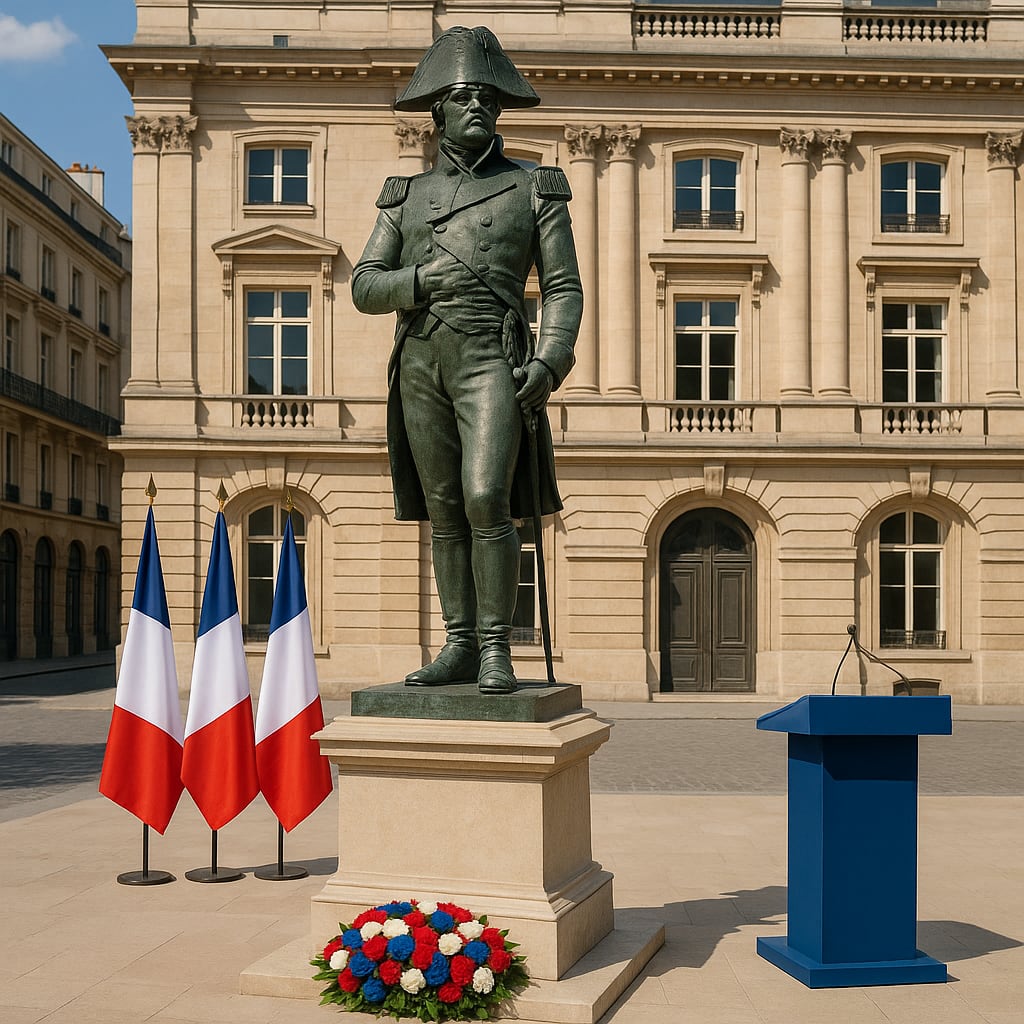
Macron inaugurates Dreyfus statue and marks France’s first national day of commemoration, warning of resurgent antisemitism
Narrative Snapshot
Across outlets, the core throughline is clear: Emmanuel Macron used the Dreyfus commemoration to warn about contemporary antisemitism and to anchor that warning in a high-profile act of remembrance. France24 and the Associated Press copy carried by the Toronto Star center on the president’s call for “constant vigilance” and his invocation of the “demons of antisemitism,” framing the event as present-focused state messaging linked to a historical injustice. Corriere della Sera emphasizes that this was the first National Day of Commemoration of Dreyfus, underscoring the institutionalization of memory at the national level.
By contrast, the Guardian and the Times of Israel place the statue itself—and its contested journey—at the heart of the story. Both stress that the work lacked a permanent home for decades, with the French army twice refusing its placement at the École Militaire, and note that the piece had been effectively hidden after proposed sites were rejected. Politika’s news report highlights Macron’s warning about a renewed “heinous antisemitism,” while its companion analysis argues for the continued relevance of Dreyfus to France today, signaling a domestic debate over how remembrance functions amid current social strains.
What Happened
French President Emmanuel Macron presided over the inauguration of a statue honoring Captain Alfred Dreyfus and marked France’s first National Day of Commemoration dedicated to the wrongfully convicted Jewish officer (Corriere della Sera; France24). In his remarks, Macron decried the resurgence of the “demons of antisemitism” and called for “constant vigilance” against anti-Jewish hatred (Toronto Star/AP; France24). The ceremony concluded a decades-long saga over the statue’s status: the Guardian reports it had been moved around Paris for roughly 40 years, with the army twice refusing its installation at the École Militaire, where Dreyfus was publicly degraded; the Times of Israel notes that the work was effectively hidden for years after sites were rejected and now has a permanent home, 120 years after Dreyfus’s exoneration (Guardian; Times of Israel). Politika framed the moment against a backdrop of renewed antisemitism in France.
Why It Matters
The move binds presidential rhetoric to a durable commemorative architecture. By inaugurating a permanent statue and launching a national day, the Élysée is placing the Dreyfus Affair—long recognized as exposing deeply rooted anti-Jewish bias in France—into a formalized civic calendar and urban landscape (France24; Corriere della Sera). This addresses two structural fronts identified in coverage: state signaling in response to resurgent antisemitism, and the resolution of a protracted dispute over the public visibility of the Dreyfus statue after decades of marginalization (Toronto Star/AP; Guardian; Times of Israel). For national and municipal authorities, it sets a precedent for how contested memory is consolidated in central public space after institutional resistance reported by the Guardian. For international observers and organizations tracking antisemitism, Macron’s language and the institutionalization of commemorations are indicators of France’s priority setting and its willingness to align symbolism with stated vigilance (France24; Toronto Star/AP; Politika).
Diverging Narratives
Two interpretive tracks emerge. One presents a forward-leaning policy message: France24 and the AP copy in the Toronto Star foreground Macron’s appeal for “constant vigilance” and his warning about the “demons of antisemitism,” treating the ceremony as a vehicle for present-day state positioning. Corriere della Sera reinforces this by highlighting the inauguration of a first National Day of Commemoration, indicating an emphasis on national-level institutional commitments.
The other centers on the politics of memory embedded in place. The Guardian and the Times of Israel focus on the statue’s decades-long limbo—army refusals at the École Militaire, rejected sites, and effective concealment—casting the new placement as the culmination of unresolved disputes over whether and where Dreyfus’s memory should occupy prominent public ground. Politika’s paired pieces connect Macron’s warnings to an ongoing need for Dreyfus as a reference point in France’s public life, but do not specify new policy instruments. Across reports, unanswered questions remain about how the new national day will be operationalized and whether the statue’s “permanent home” will close the chapter on prior placement controversies (Corriere della Sera; Guardian; Times of Israel).
What Happens Next
Three decision points follow from the coverage. First, implementation of the new national commemoration will test whether the state’s rhetorical emphasis translates into recurring, visible practice; indicators include formal guidance on observance, institutional partners, and the breadth of civic participation cited in future reporting (Corriere della Sera). Second, the durability of the statue’s installation will signal whether the long-running placement dispute is resolved; watch for any administrative reviews, challenges, or further relocations given the history of site refusals and concealment documented by the Guardian and the Times of Israel. Third, policy follow-through on Macron’s call for “constant vigilance” bears monitoring, with attention to subsequent government statements, resource commitments, or coordination with relevant institutions that align with the stance reported by France24 and the Toronto Star/AP. Politika’s framing suggests the salience of sustained attention to antisemitism within France’s public discourse.