
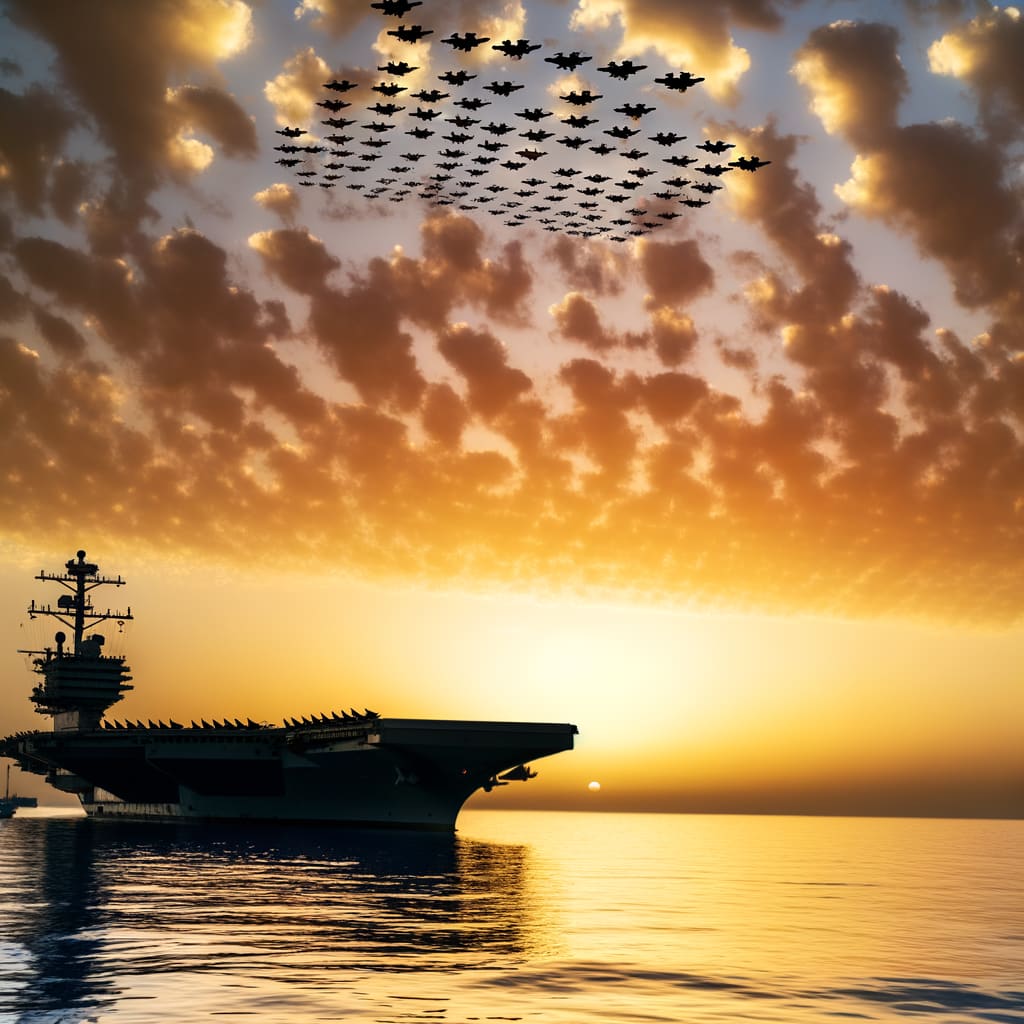
US Deploys Aircraft Carrier Strike Group to Middle East Amid Rising Tensions with Iran
The USS Abraham Lincoln aircraft carrier strike group has entered the Central Command (CENTCOM) waters in the Indian Ocean amidst escalating threats from Iran, according to senior U.S. officials. This development comes amid reports of Iran's Supreme Leader, Ayatollah Ali Khamenei, going underground and warnings from a leading U.S. drone expert about the serious threat posed by Iranian drone swarms to the carrier strike group.
Background and Context
The U.S. has been expanding its military presence in the Middle East region, not only at sea but also in the air and on land. This move comes after President Trump ordered an aircraft carrier and a guided-missile strike group to the Middle East as tensions between the U.S. and Iran continue to rise. The decision to deploy the USS Abraham Lincoln and several guided-missile destroyers to the region has expanded the U.S. capabilities to defend U.S. forces or potentially take military action against Iran.
Key Developments
Iran has responded to the increasing U.S. military presence by monitoring U.S. movements in the region and reasserting its commitment to defending its sovereignty. Esmail Baghaei, an Iranian official, emphasized that deploying any vessel to the region will not diminish Iran's resolve or its commitment to defending its sovereignty
.
The U.S. faces a credible threat from Iranian drone swarms, according to Cameron Chell, CEO and co-founder of Draganfly. Chell warned that Iran’s growing reliance on low-cost unmanned systems poses a danger to high-value U.S. naval assets, including the USS Abraham Lincoln aircraft carrier strike group. By pairing low-cost warheads with inexpensive delivery platforms, Iran has developed an effective asymmetric threat against highly sophisticated military systems
, Chell said.
Implications and Reactions
This escalating tension has led to threats of new Red Sea attacks by Iran-backed Yemen rebels as the U.S. aircraft carrier heads toward Iran. Meanwhile, President Trump has asserted that Iran has reached out on numerous occasions
seeking to negotiate with the U.S. Trump also pointed to the arrival of what he called a big armada next to Iran,
referencing the recent deployment of U.S. naval assets.
General Mohammad Pakpour of the Islamic Revolutionary Guard Corps (IRGC) has issued a warning after President Donald Trump said a “massive fleet” was heading for the region. Iran stands ready with its “finger on the trigger” to fend off any U.S. or Israeli aggression, according to Pakpour.
Conclusion
The situation remains highly volatile, with the U.S. reportedly considering precision strikes on high-value Iranian officials. While the U.S. continues to increase its military presence, Iran has been firm in its stance of defending its sovereignty. As the world looks on, the escalating U.S.-Iran tensions continue to hold the potential for significant regional and global implications.