
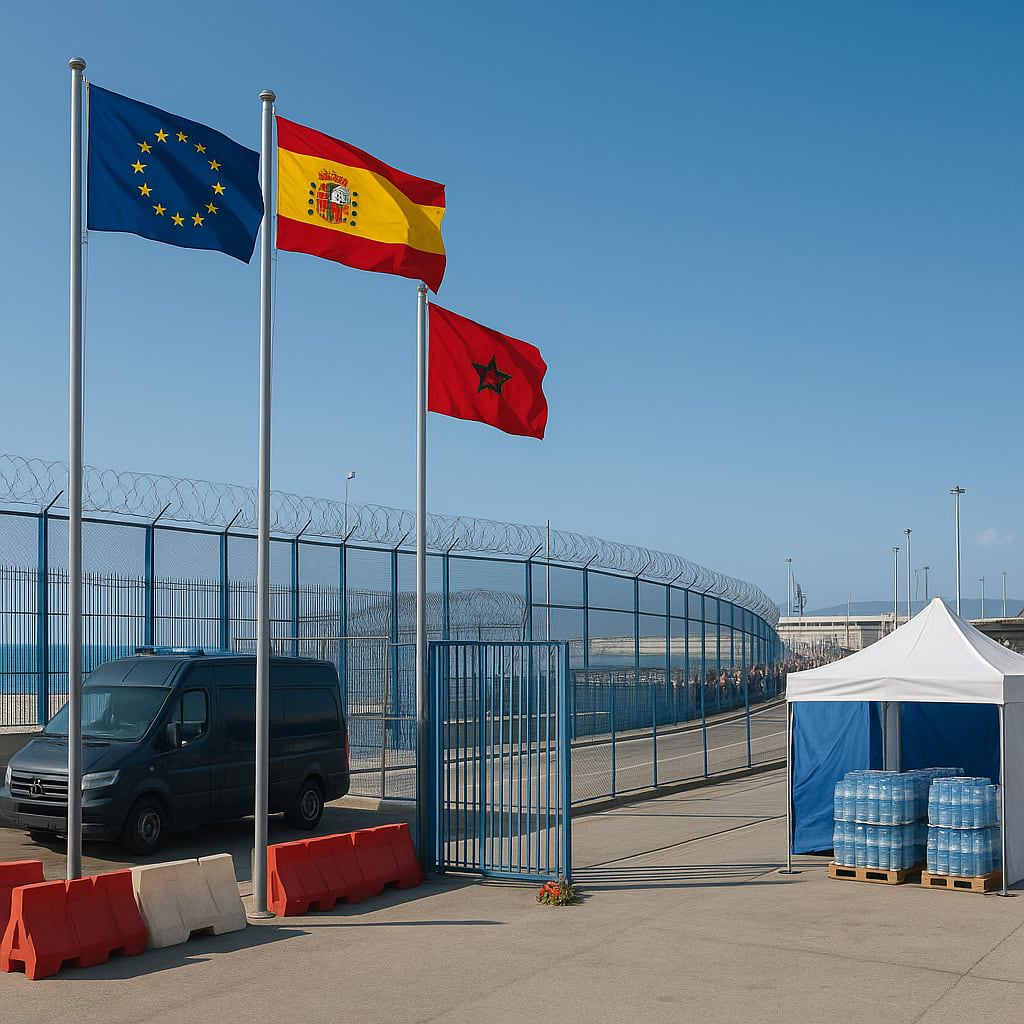
Ceuta border surge exposes contested toll, competing explanations, and hard policy choices from Rabat to Brussels
Narrative Snapshot
Across outlets, the basic scale is not in dispute, but nearly every consequential figure is. Spanish officials cited by BBC and CGTN put crossings between 72,000 and 78,000, while Moroccan authorities referenced by CGTN speak of roughly 40,000. Reported fatalities range from about 80 (CBC; Folha de S.Paulo) to 88 (The Guardian’s newsletter; Telesur, August 3), to 100 per Ceuta’s leader (DW; BBC; Al Jazeera; CGTN), to 141 according to Caminando Fronteras and Morocco’s AMDH, reported by Telesur, Middle East Eye, and Clarín. The result is a fragmented evidentiary picture that nonetheless grounds urgent operational responses on both sides of the frontier.
Explanations for why the surge occurred diverge sharply. DW links the rush to misleading claims circulating about a Spanish Supreme Court ruling on migration, while The Guardian scrutinizes Washington–Rabat ties and argues Morocco “feels emboldened” amid its closeness to Donald Trump, citing Rabat’s naming of a $1bn Western Sahara highway after him. Middle East Eye foregrounds youth precarity in Morocco, amplifying voices that “risk everything” to reach Ceuta. Human-rights groups reported by Telesur fault both Morocco and the EU for crisis handling, while CBC highlights how far-right pressure helped channel European debate toward blaming Spain rather than the human toll.
Coverage of the immediate aftermath also splits between security, humanitarian, and social frames. TASS notes a reinforced Spanish naval presence in Ceuta’s port, and TASS and Politika report Moroccan police on high alert amid social media chatter about new attempts. Folha de S.Paulo and earlier Telesur reporting detail forensic efforts to identify and bury the dead, while Bangkok Post relays Ceuta’s plea for support amid an “unsustainable” number of unaccompanied children. Le Monde examines strains within Ceuta’s long-standing Christian–Muslim coexistence and the identity pressures on Muslim citizens, while Clarín traces the cross-border economic and family ties linking Ceuta and Fnideq.
What Happened
Between July 30 and 31, tens of thousands crossed from Morocco into Spain’s North African enclave of Ceuta; Spanish authorities cited by BBC and CGTN put the figure at 78,000 and 72,000 respectively, while Moroccan authorities referenced by CGTN suggested around 40,000. Most returned swiftly, but Ceuta’s leader told DW, BBC, Al Jazeera, and CGTN that 3,000–5,000 remain, hundreds of them minors, and estimated 100 deaths. Other tallies vary: CBC and Folha de S.Paulo report about 80 fatalities; Telesur (Aug. 3) and The Guardian’s Aug. 5 briefing cited at least 88; Telesur, Middle East Eye, and Clarín, citing Caminando Fronteras and AMDH, reported 141. Forensic teams in Ceuta are working to identify bodies (Folha de S.Paulo; Telesur, Aug. 3). Spain bolstered naval assets in the port (TASS). Morocco placed police on high alert (TASS; Politika) and began prosecutions, including 52 people tied to the crossings (Politika) and seven taxi drivers jailed for aiding irregular migration (Toronto Star). Rabat signaled readiness to cooperate on returning unaccompanied minors, per MAP via CGTN.
Why It Matters
The episode tests the resilience of Spain–Morocco crisis management amid a long history of bilateral friction, which Le Monde links to recurring disputes and broader questions such as Western Sahara. EU interior ministers moved quickly to assert that Schengen was never at risk, per The Guardian’s newsletter, but Al Jazeera reports they simultaneously warned that Europe’s borders are vulnerable, underscoring the political salience of rapid, coordinated response. The divergent fatality counts and contested scale expose constraints in cross-border information-sharing and accountability, while Folha de S.Paulo’s and Telesur’s accounts of ongoing identifications highlight the administrative burden on local institutions.
DW’s finding that misleading legal claims helped trigger crossings underscores the role of information ecosystems in shaping migration dynamics. The Guardian’s focus on Washington–Rabat ties—amplified by Morocco naming a highway after Trump—places the crisis within shifting geopolitical alignments that could affect how leverage is exercised in future standoffs. Bangkok Post’s and CGTN’s reporting on unaccompanied minors points to sensitive returns coordination that will test EU–Morocco operational arrangements and local social cohesion in Ceuta, which Le Monde depicts as already under strain.
Diverging Narratives
Causality is contested. DW attributes momentum to misinformation about a Spanish Supreme Court decision, contrasting with The Guardian’s argument that Morocco’s posture reflects confidence in its relationship with Trump-era Washington, illustrated by the highway naming. Middle East Eye centers structural marginalization of Moroccan youth as the primary driver, while Telesur relays AMDH’s critique of both Rabat and the EU for crisis handling. These are not mutually exclusive frames but they point policymakers toward different levers—counter-disinformation, diplomacy, or socioeconomic conditions.
The human toll remains unsettled. Local and international outlets cite 80, 88, or 100 deaths, while Caminando Fronteras and AMDH report 141, with causes listed as drowning and crushing (Telesur; Clarín). Missing persons figures also diverge, with TASS relaying about 60 Moroccans officially missing and Toronto Star documenting families searching from Fnideq. Scale is likewise disputed: Spanish figures run to 72,000–78,000 (BBC; CGTN), while Moroccan authorities speak of about 40,000 (CGTN). These discrepancies shape political narratives about state capacity and proportionality of response.
Policy emphasis splits between security and humanitarian management. TASS reports new Spanish naval assets in port; Politika and TASS describe Moroccan high alert measures and fear of renewed attempts. Folha de S.Paulo and Telesur detail forensic identifications, and Bangkok Post quotes Ceuta’s leader calling minors “unsustainable” and seeking aid. CGTN cites MAP on Morocco’s readiness to cooperate in returning unaccompanied minors. Meanwhile, CBC documents EU politicians blaming Spain under far-right pressure, even as EU ministers publicly downplayed Schengen risk (The Guardian’s newsletter).
What Happens Next
Three decision tracks will shape outcomes. First, returns of unaccompanied minors: Morocco’s commitment to identify and receive them (CGTN/MAP) will require procedures acceptable to Spanish authorities and child protection standards. Signals to watch include joint identification protocols, timelines for case transfers, and municipal capacity in Ceuta, whose leader has called the situation “unsustainable” (Bangkok Post).
Second, the security–humanitarian balance at the border: Spain’s reinforced naval presence (TASS) and Morocco’s high-alert policing (TASS; Politika) could persist if social media rumors of new crossings continue. Indicators include adjustments in Spanish deployments, Moroccan arrest and prosecution patterns—such as the 52 prosecutions (Politika) and taxi-driver sentences (Toronto Star)—and any de-escalatory coordination.
Third, the political framing in Europe and beyond: EU messaging that Schengen was never at risk (The Guardian’s newsletter; Al Jazeera) will be tested by parliamentary scrutiny and national politics documented by CBC. Analysts should track updated death and missing-persons figures from forensic teams (Folha de S.Paulo; Telesur, Aug. 3) and NGOs (Telesur; Middle East Eye; Clarín), as well as any diplomatic moves spotlighted by The Guardian regarding US–Morocco ties that could influence Rabat’s calculus.