
Europe’s late-June heatwave strains infrastructure and spotlights adaptation and inequality
Narrative Snapshot
- Convergence on fragility of systems: Reporting from Clarin, CBC, and the Japan Times aligns on record heat pushing European infrastructure past design limits, with transport and energy singled out.
- Divergent focal points: Le Monde centers on collective preparedness and climate-transition literacy, while the Guardian frames heat as a distributive crisis with stark mortality implications. Corriere della Sera situates heat alongside other hazards (floods, earthquakes) to question repeated governance failures. Folha de S.Paulo offers concrete disruption from Leipzig as a microcosm of systemic stress.
- What’s at stake: Continuity of essential services (transport, energy, industry), credible public-health protection, and Europe’s climate-leadership narrative as attention pivots from mitigation to adaptation.
What Happened
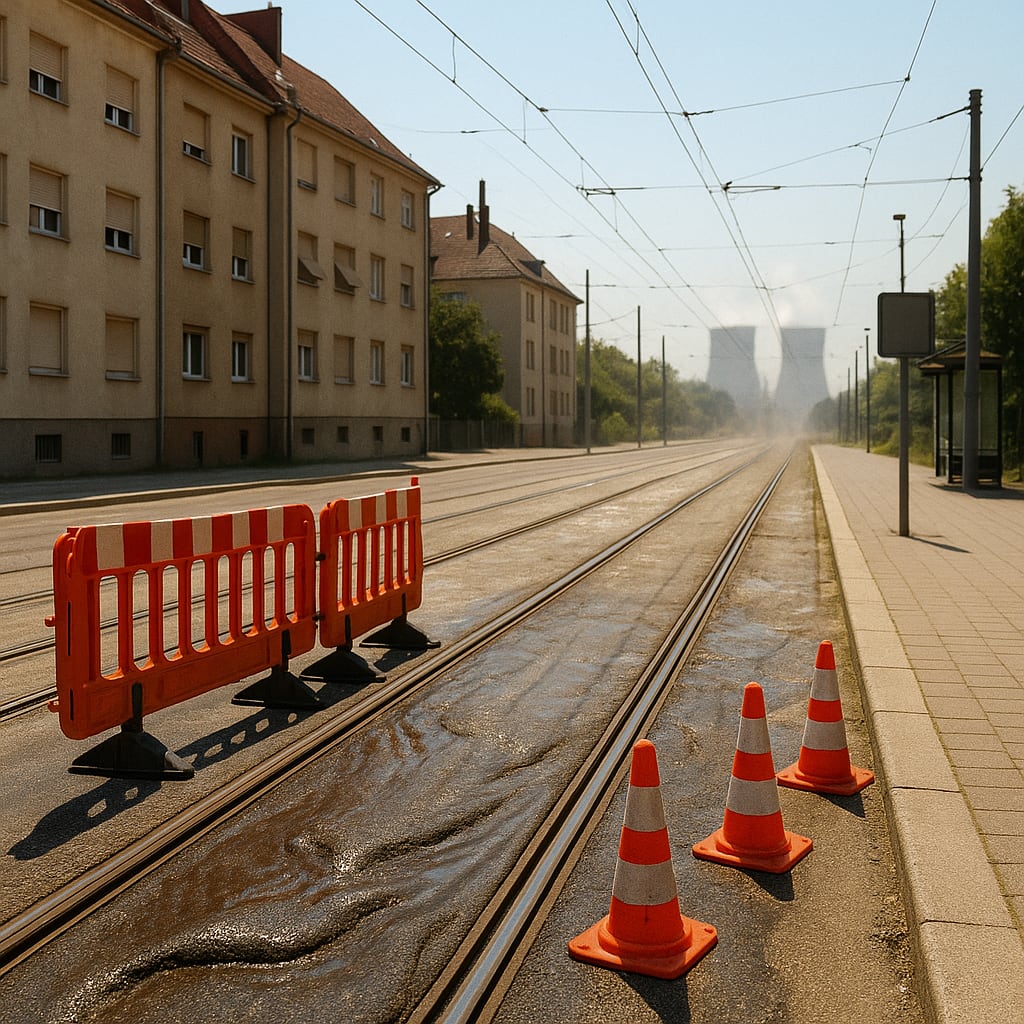
In late June 2026, a heatwave drove record temperatures across European cities (CBC; Japan Times). The strain surfaced vividly in Germany: in Leipzig on June 27, heat melted pavement around tram rails, obstructing tracks and suspending the city’s sole rail-based transit that afternoon (Folha de S.Paulo). Broader system vulnerabilities emerged. Clarin reports that trains, nuclear power stations, and factories across Europe were not built for such temperatures, with the heatwave exposing design assumptions tied to a cooler climate. The moment also shifted public debate. Le Monde’s “Chaleur humaine” podcast addressed how to prepare collectively for the next heatwave, channeling questions about the climate transition into practical orientation. Corriere della Sera hosted a live discussion linking record heat to floods and earthquakes, asking why institutions keep repeating similar risk-management errors.
Why It Matters
June’s heatwave forced a reframing of Europe’s climate posture: even as a “net-zero champion,” the continent now faces adaptation urgency at home (Japan Times). Infrastructure shortfalls—across rail, energy, and industrial operations—carry immediate economic and service-continuity risks (Clarin; Folha de S.Paulo). The Guardian underscores a public-health and equity dimension, warning that the combination of climate stress and inequality could account for more than 100,000 annual deaths in Europe, a signal for policymakers to prioritize protective measures for the most vulnerable. Le Monde’s emphasis on collective preparedness suggests a pivot from individual coping to coordinated municipal and national planning. Corriere’s framing—heat alongside floods and earthquakes—points to systemic learning deficits in European risk governance, with implications for how institutions integrate climate adaptation into broader disaster-preparedness architectures.
Diverging Narratives
Coverage differs less on facts than on interpretive frames. Clarin and Folha de S.Paulo foreground physical-system failures: tracks, pavements, nuclear stations, and factories unable to withstand temperatures that the built environment was never designed for. CBC and the Japan Times widen the aperture to continental patterns—record-breaking city temperatures and a broader societal reckoning with everyday life under recurring heatwaves. Le Monde concentrates on collective capacities: information, coordination, and readiness for the next event as part of the climate transition. The Guardian, by contrast, centers distributional harm, citing the potential for over 100,000 heat-related deaths annually in Europe and juxtaposing that with accounts of individuals who could manage via behavioral adaptations (e.g., shutters, evening ventilation), highlighting unequal exposure and resilience. Corriere threads these strands into a governance question: why similar mistakes persist across hazards, implying institutional inertia even as climate risks escalate.
What Happens Next
- Infrastructure retrofits and standards: Authorities face choices on materials and design thresholds for rails, road surfaces, and cooling-dependent assets. Watch for transport audits and procurement shifts in cities hit by failures (e.g., Leipzig’s tram system) and whether national regulators update heat-resilience criteria (Folha de S.Paulo; Clarin).
- Energy and industrial operations under heat stress: With nuclear plants and factories flagged as vulnerable (Clarin), monitor announcements of operational adjustments, contingency protocols, and adaptation investments that address high-temperature constraints.
- Public-health and equity measures: Given mortality and inequality concerns (the Guardian), track revisions to heatwave plans, resource allocation to at-risk populations, and communication strategies that emphasize collective action (Le Monde).
- Institutional learning across hazards: Following Corriere’s critique, indicators include after-action reviews, cross-hazard preparedness reforms, and whether heat adaptation is embedded alongside flood and earthquake risk planning in national and municipal frameworks.