
UN says more than 500 feared dead after two suspected shipwrecks off Myanmar carrying Rohingya refugees
Narrative Snapshot
Across outlets, the core frame is consistent: a joint UNHCR–IOM alert that two boats carrying more than 500 people are feared to have capsized off Myanmar after departing in late June, with passengers largely from the Rohingya minority. The Guardian, South China Morning Post, Bangkok Post, Deutsche Welle, and The Hindu all anchor their coverage in the UN agencies’ statement and place the departures in Rakhine state or Myanmar broadly, while Toronto Star and The Hindu emphasize that officials are investigating reports, underscoring the provisional nature of the casualty estimates.
Specificity varies. Politika provides the most granular timeline, reporting one vessel with roughly 250 people lost contact soon after departure and a second with approximately 280 passengers sinking on July 8. Other outlets largely avoid firm dates or casualty breakdowns beyond the aggregate figure, reflecting differing confidence levels in the underlying reports.
Risk drivers are framed differently. Japan Times situates the episode in a recurring pattern of Rohingya taking to sea on rickety boats often run by trafficking networks, while Deutsche Welle highlights hazardous conditions at sea and the thousands who have undertaken such crossings in recent years. South China Morning Post foregrounds the origin point in war-torn Rakhine, placing push factors inside Myanmar alongside the dangers of maritime flight.
What Happened
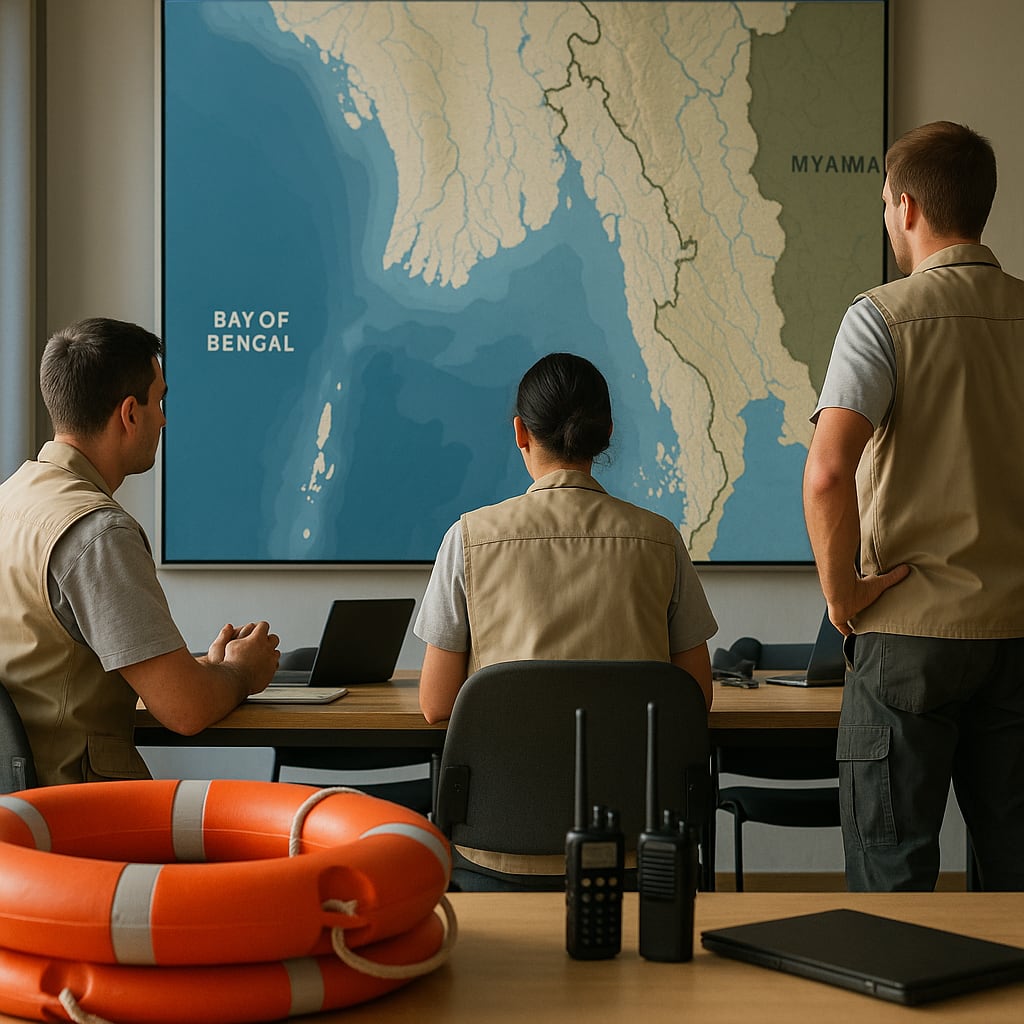
UN agencies said they were alarmed by reports that two boats carrying more than 500 people may have capsized off Myanmar in recent days, after departing in late June from Rakhine state with mostly Rohingya on board, according to the Guardian, South China Morning Post, Bangkok Post, and Deutsche Welle. The incidents are believed to have occurred in the Bay of Bengal, Toronto Star and The Hindu reported. Politika added specificity from local reporting: one vessel with about 250 people lost contact shortly after setting off, and a second boat with approximately 280 passengers reportedly sank on July 8. The UN’s International Organization for Migration and UNHCR issued a joint statement voicing alarm but did not provide confirmed casualty counts, reflecting that information is still being assembled from reports. Coverage consistently characterizes the journeys as perilous and irregular.
Why It Matters
The incident sits at the intersection of ongoing displacement from Rakhine and a well-established maritime route marked by high risk and limited protection. Japan Times notes that Rohingya routinely attempt sea journeys in search of better conditions on boats often operated by trafficking networks, and Deutsche Welle underscores that thousands have attempted such crossings in recent years under hazardous conditions. The UNHCR–IOM alarm signals a continuing protection gap for people leaving Myanmar by sea and the challenges of monitoring irregular departures where verification is difficult and information often arrives piecemeal, as reflected by outlets emphasizing “reports” and active investigations. For governments and international organizations operating around the Bay of Bengal, the coverage points to persistent enforcement and humanitarian dilemmas at sea: curbing trafficking operations, mitigating maritime risk, and establishing reliable incident reporting—issues the sources collectively surface without indicating that they have yet been resolved.
Diverging Narratives
Outlets differ less on the scale of the potential loss than on evidentiary confidence and attribution. The Guardian, South China Morning Post, and Bangkok Post largely mirror the UN’s cautious formulation that two boats “may have capsized,” while Toronto Star and The Hindu stress that officials are investigating reports of capsizings, centering uncertainty in the factual record. Politika advances the narrative by specifying a date—July 8—for one sinking and describing the other boat’s loss of contact soon after departure; other outlets avoid such precision, highlighting the uneven availability and verification of details.
Geographic framing also varies: several stories locate the events “off the coast of Myanmar” (South China Morning Post, Bangkok Post, Guardian), while Toronto Star and The Hindu place them in the Bay of Bengal, a broader maritime context that reinforces the regional character of the route. Explanatory emphasis diverges as well. Japan Times foregrounds trafficking networks and the condition of the vessels; Deutsche Welle stresses hazardous sea conditions and the volume of recent crossings. South China Morning Post’s reference to conflict in Rakhine provides internal push-context, whereas others stay primarily with the maritime dimension. None of the sources report confirmed causes or comprehensive casualty verification.
What Happens Next
The immediate hinge is verification. Toronto Star and The Hindu indicate officials are investigating, and the UN agencies’ statement suggests ongoing information-gathering. If authorities or UNHCR/IOM substantiate Politika’s reported dates and per-boat numbers, casualty estimates and timelines will firm up; if not, the episode may remain defined by provisional figures and unconfirmed reports. A second focal point is the operational profile of the route. Japan Times’ emphasis on trafficking-run, rickety boats points to possible enforcement actions; public indications of disrupted networks or arrests would signal that line of response, while their absence would suggest continuity in smuggling modalities. Finally, Deutsche Welle’s reference to hazardous conditions and the volume of recent crossings implies continued risk exposure; watch for UNHCR/IOM updates advising on conditions or trends and for any official statements about departures from Rakhine noted by South China Morning Post, which would clarify whether flows are accelerating or abating.