
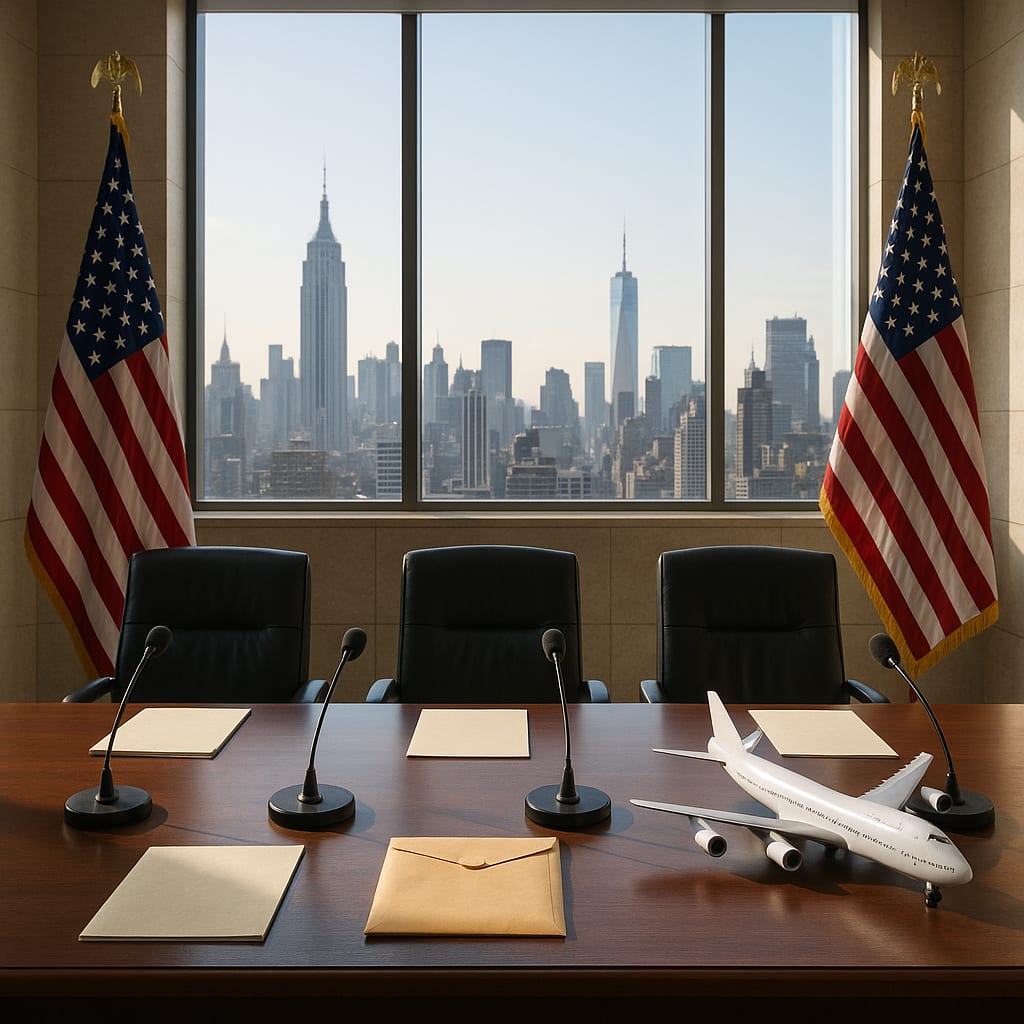
US Justice Department subpoenas New York Times reporters over Air Force One security reporting
Narrative Snapshot
Across outlets, coverage converges on a single through-line: the Justice Department, under the Trump administration, served subpoenas on several New York Times reporters tied to their coverage of security concerns on a new presidential aircraft donated by Qatar, with testimony sought before a Manhattan federal grand jury. Many stories add procedural detail or attribution that shapes the frame. The Guardian and South China Morning Post note agents delivered some subpoenas at reporters’ homes, while Fox News names four journalists and situates the action as part of a grand jury leak probe. European reporting in Le Monde, ANSA, and Deutsche Welle emphasizes an escalation of legal pressure on the press.
A second point of contrast is how much technical specificity outlets provide about the aircraft. Folha de S.Paulo and RT relay the Times’ sourcing that the jet lacks standard security features, including anti-missile defenses, while others keep the substance of the concerns general. Fox News and the South China Morning Post stress the platform’s recency—entry into service last week and an inaugural flight earlier in the month—underscoring operational relevance rather than technical detail.
Finally, the core stakes are framed differently. CBC foregrounds the New York Times’ legal posture with a lawyer’s claim that the tactic should “shock the conscience,” while DW, The Guardian, and Le Monde place the subpoenas within a broader pattern of attempts to compel journalists’ testimony. By contrast, Fox’s “leak probe” framing centers potential unauthorized disclosure of sensitive security information. Most outlets highlight the Qatari origin of the aircraft, which adds a diplomatic dimension to a story otherwise anchored in press freedom and national security.
What Happened
The US Department of Justice issued subpoenas to multiple New York Times journalists following the paper’s reporting on security concerns with the new Air Force One, a retrofitted Boeing 747-8 gifted by Qatar. Fox News identified the reporters as Eric Lipton, Julian E. Barnes, Tyler Pager, and Eric Schmitt. The Guardian reported that the subpoenas, delivered on Friday, require testimony before a Manhattan federal grand jury on Wednesday, with agents delivering some at reporters’ homes. The Times publicly condemned the move as a “brazen act,” and a Times lawyer told CBC it should “shock the conscience” of Americans. Outlets including Folha de S.Paulo and RT described the reporting’s specifics—citing anonymous officials who said the aircraft lacks standard defenses such as anti-missile systems. The South China Morning Post and Fox noted the jet’s recent entry into service and inaugural flight earlier in the month.
Why It Matters
Several outlets characterize the subpoenas as part of a broader push by the Trump administration to compel journalist testimony, raising concerns about press freedoms and leak-enforcement practices. The Guardian describes this as the latest such effort, while DW and Le Monde emphasize the implications for media independence. Framed by Fox News as a grand jury leak probe, the case sits at the intersection of national security secrecy and protections for newsgathering, testing how aggressively prosecutors can seek to identify confidential sources through compelled testimony.
Internationally, sustained attention from European, Canadian, and Asian media places US press-freedom norms under external scrutiny. The aircraft’s Qatari provenance, widely highlighted across reports, adds a diplomatic layer to a security controversy, linking presidential transport vulnerabilities to the optics of a foreign gift. For decision-makers, the dispute signals the policy costs and constraints of leak investigations when reporting touches on high-visibility state assets and raises questions about how far investigators will go to compel journalists in national-security cases.
Diverging Narratives
Coverage splits on framing. The New York Times, echoed by CBC and DW, depicts the subpoenas as an alarming escalation against the press—“brazen,” in the Times’ words—with The Guardian situating it within a pattern of efforts to compel journalists under threat of penalty. Le Monde similarly describes the administration as multiplying legal procedures against reporters. By contrast, Fox News characterizes the action as a grand jury leak probe tied to the disclosure of sensitive information, implicitly validating a national-security lens on the inquiry.
There are also differences in how outlets present the underlying reporting. Folha de S.Paulo and RT recount claims from anonymous officials that the plane lacks standard protections, including anti-missile systems, while others avoid technical detail. Some pieces focus on immediacy and process—the jet’s entry into service (SCMP, Fox), the home delivery of subpoenas (Guardian, SCMP), and the naming of four reporters (Fox)—rather than the aircraft’s vulnerabilities. Finally, attribution language varies: most outlets assign the subpoenas to the Justice Department, while RT’s write-up frames them as actions by the White House, a distinction that shapes readers’ sense of institutional responsibility.
What Happens Next
The immediate hinge is the federal grand jury appearance set for Wednesday in Manhattan, described by The Guardian and Fox News. Analysts should watch for court filings from the New York Times—its public condemnation in the Times and CBC suggests a potential legal contest—and for any Justice Department statements clarifying the scope of what Fox labels a leak probe. A second indicator is whether prosecutors extend similar measures to other journalists or outlets, a trajectory consistent with Le Monde’s portrayal of multiplying actions.
Substantively, further official comment on the aircraft’s security—confirmations, denials, or procedural changes—would shape the national-security side of the story, given Folha de S.Paulo and RT’s reporting on alleged missing defenses. Finally, operational details reported by the South China Morning Post and Fox about the plane’s recent entry into service make any subsequent adjustments to its use or disclosure practices salient signals of how the administration balances secrecy, safety, and transparency.