
U.S. President Trump's 'Great Force' Advances Towards Iran Amid Tensions
In a series of recent developments, U.S. President Donald Trump has announced the mobilization of a 'great force' towards Iran amidst escalating tensions between the two nations. The announcement follows Trump's previous warnings to Iran and his assurances to protesters within the Islamic Republic that 'help is on its way'. However, the lack of immediate military action has stirred debate and speculation in Washington.
Context of Tensions
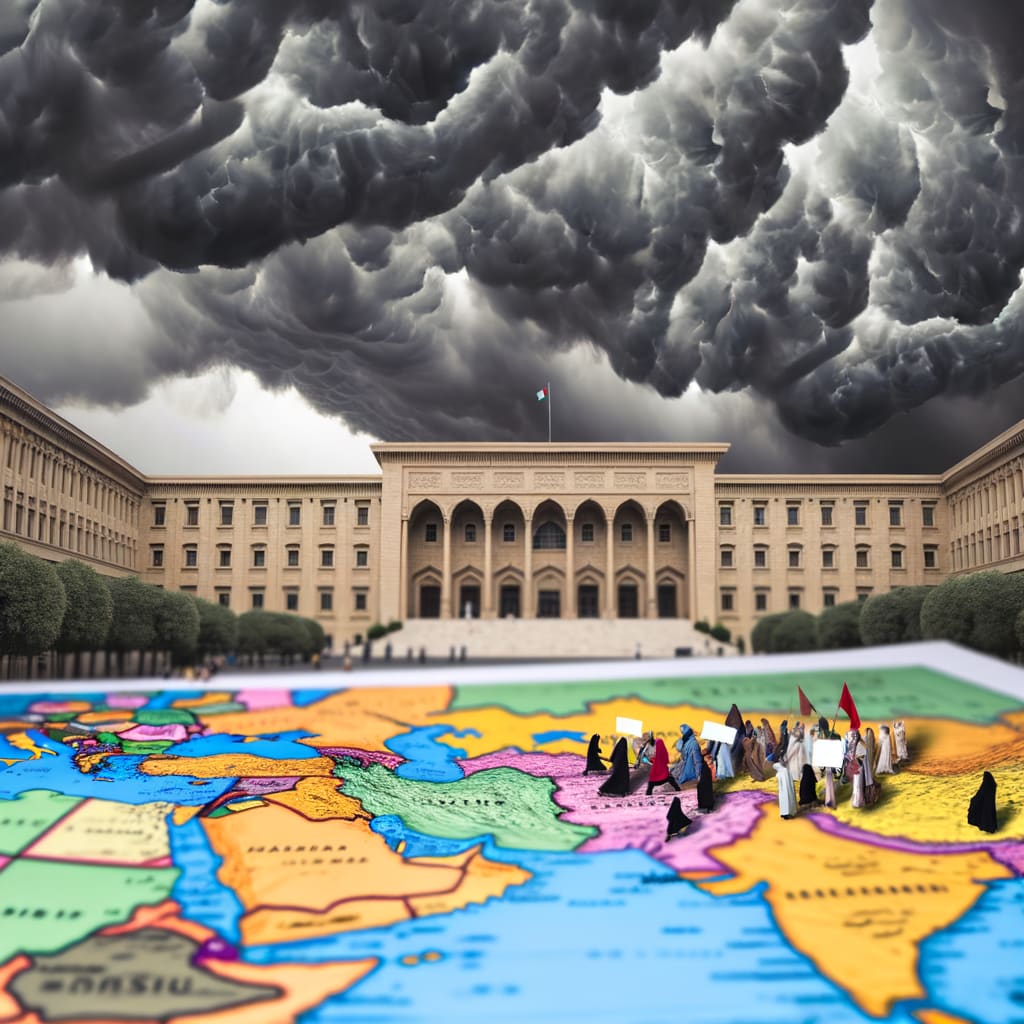
The Trump administration has been issuing veiled threats to Iran amidst mass protests within the country against its theocratic regime, in place since 1979. The unrest in Iran has been attributed to rising inflation and the devaluation of the Iranian rial, leading to violent confrontations with security forces and causing hundreds of reported deaths. Tehran has blamed the discord on the U.S. and Israel.
Trump's 'Great Force'
In a surprising move, President Trump admitted for the first time that he is sending a 'massive fleet' towards Iran, a historical rival. According to reports, the fleet may include the USS Abraham Lincoln or one of two carriers that departed Norfolk and San Diego earlier this week. The U.S. already has three destroyers in the region.
Trump's decision to mobilize forces was driven by caution rather than retreat, say U.S. and regional security experts. They highlight that a direct strike risked retaliation against U.S. forces and Israel, and raised questions about who would follow Iran’s leadership and whether intervention would undercut the protest movement Trump appeared to encourage.
The Next Moves
Despite the show of strength, Trump has expressed his preference for avoiding conflict. He declared that the U.S. is 'watching Iran' closely and expressed hope that the 'massive fleet' would not need to be used. However, the president's rhetoric has left many wondering about the U.S.'s potential next steps.
Internal debates over Iran’s post-regime leadership and the lack of a clear successor have reportedly factored into deliberations over a potential strike. Officials grappled not only with how to hit Iran, but with who would come next. This uncertainty was publicly highlighted by Trump.
Regional and Global Implications
The move towards Iran has not only stirred debates in Washington but also raised concerns among Gulf countries. They fear the chaos that a U.S. attack on Iran or the collapse of the Islamic Republic would generate. Meanwhile, the mobilization of U.S. forces towards Iran could signal limits of Beijing and Moscow's power as U.S. flexes its strength.
Current Status
As of now, the 'great force' continues its course towards Iran. The world watches closely as tensions between the U.S. and Iran escalate, with hopes for a peaceful resolution still prevailing.