
US warns ASEAN on Iranian control of Hormuz as Gulf pact ideas and covert escorts surface
Narrative Snapshot
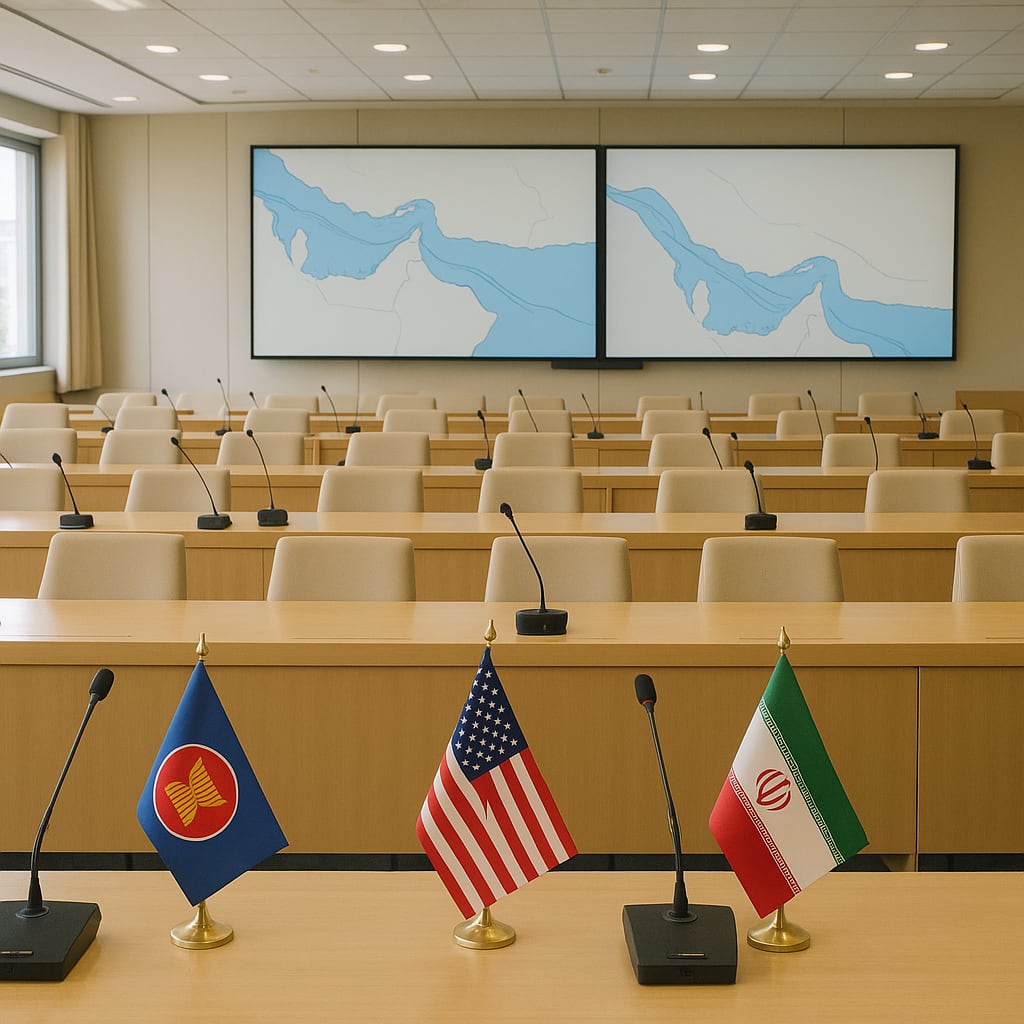
Across outlets, the strongest through-line is Washington’s effort to internationalize the stakes. Middle East Eye, the Toronto Star, Al Jazeera, and RFE/RL all foreground U.S. Secretary of State Marco Rubio’s warning in Manila that Iran’s move to control and collect tolls in the Strait of Hormuz would set a “dangerous precedent,” explicitly tying it to freedom of navigation, global trade, and Asia’s own contested maritime routes. The framing extends the crisis beyond the Gulf into regional institutions and norms.
Regional and thematic counterpoints emphasize ownership, alternatives, and historical pattern. Tehran Times roots Iran’s position in geography, depicting the strait as the “natural, submerged continuation of the Iranian Plateau,” while Clarin surfaces a proposal for a Gulf coalition to share control of the waterway. Japan Times and the Bangkok Post situate Hormuz within a centuries-long history of straits shaping rivalry and commerce, linking today’s tensions to the Red Sea via the Houthis.
On-the-water reporting and escalation signals diverge in tone and emphasis. Politika describes ongoing, quiet U.S. naval guidance for commercial shipping through Hormuz, whereas Telesur highlights two tanker explosions in mined waters and asserts Iran has closed the route amid warnings of offensive action. Fox News, citing Reuters, adds that Tehran has asked Yemen’s Houthis to prepare to shut the Bab el-Mandeb if the United States strikes Iranian power infrastructure, further connecting Hormuz to adjacent chokepoints.
What Happened
In mid-July, Fox News, citing Reuters, reported that Iran asked Yemen’s Houthi movement to prepare to close the Bab el-Mandeb if the United States attacked Iranian power infrastructure, with missiles and drones reportedly deployed near the waterway. Days later, Telesur reported two tanker explosions in mined waters, framing them as part of a dangerous escalation in which Iran “closes the route” and issues warnings of offensive action. As policy ideas circulated, Clarin carried a proposal for a Gulf coalition to share control of Hormuz. Tehran Times advanced a geographic rationale for Iran’s stake in the strait. Politika reported that U.S. military efforts to guide ships through Hormuz were continuing “secretly.” By July 21–22, Rubio used ASEAN meetings in Manila to warn that Iran’s bid to control and charge tolls set a dangerous precedent, with Al Jazeera, Middle East Eye, the Toronto Star, and RFE/RL amplifying the message; RFE/RL also quoted Rubio saying Iran was not serious about diplomacy.
Why It Matters
Outlets connect the immediate standoff to broader norms and regional security architectures. Rubio’s remarks, reported by the Toronto Star, Al Jazeera, and RFE/RL, explicitly tied Hormuz to freedom of navigation and to Asia’s contested waterways, indicating that responses will be read as precedents across regions. The Bangkok Post underscores the structural role of key straits as linchpins of trade since the 16th century, while Japan Times links Hormuz dynamics to Red Sea disruptions by the Houthis, suggesting cross-theater contagion risks. Tehran Times’ geographic framing points to a sovereignty-centered narrative, potentially at odds with international expectations of open passage as articulated by U.S. officials. Clarin’s shared-control proposal introduces a regional governance alternative that, if pursued, could reshape how littoral states manage a global chokepoint. Politika’s account of quiet escorts indicates a security posture aimed at reducing risk without overt escalation.
Diverging Narratives
Sources diverge on the nature and legitimacy of control. Tehran Times depicts the strait as an extension of Iranian territory, implicitly justifying a larger Iranian role. In contrast, Rubio’s warnings, carried by Middle East Eye, the Toronto Star, Al Jazeera, and RFE/RL, frame Hormuz as an international waterway where unilateral control and toll collection would undermine freedom of navigation and set precedents affecting Asia. Clarin’s suggestion of a Gulf coalition to share control represents a third approach that distributes authority among regional states rather than centering it in Tehran or external navies.
Accounts also differ on the operational picture. Politika emphasizes discreet U.S. naval guidance for commercial vessels, implying managed risk and continuity of traffic. Telesur, by contrast, highlights tanker explosions in mined waters and states that Iran “closes the route,” portraying a sharper break in maritime security. BBC analysis situates Iran’s behavior within a constrained strategic calculus with no clear path to victory, while Japan Times and the Bangkok Post contextualize current moves as part of the persistent tensions that key straits generate, including the Red Sea dimension via the Houthis. Fox News, citing Reuters, adds prospective escalation at Bab el-Mandeb, but this remains contingent and tied to potential U.S.-Iran exchange dynamics.
What Happens Next
Three decision points emerge from the reporting. First, whether Iran attempts to enforce control and tolls at scale: Rubio’s warnings set a benchmark for what Washington and Asian partners would treat as a red line, so any public decree or interdiction at Hormuz would be a key indicator. Second, whether Gulf states coalesce around shared governance: Clarin’s proposal gives analysts a concrete signal to watch in regional diplomacy—statements by Gulf capitals, ministerial meetings, or draft arrangements on joint oversight. Third, maritime security posture and escalation pathways: Politika’s “secret” escorts could expand or become overt if threats rise; Telesur’s account of mined-water incidents points to the need to track further attacks or closures. Cross-theater spillover remains an indicator, with Fox News (via Reuters) and Japan Times tying potential Houthi moves at Bab el-Mandeb to the Hormuz crisis, and RFE/RL’s reporting on stalled diplomacy shaping expectations of near-term talks.